Introduction
Choosing between the top UCaaS and Cloud PBX providers for businesses can make or break how your team communicates every single day. The right platform keeps calls connected, teams synced, and customers happy, while the wrong one leads to dropped calls and frustrated staff. Most companies only discover the gaps in their phone system after a client call drops or a new remote hire cannot get set up.
This guide ranks the leading options on pricing, reliability, and features, then walks through exactly what to check before you commit. You will see how six well-known business phone systems compare side by side, plus the criteria that separate a reliable provider from a risky one. By the end, you will know which platform fits your team size, budget, and growth plans.
What Are UCaaS and Cloud PBX Providers?
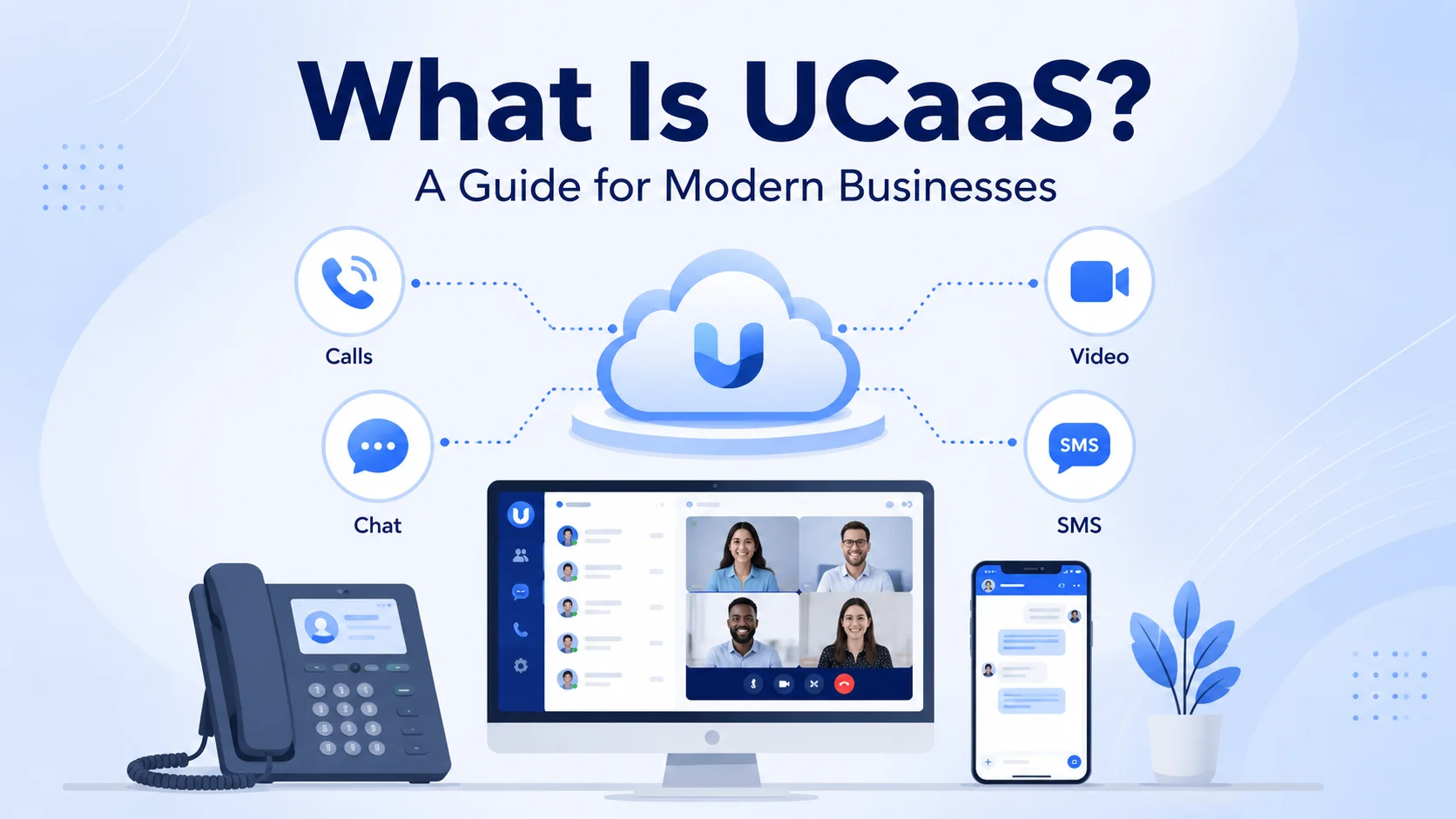
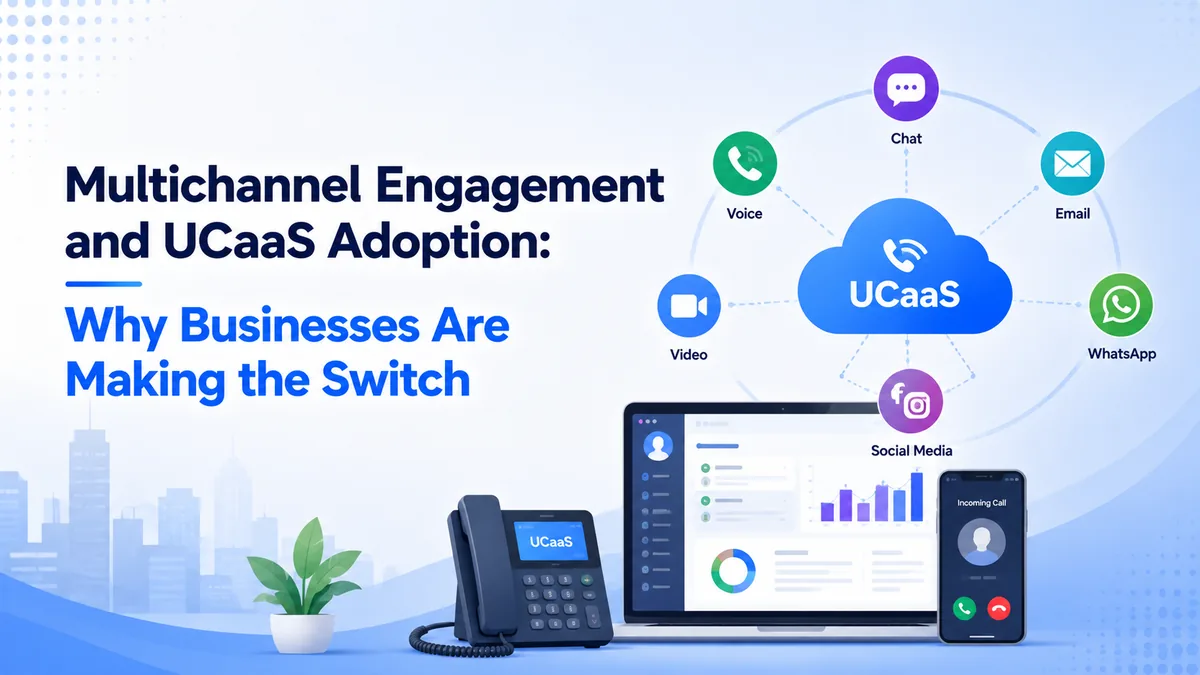
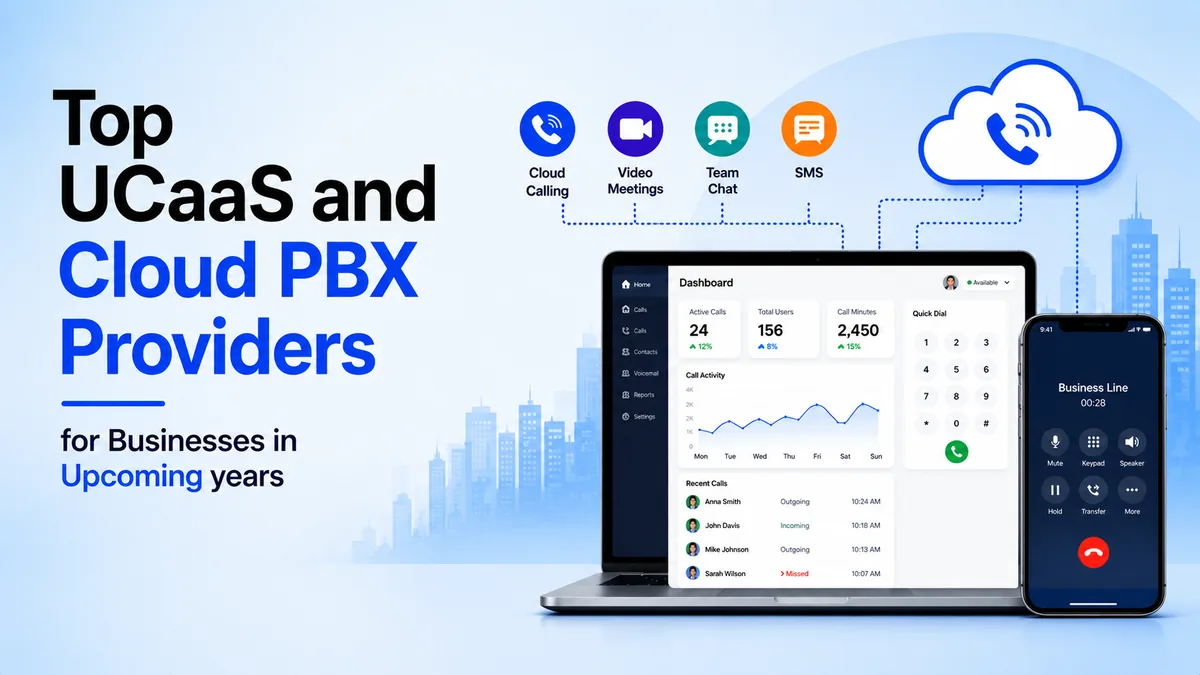
UCaaS and Cloud PBX providers deliver business phone service over the internet instead of copper lines or an on-site switchboard. UCaaS (Unified Communications as a Service) bundles voice calling, video meetings, team chat, and SMS into a single login, while Cloud PBX focuses more narrowly on hosted call routing, extensions, and voicemail. Many vendors blur the line, offering both under one plan.
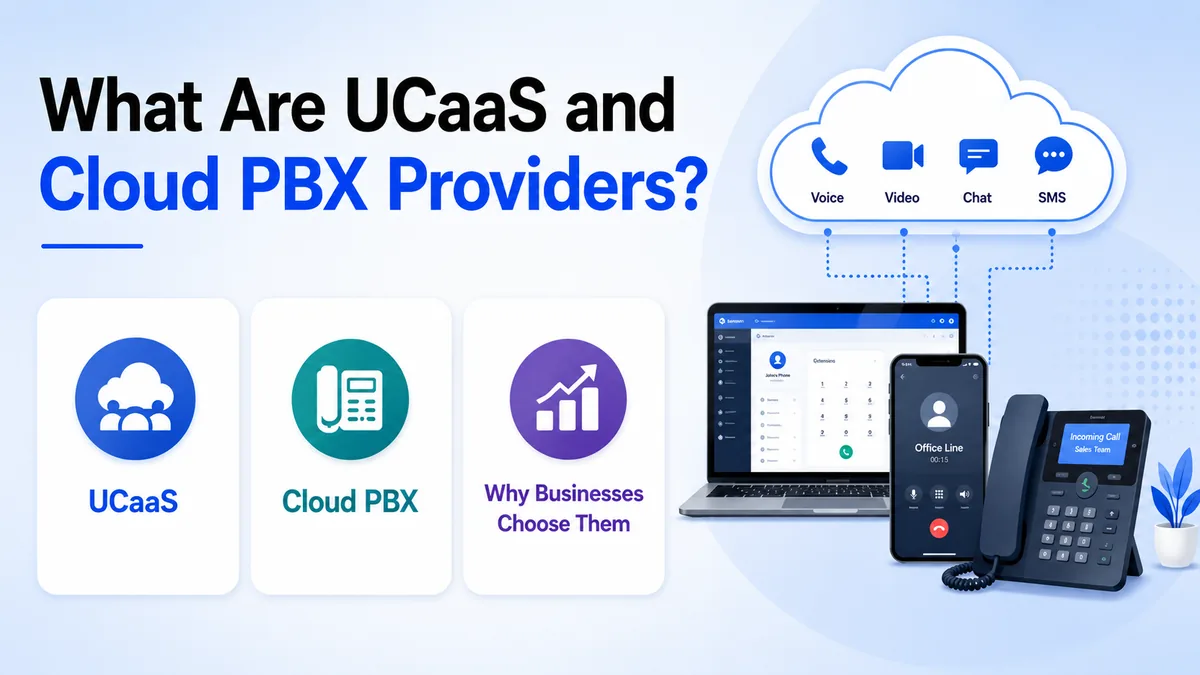
For growing businesses, this shift matters because hardware maintenance, wiring costs, and desk-phone lock-in disappear. Teams gain call queues, auto-attendants, and mobile apps that let staff answer the office line from anywhere on a cloud phone system built on VoIP.
VoIP providers for business now compete heavily on uptime, AI features, and how quickly a new employee can be set up with an extension.
How We Ranked the Top UCaaS and Cloud PBX Providers
Not every business phone system is built for the same use case, so we scored each platform against six criteria before ranking the top UCaaS and Cloud PBX providers below:
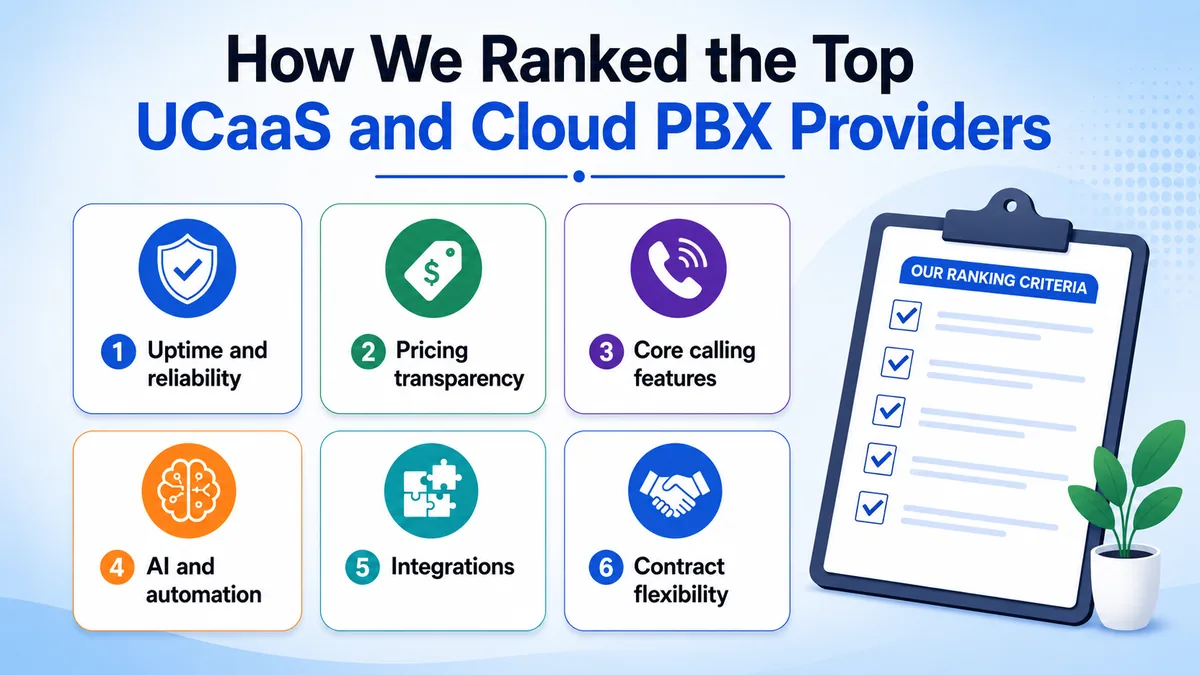
- Uptime and reliability: published SLA, redundancy, and points of presence.
- Pricing transparency: whether plans and per-user costs are published or hidden behind a sales call.
- Core calling features: call queues, auto-attendants, call recording, and number porting.
- AI and automation: AI receptionists, transcription, and sentiment scoring.
- Integrations: native CRM and helpdesk connections without third-party middleware.
- Contract flexibility: month-to-month options versus multi-year lock-in.
These criteria reflect what actually breaks a rollout: hidden fees, rigid contracts, and support teams that vanish after the sale. Keep this checklist handy when you evaluate business phone systems beyond this list, since your call volume and CRM stack may shift the ranking.
Top UCaaS and Cloud PBX Providers for Businesses (Ranked)
Here is how the leading UCaaS and Cloud PBX providers stack up on price, features, and support.
| Rank | Provider | Starting Price | Standout Feature | Best For |
|---|---|---|---|---|
| 1 | TKOS | $7.99/user/mo | 99.9% SLA + AI receptionist | Growing teams wanting one bill |
| 2 | RingCentral RingEX | $20/user/mo | Deep app marketplace | Large, complex teams |
| 3 | Nextiva | $18/user/mo | Built-in CRM tools | Sales-heavy teams |
| 4 | 8x8 | Custom pricing | Global voice coverage | Multinational offices |
| 5 | Dialpad | $15/user/mo | Google Cloud AI transcription | Tech-forward remote teams |
| 6 | GoTo Connect | Custom pricing | Simple mobile app | Small, lean teams |
1. TKOS
This platform leads the ranking of UCaaS and Cloud PBX providers because it bundles cloud phone, video meetings, team chat, and an AI receptionist into one login for $7.99 per user per month. It backs every plan with a 99.9% uptime SLA across multiple points of presence, plus free number porting and no long-term contract. Native integrations with Salesforce, HubSpot, and Zoho remove the need for costly middleware, and it reports phone bill reductions of up to 31% for teams consolidating from separate vendors.
2. RingCentral RingEX
RingCentral offers one of the broadest app marketplaces among business phone systems, with strong video conferencing and a mature mobile app. Pricing starts around $20 per user per month, and larger teams often need a sales call to unlock the full feature set.
3. Nextiva
Nextiva pairs its cloud phone system with built-in CRM-style tools, making it a solid pick for sales and support teams that want call data tied to customer records. Plans start near $18 per user per month, with unlimited calling included on most tiers.
4. 8x8
8x8 brings voice, video, and contact center tools together with genuinely global coverage, which suits multinational offices. Pricing is not published, so expect a custom quote, and some reviewers note its interface feels dated next to newer VoIP providers for business.
5. Dialpad
Built on Google Cloud, Dialpad leans hard into AI with live transcription and sentiment analysis included even on lower tiers. Starting at $15 per user per month, it appeals to remote-first teams comfortable with a modern, app-first workflow.
6. GoTo Connect
GoTo Connect keeps setup simple with an easy mobile app and straightforward call routing, good for small teams that do not need heavy customization. Pricing is not listed publicly, and advanced AI features lag behind higher-ranked competitors.
How to Get a Cloud PBX System from TKOS
Adding a local presence in over 100 countries takes minutes, not new hardware or a long contract, which matters if you are comparing UCaaS and Cloud PBX providers for a remote or distributed team. A Cloud PBX number routes calls straight to your existing devices through the same app used for meetings and chat. Here is how to get one set up:
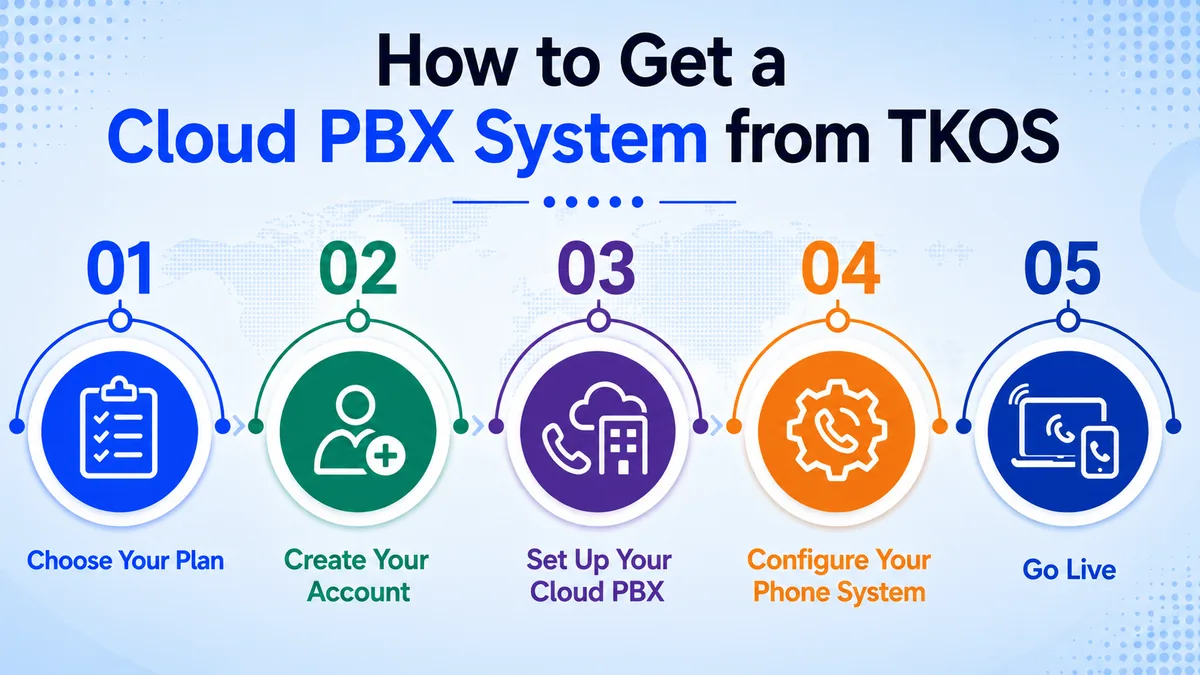
- Choose Your Plan: Select a Cloud PBX plan that fits your business.
- Create Your Account: Start your free trial using your work email.
- Set Up Your Cloud PBX: Add your business number or choose a new virtual number.
- Configure Your Phone System: Set up extensions, IVR, call routing, voicemail, and business hours.
- Go Live: Start making and receiving business calls on desktop, mobile, or IP phones.
UCaaS vs. Cloud PBX: Which Fits Your Business?
If your team mainly needs reliable call routing, voicemail, and extensions, a straightforward Cloud PBX plan may be enough and often costs less. But most growing businesses eventually want video meetings, team chat, and SMS in the same place, which is where full UCaaS and Cloud PBX providers pull ahead of narrower phone-only tools.
The decision usually comes down to how scattered your team is. Office-based teams with light collaboration needs can run lean on Cloud PBX alone. Remote or hybrid teams juggling calls, video, and CRM notes tend to save time and money on a unified platform, since switching between five disconnected apps adds up fast. According to ITU data, cloud-based communication adoption among businesses has continued climbing worldwide as remote and hybrid work becomes standard.
Common Mistakes to Avoid When Comparing Providers
Many teams choose based on price alone and skip testing call quality during business hours, which is where problems usually surface first. Others sign multi-year contracts before confirming the uptime SLA actually applies to their region, not just a global average. When comparing VoIP providers for business, ask about disaster recovery plans too.
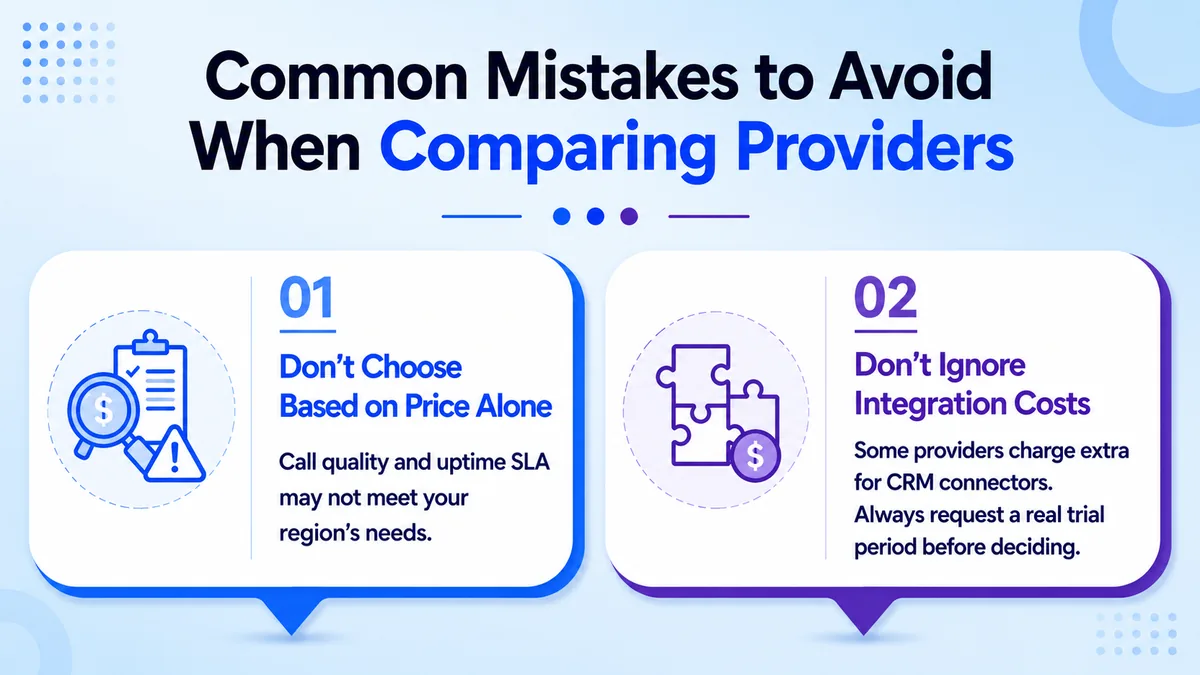
A second common mistake is ignoring integration costs. Some UCaaS and Cloud PBX providers charge extra for CRM connectors that competitors include for free, raising the real cost per seat. Request a real trial period from any wholesale VoIP provider on your shortlist before signing anything.
See also: UCaaS for seamless collaboration.
Conclusion
Ranking the top UCaaS and Cloud PBX providers comes down to matching real business needs against price, uptime, and features rather than chasing the longest spec sheet. TKOS leads this list for its combination of a 99.9% uptime SLA, AI receptionist, and transparent month-to-month pricing, while RingCentral, Nextiva, 8x8, Dialpad, and GoTo Connect each suit specific team profiles. Business phone systems are no longer a one-size-fits-all purchase, and the criteria in this guide should make comparing them far faster.
Before signing a contract, test at least two providers with a free trial and get your team's real feedback on call quality and setup time. A short trial period reveals far more than a sales pitch ever will, especially once your team starts using the AI features day to day. Whichever platform you choose, prioritize transparent pricing and a real uptime guarantee over flashy extras you may never use.
Popular international calling destinations