Introduction
VoIP and UCaaS get used almost interchangeably in conversations about business phone systems, but they are not the same thing, and picking the wrong one can leave a growing business either overpaying for tools it does not need or missing features it will need soon.
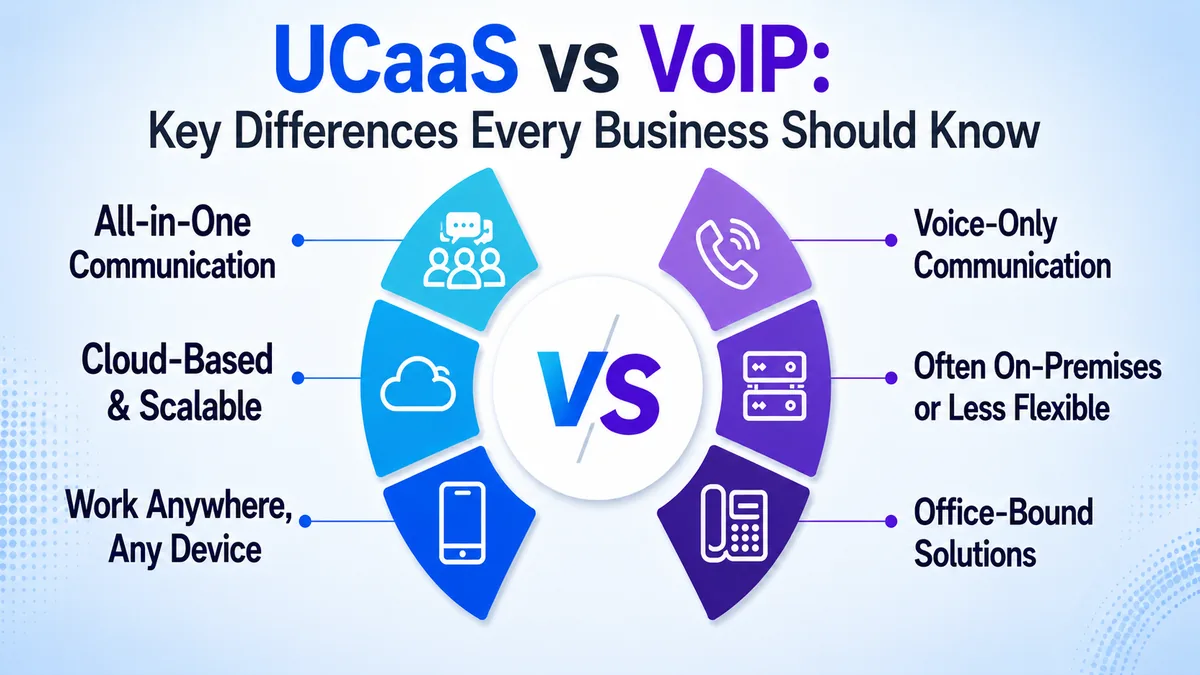
VoIP is the technology that carries a call over the internet. UCaaS is a much broader platform that includes VoIP calling alongside video, messaging, and collaboration tools. This guide breaks down exactly what separates the two, where one ends and the other begins, and which one actually fits your business today.
What Is VoIP?
VoIP stands for Voice over Internet Protocol. It is the technology that converts a voice call into digital data and sends it over an internet connection instead of a traditional copper phone line.

In practice, VoIP is what lets a business make and receive calls using a desk phone, a computer, or a mobile app, all connected to the internet rather than a physical phone network. Most VoIP services include core calling features: call forwarding, voicemail, an auto attendant, call recording, and conference calling.
That simplicity is part of why the VoIP market keeps growing fast, valued at $201.97 billion in 2026 and projected to reach $472.21 billion by 2033. VoIP is, at its core, about one thing done well: carrying phone calls reliably over the internet.
What Is UCaaS?
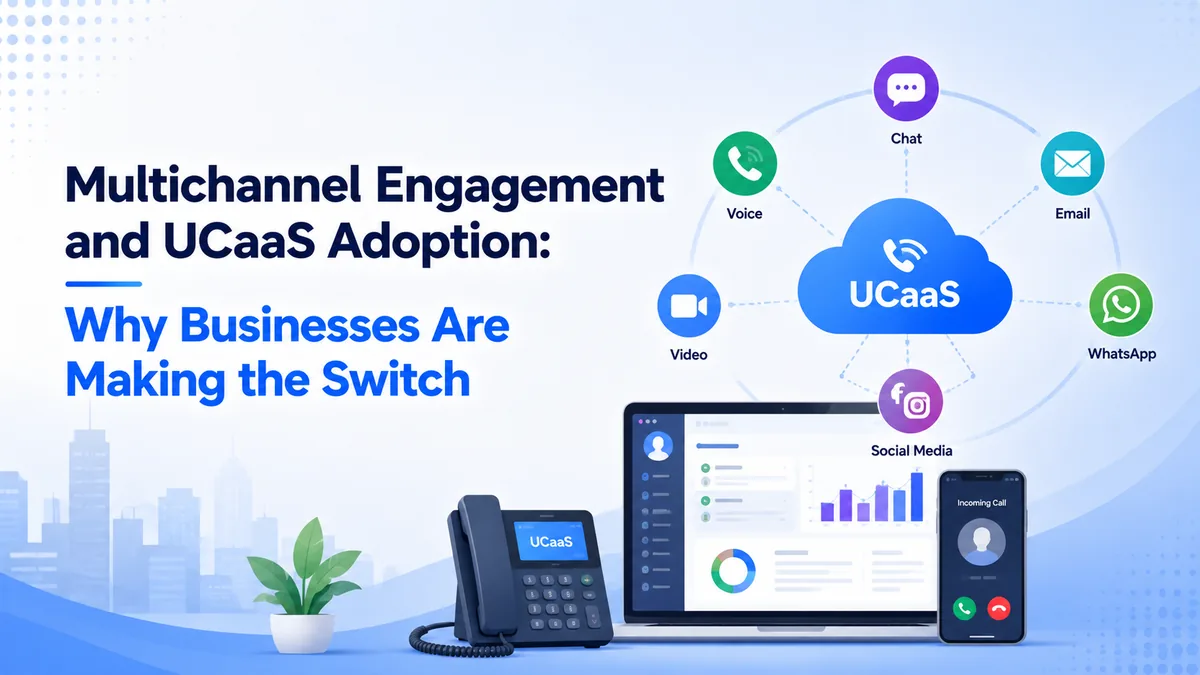
UCaaS stands for Unified Communications as a Service. It is a cloud platform that includes VoIP calling as one piece of a much larger system, alongside video conferencing, team messaging, presence status, file sharing, and integrations with tools like a CRM or calendar.
Rather than just carrying calls, UCaaS ties every communication channel together in one place, so a conversation can move from a chat message to a call to a video meeting without switching platforms or losing context. If VoIP is the engine that makes calling possible over the internet, UCaaS is the full vehicle built around that engine.
A sales team on a UCaaS platform might start a deal over chat, jump to a quick call to close a detail, then schedule a video demo, all logged against the same customer record without opening a second tool at any point.
How UCaaS and VoIP Actually Relate
The clearest way to understand the difference is that UCaaS is built on top of VoIP rather than competing with it.
Every UCaaS platform uses VoIP technology to handle its calling functions, but not every VoIP service includes the video, messaging, and collaboration tools that define UCaaS. In other words, VoIP is a component, while UCaaS is the complete package. A business can absolutely use VoIP without ever adopting full UCaaS, but it cannot have UCaaS without VoIP working underneath it.
The same logic applies one layer up: just as UCaaS is built on VoIP, it also overlaps with CCaaS once a business adds dedicated customer-facing tools like call queues and IVR menus on top of its calling and collaboration stack.
Key Differences at a Glance
Beyond the relationship between the two, a handful of practical differences matter most when deciding which one fits your business.
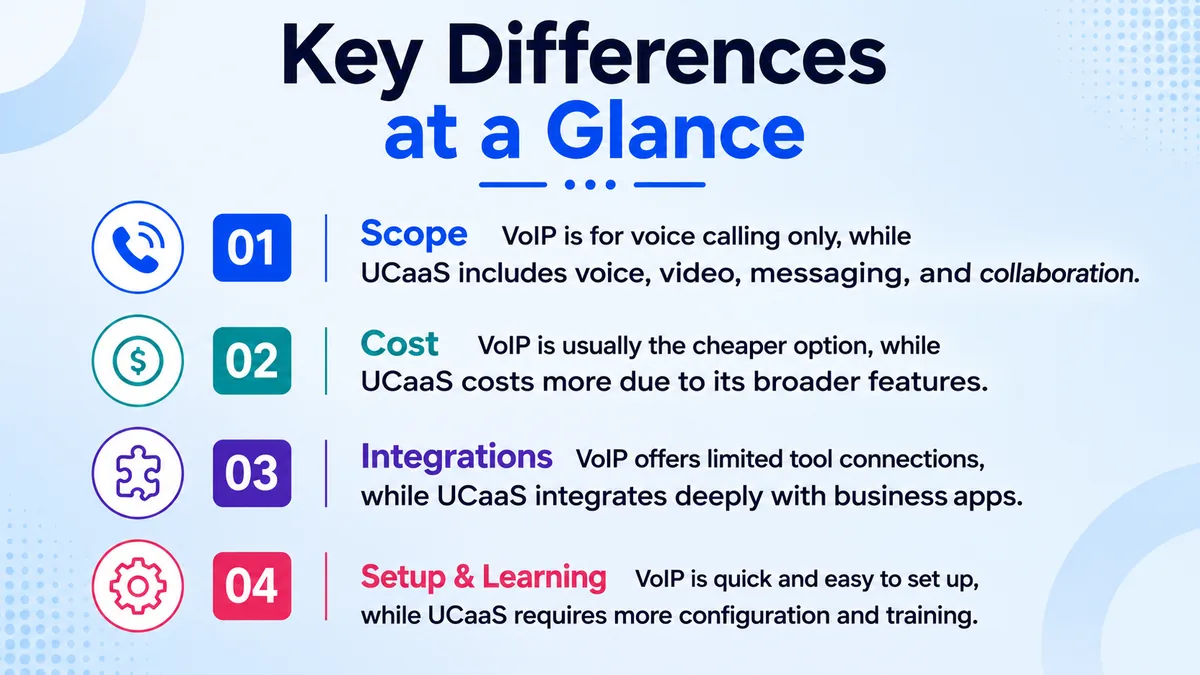
Scope is the biggest difference: VoIP focuses entirely on voice calling, while UCaaS combines voice, video, messaging, and collaboration into a single platform. Cost follows that same pattern, since VoIP alone is typically the cheaper option, while UCaaS costs more per user because it bundles in far more functionality.
Integrations differ too: basic VoIP services often offer limited connections to other business tools, while UCaaS platforms are generally built to integrate deeply with a CRM, helpdesk, or project management system.
Setup and learning curve also diverge, since a standalone VoIP line is usually simple to configure, while a full UCaaS platform takes more setup to configure video, messaging, and integrations properly.
When VoIP Alone Is the Right Choice
VoIP by itself remains the right fit for a specific kind of business, and there is no need to pay for more than that.
Businesses whose communication is almost entirely phone calls, with little need for video meetings or team messaging, often get everything they need from VoIP alone. Budget-conscious businesses, particularly very small ones just getting started, may prefer VoIP's lower cost and simpler setup over a fuller platform they are not ready to use completely.
Businesses that already use separate tools for video and messaging that they are happy with may also see little reason to consolidate into UCaaS right away, especially if those tools already talk to each other well enough for daily needs.
When UCaaS Is the Right Choice
UCaaS earns its higher cost once a business needs more than calling alone to function well day to day.

Growing or distributed teams benefit most, since UCaaS keeps calls, video meetings, and messaging tied together across remote and hybrid employees instead of scattered across disconnected tools. Businesses juggling several separate subscriptions for calling, video, and chat often save money and reduce confusion by consolidating into one UCaaS platform instead.
Companies that rely heavily on integrating communication data with a CRM or helpdesk also benefit, since UCaaS platforms are typically built with those connections in mind from the start rather than bolted on as an afterthought.
A Practical Example
Picture a small consultancy with three employees who mostly work from one office and rely on phone calls to reach clients. Standalone VoIP fits comfortably here: calls are reliable, the setup is simple, and there is no real need yet for video conferencing or team messaging built into the same system.
Now picture that same consultancy two years later, having grown to twenty employees across two cities with several people working remotely. Phone calls alone no longer cover how the team actually communicates, and everyone needs the same set of tools whether they are in an office or working from home. At that point, UCaaS becomes the more practical way to keep a distributed team connected.
Common Misconceptions Worth Clearing Up
A few misunderstandings come up often enough to address directly. Some assume UCaaS replaces VoIP entirely, when in fact UCaaS relies on VoIP to handle its calling functions; one is not a substitute for the other, since UCaaS is built using VoIP rather than instead of it.
Others assume UCaaS is only worth it for large enterprises, but per-user pricing means a ten-person team can adopt UCaaS just as easily as a thousand-person one, provided the added tools actually get used.
A third misconception is that switching from VoIP to UCaaS means starting over with a new phone number, when in most cases a provider offering both can carry existing numbers and configurations directly into the fuller platform.
Making the Switch from VoIP to UCaaS
Many businesses do not choose one permanently on day one; they start with VoIP and move to UCaaS as their needs grow.
A common pattern is starting with straightforward VoIP calling while a business is small, then adding video, messaging, and integrations as the team grows, adds remote employees, or takes on more customer-facing volume. Because UCaaS is built on the same VoIP foundation, this transition is usually more of an upgrade than a total system replacement.
Getting Started with TKOS
TKOS offers both straightforward VoIP calling and a full UCaaS platform, so you can start with what you need today and grow into more without switching providers later. Getting started takes just a few steps.
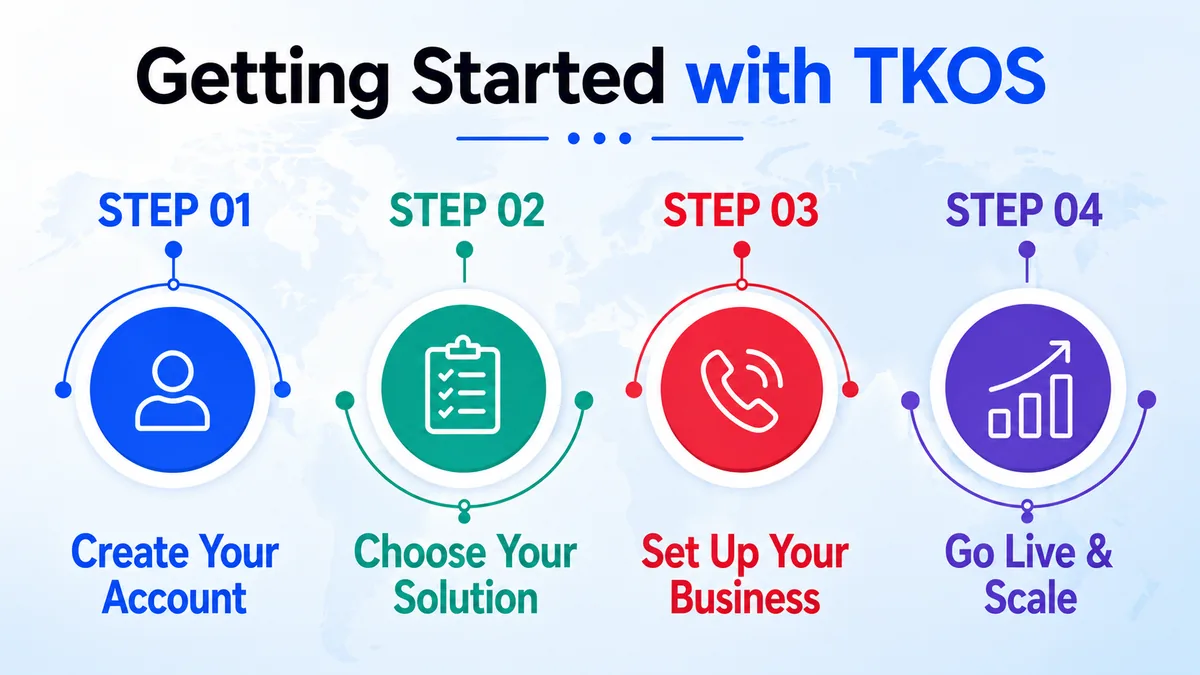
- 1. Create your account. Visit tkos.co.za, start a free trial, or sign up with a work email, no credit card required.
- 2. Choose your solution. Select the plan that best fits your business, whether it's VoIP calling or the full UCaaS platform.
- 3. Set up your business. Choose or port your business number, configure call routing, and enable video, messaging, or integrations as needed.
- 4. Go live and scale. Launch your communications system and expand anytime by adding CRM integrations and advanced UCaaS features as your business grows.
Conclusion
VoIP and UCaaS are not competing options so much as different points on the same path: VoIP handles voice calling reliably over the internet, while UCaaS builds a full communications platform on top of that foundation. Choosing between them comes down to how much of your team's communication happens outside of phone calls alone.
A small business focused purely on calling may do perfectly well with VoIP, while a growing or distributed team will likely outgrow it and benefit from UCaaS's video, messaging, and integrations working together. Either way, understanding the difference means choosing a system based on what your business actually needs.