Introduction
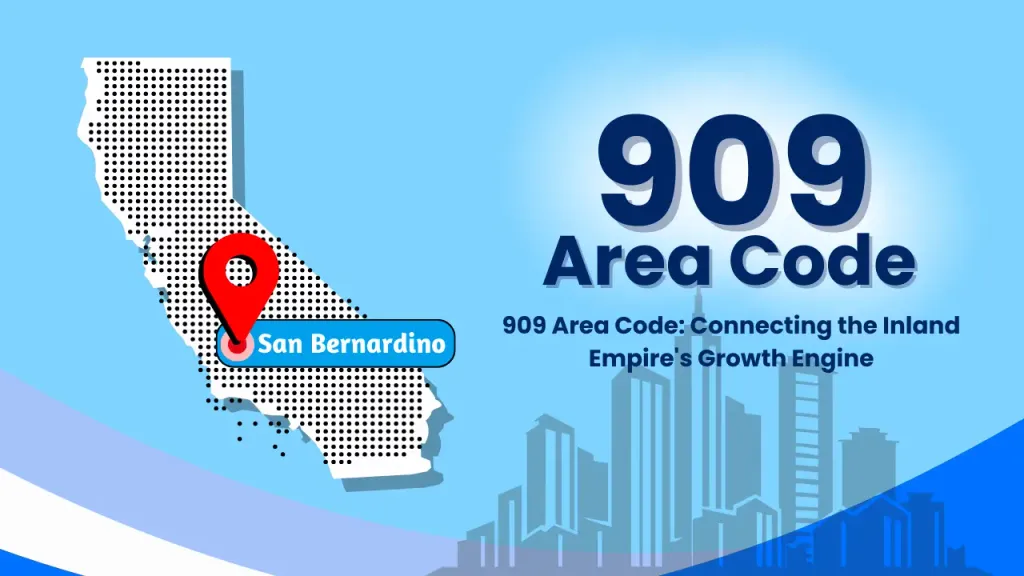
The 909 area code covers the eastern San Gabriel Valley and southwestern San Bernardino County. This slice of the Inland Empire drives logistics, warehousing, and distribution across Southern California. Cities like Pomona, Ontario, Rancho Cucamonga, Fontana, and San Bernardino all sit inside the 909 footprint.
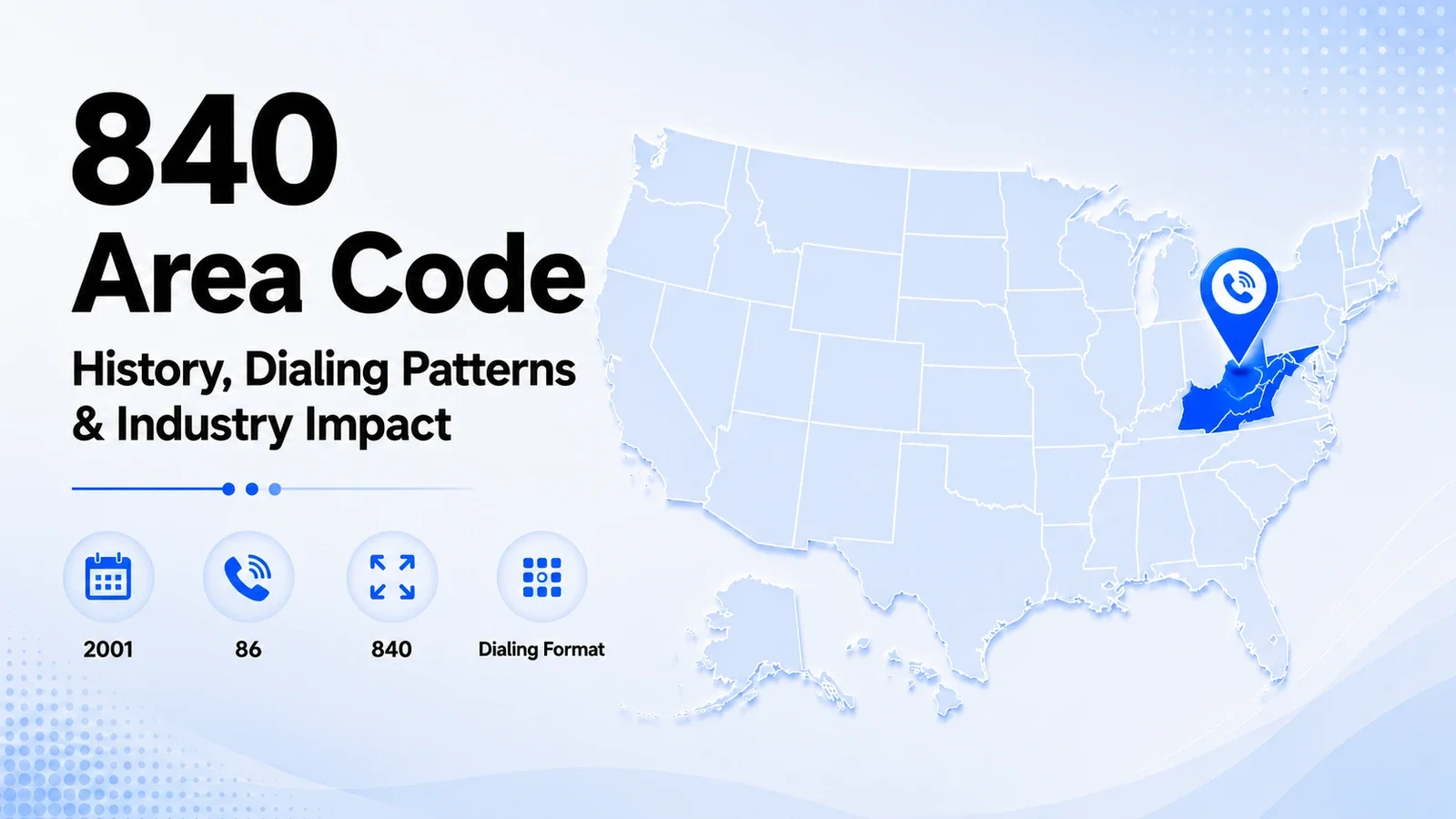
Rapid growth forced several numbering changes over the decades. The 909 split from 714 in 1992. A second split created 951 for Riverside County in 2004. The 840 overlay area code arrived on February 23, 2021, sharing the same geographic boundaries. Ten-digit dialing is now mandatory for every local call in this zone.
Why the 909 Area Code is Important for the Inland Empire?
The 909 prefix identifies a major economic corridor between Los Angeles and the rest of the country. It serves a large, diverse population and an economy built on goods movement, manufacturing, healthcare, and education.
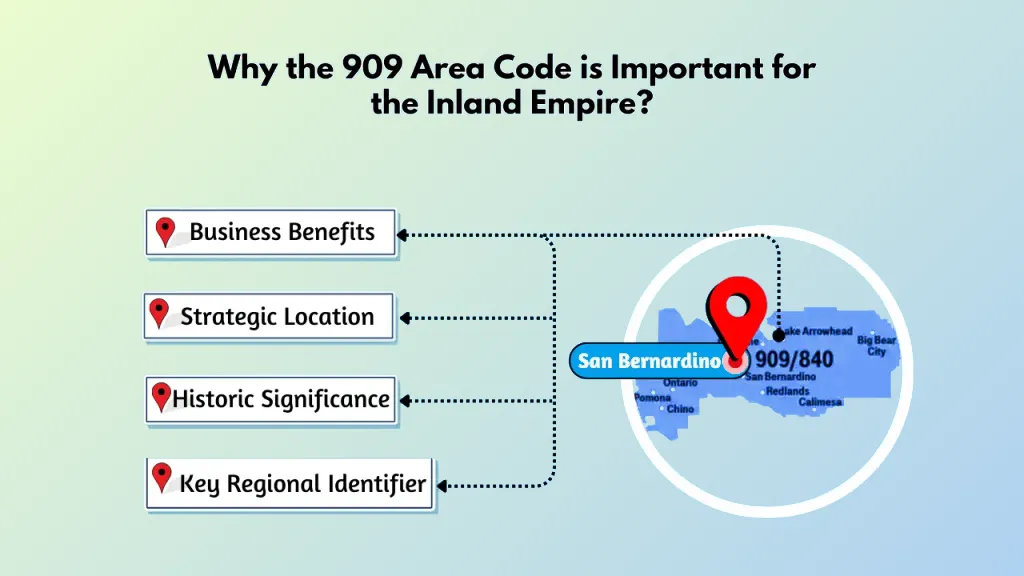
The code launched on November 14, 1992, after splitting from 714. Continued growth led to the 2004 split that created 951. The 840 overlay followed in 2021, adding fresh numbers without forcing existing users to change. For businesses, a 909 number signals local presence in the logistics capital of California. For residents, it represents home.
- Over two million people live and work across the 909/840 footprint.
- Ontario International Airport handles both passenger and cargo flights daily.
- The region hosts some of the largest warehouse clusters in the western United States.
- Multiple freeway interchanges connect the area to the Ports of Los Angeles and Long Beach.
Overview of the Area Code 909
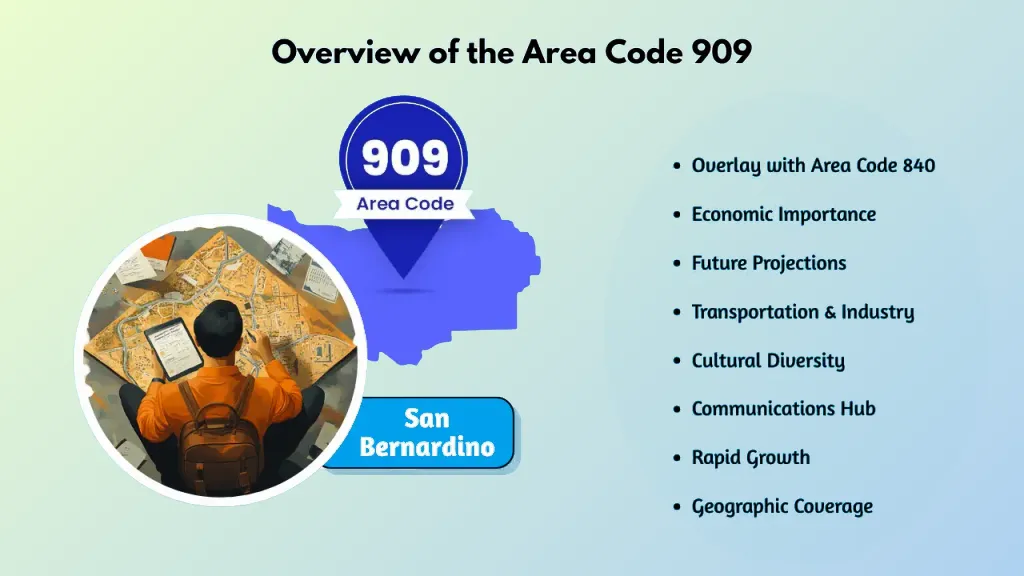
Area code 909 and its 840 overlay handle communication across a fast-growing Inland Empire corridor. The table below summarizes key facts about the region.
| Category | Description |
|---|---|
| Location | Eastern San Gabriel Valley (Los Angeles County) & SW San Bernardino County, CA |
| Overlays | Is overlaid by 840 |
| Introduction | November 14, 1992 (Split from 714) |
| Split | 2004 (Created 951 for Riverside County areas) |
| Overlay Added | 840 overlay effective February 23, 2021 |
| Time Zone | Pacific Time Zone (PT): GMT -08:00 / -07:00 (DST) |
| Major Counties | San Bernardino County, Los Angeles County |
| Major Cities | Pomona, Claremont, La Verne, San Dimas, Ontario, Montclair, Chino, Chino Hills, Upland, Rancho Cucamonga, Fontana, Rialto, San Bernardino, Colton, Loma Linda, Redlands, Highland, Yucaipa |
| Industries | Logistics & Distribution, Warehousing, Manufacturing, Healthcare, Education, Retail, Construction, Government |
The 909/840 region includes eastern Los Angeles County cities like Pomona, Claremont, and La Verne. It also covers southwestern San Bernardino County, including Ontario, Fontana, and Redlands. Both codes share the exact same geographic boundaries. The entire zone operates in the Pacific Time Zone. Immediately to the west, the 626 area code covers the rest of the San Gabriel Valley, giving businesses on both sides of the corridor a locally recognizable number.
- 1992 — 909 created via split from 714.
- 2004 — 909 split again, creating 951 for Riverside County.
- 2021 — 840 overlay introduced, mandating 10-digit dialing.
Economic Benefits of the Area Code 909: Why It Matters for Businesses
A 909 number ties your business to the logistics powerhouse of the Inland Empire. The region sits at the crossroads of major freeways, rail lines, and Ontario International Airport.
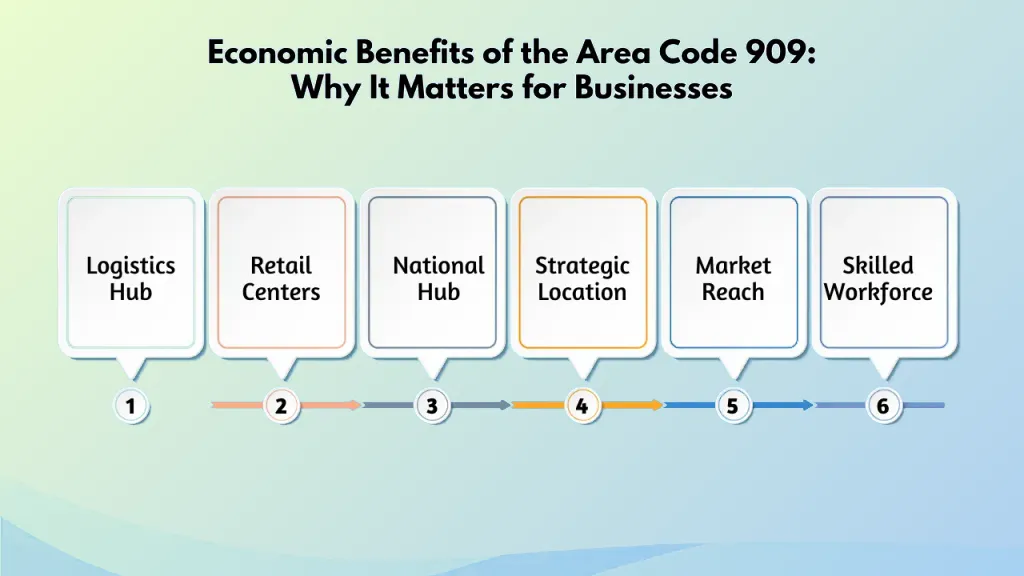
- Logistics and distribution — the dominant sector, driven by proximity to ports and freeways like I-10 and I-15.
- Manufacturing — food processing, plastics, and construction materials.
- Healthcare — large hospital systems serve the growing population.
- Education — Cal Poly Pomona, Claremont Colleges, Cal State San Bernardino, and Loma Linda University.
- Retail and construction — fueled by ongoing residential and commercial development.
The business climate features a large workforce, historically affordable real estate, and pro-business city initiatives. Using a 909 number signals local understanding of the Inland Empire market. This matters most for B2B interactions in logistics, supply chain, and manufacturing.
Carriers that handle high call volumes in this corridor often rely on wholesale voice termination to keep per-minute costs low. Bulk routing through trusted upstream providers improves both call quality and pricing for local businesses.
How to Get a 909 Area Code Number
Getting a 909 or 840 number follows standard steps. Resellers compare top VoIP wholesale providers before allocating numbers in this range.
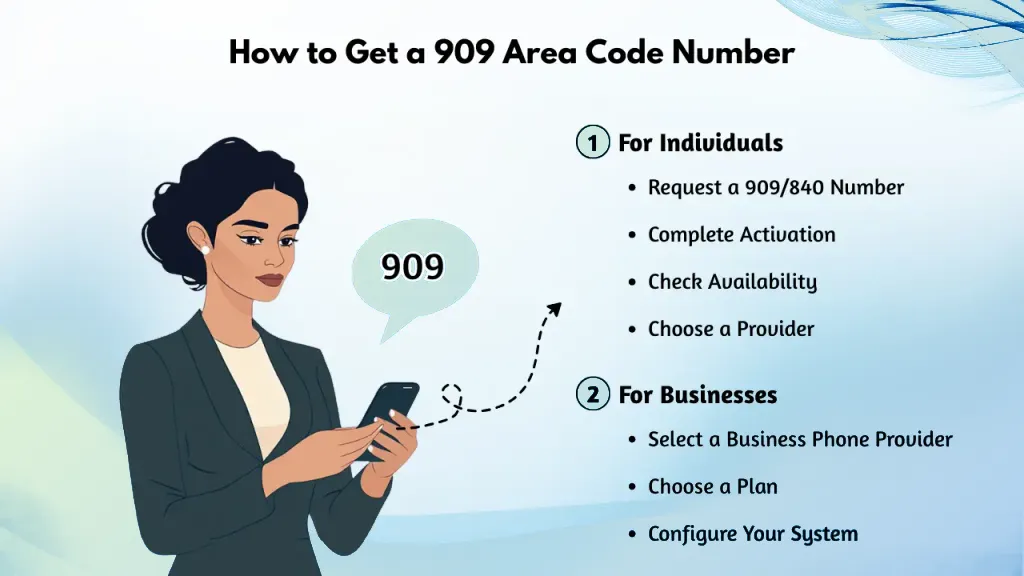
- Pick a provider — choose a mobile carrier or VoIP service covering the Inland Empire.
- Request a 909 or 840 number — specify the area code when setting up new service.
- Check availability — the provider confirms what is open. You may receive either prefix for the same location.
- Activate — follow the provider's setup steps. Porting an existing number into the region is usually possible.
Businesses should look for providers with strong Inland Empire reliability, clear pricing, and features like call routing and analytics. Many VoIP services let you search available numbers online and configure desk phones, softphones, or mobile apps in minutes.
- Confirm the provider supports both 909 and 840 prefixes.
- Ask about number porting timelines if you already have a local number.
- Check whether the plan includes call recording and voicemail transcription.
- Test call quality during peak business hours before signing a long contract.
Area Code Overlay and Relief Planning
The 909 region has experienced both splits and overlays. Each change reflects a different strategy for managing number demand in a high-growth area.
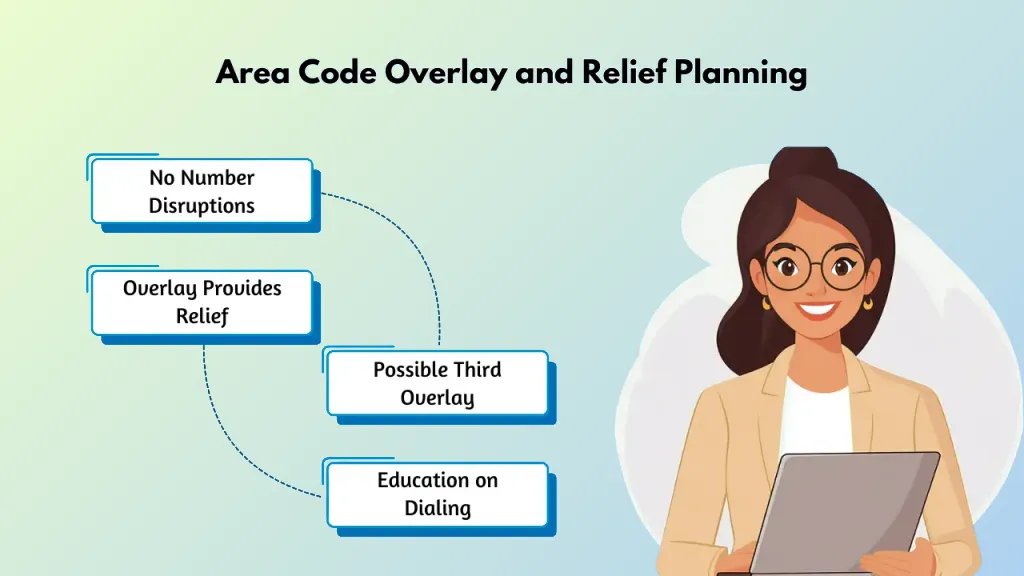
- 1992 — 909 created by splitting from 714.
- 2004 — 909 split again, creating 951 for western Riverside County.
- 2021 — 840 introduced as an overlay, mandating 10-digit dialing for all local calls.
The overlay approach avoided forcing millions of existing users to change their numbers. NANPA and the CPUC monitor number usage continuously. The 840 overlay is expected to last many years. If depletion ever returns, a third overlay code is the most likely solution.
Integrating Area Code 909 into Modern Communication Systems
The 909 and 840 codes work seamlessly with modern communication platforms. Businesses can establish a virtual local presence even when located elsewhere.
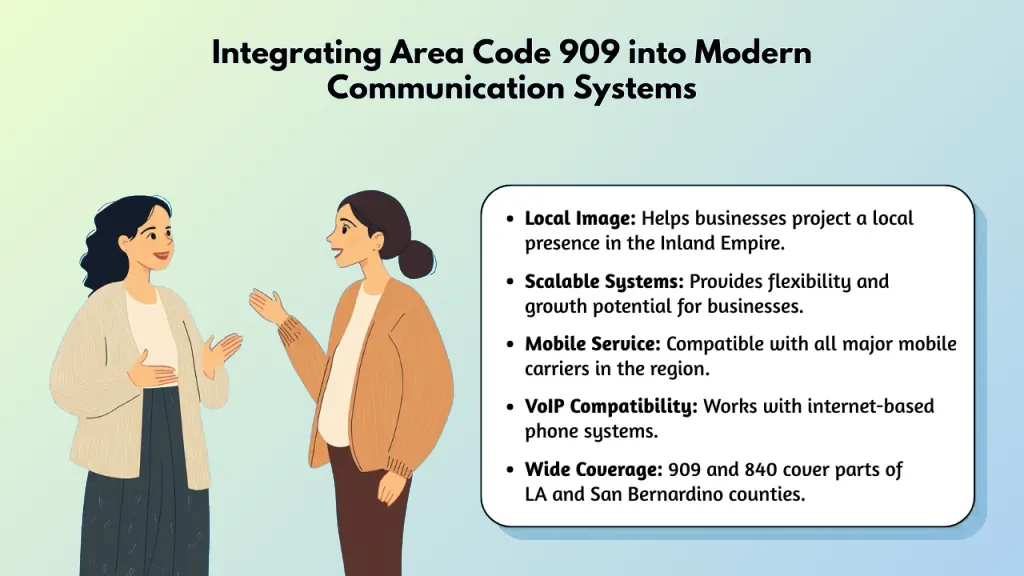
- VoIP and UCaaS — 909/840 numbers are fully compatible with internet-based phone systems.
- Mobile services — works across all major carriers in the region.
- Business systems — integrates with CRM software, contact center platforms, and PBX systems.
A local 909 number builds trust with Inland Empire clients and partners. Cloud-based tools let teams manage calls from any location. Advanced features like IVR, call analytics, and voicemail-to-email all attach to the same local identity.
- Set up auto-attendant menus so callers reach the right department fast.
- Use call forwarding rules to route after-hours calls to mobile devices.
- Enable SMS on your 909 number for appointment reminders and order updates.
- Connect your phone system to your CRM so every call logs automatically.
Cultural and Social Aspects
The 909/840 region carries a distinct cultural identity shaped by history, geography, and industry. Life here revolves around major freeways and the logistics economy.
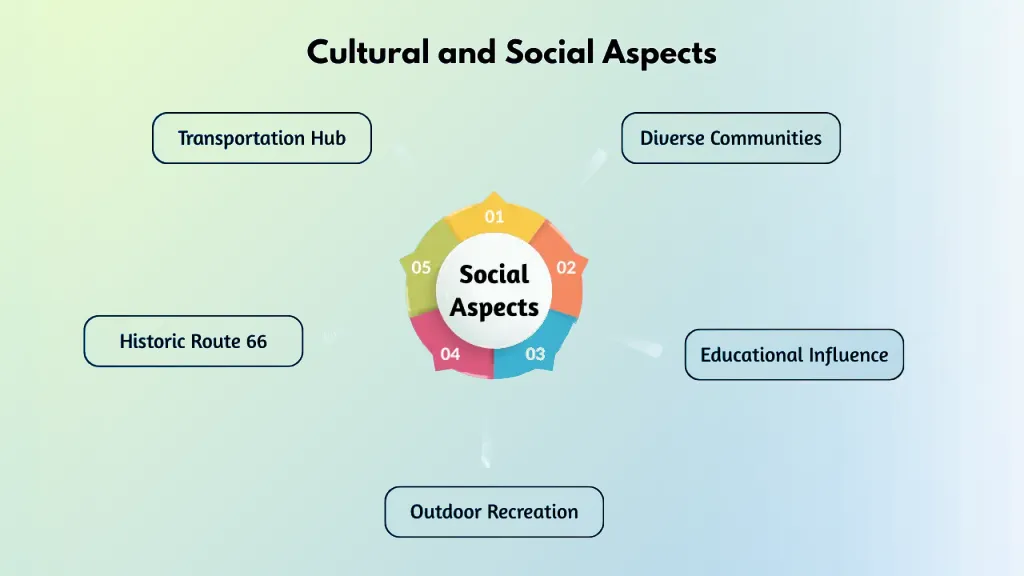
- Transportation corridors — I-10, I-15, I-210, and SR 60 shape daily life. Ontario International Airport is a major economic driver.
- Historic Route 66 — segments run through Rancho Cucamonga, Fontana, Rialto, and San Bernardino.
- Diverse communities — from historic downtowns in Pomona and Redlands to master-planned suburbs in Rancho Cucamonga.
- Educational hubs — multiple universities and colleges feed the local workforce.
- Recreation — the San Gabriel and San Bernardino Mountains offer hiking, skiing, and outdoor access.
- Local events — LA County Fair in Pomona, Toyota Arena concerts in Ontario, and community festivals across the region.
A 909 number connects people and businesses to this blend of logistics, education, history, and community.
Technical Details Of Area Code 909
The 909 and 840 codes operate under an overlay plan managed by NANPA and regulated by the CPUC. Both codes share the identical geographic footprint.
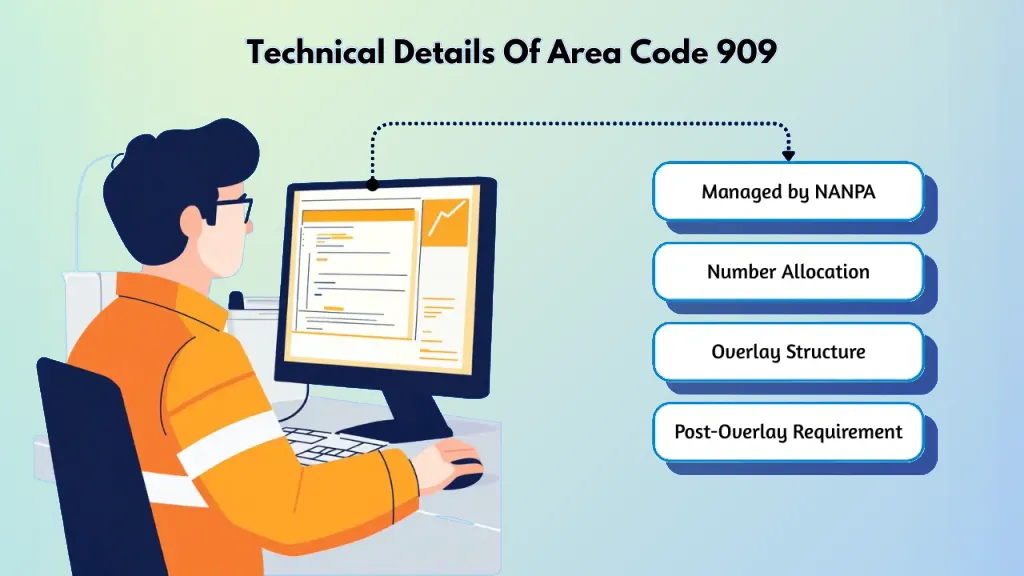
This overlay system manages number resources efficiently. It requires consistent FCC Guide-mandated 10-digit dialing for all local calls.
- Mandatory 10-digit dialing — area code plus seven-digit number for every local call.
- Number allocation — NANPA assigns blocks to carriers, who issue numbers to customers.
- Public awareness — residents and visitors must understand that 909 and 840 serve the same area.
- Exhaustion monitoring — NANPA tracks consumption rates in this high-growth zone.
Callers should save contacts with the full 10-digit format. Older phone books and printed materials may still show seven-digit numbers. Those short formats will not connect. Update any stored numbers, speed dials, or auto-dial lists to include the 909 or 840 prefix.
The Future of the Area Code 909: What's Next for the Region's Phone System?
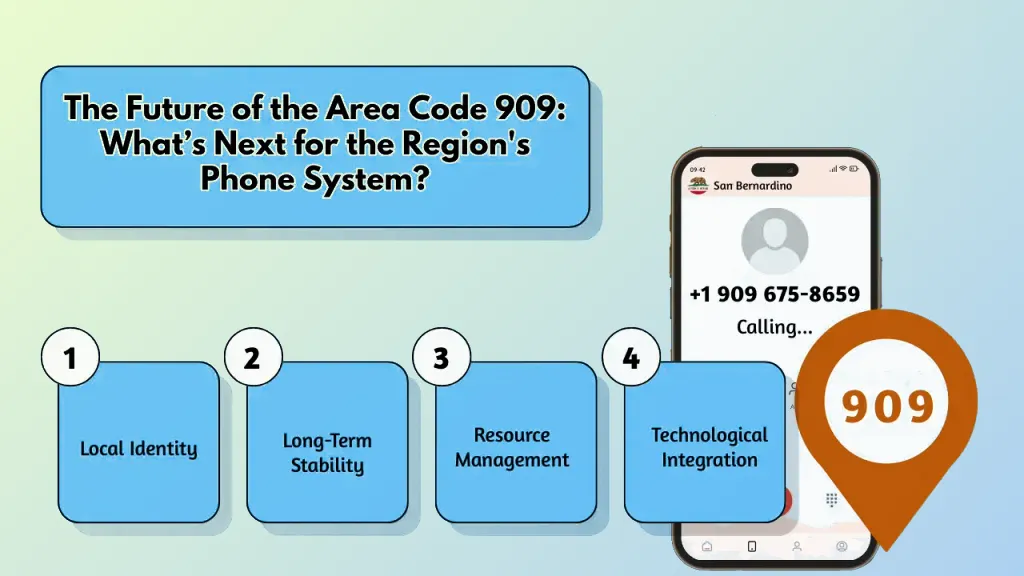
The 909/840 pair will remain central to the Inland Empire's communication network. The region continues to grow in population and economic importance.
- Sustained demand — logistics growth and population increases keep number consumption high.
- Deeper tech integration — phone numbers will link more tightly with IoT, mobile apps, and digital platforms.
- Long-term stability — no changes to the 909/840 structure are expected soon. A third overlay is the most probable future solution.
- Local identity — the 909 prefix holds strong recognition tied to the Inland Empire and its core industries.
New warehouse projects, data centers, and residential developments continue to break ground. Each new business or household adds to the demand for local phone numbers. VoIP adoption is also rising. More companies are replacing legacy landlines with cloud-based systems that still carry a familiar 909 caller ID.
See also: 929 area code (NYC outer boroughs).
Conclusion
The 909 area code represents the Inland Empire's eastern San Gabriel Valley and southwestern San Bernardino County. It split from 714 in 1992 and later spawned 951 in 2004. The 840 overlay joined in 2021. Together, 909 and 840 serve one of California's most important logistics and population corridors.
A 909 number gives businesses instant local credibility in a region driven by warehousing, distribution, manufacturing, and healthcare. It connects residents to distinct communities, historic Route 66 segments, and mountain recreation. Paired with modern VoIP and mobile platforms, the 909 prefix remains essential for communication across this part of Southern California.