Introduction
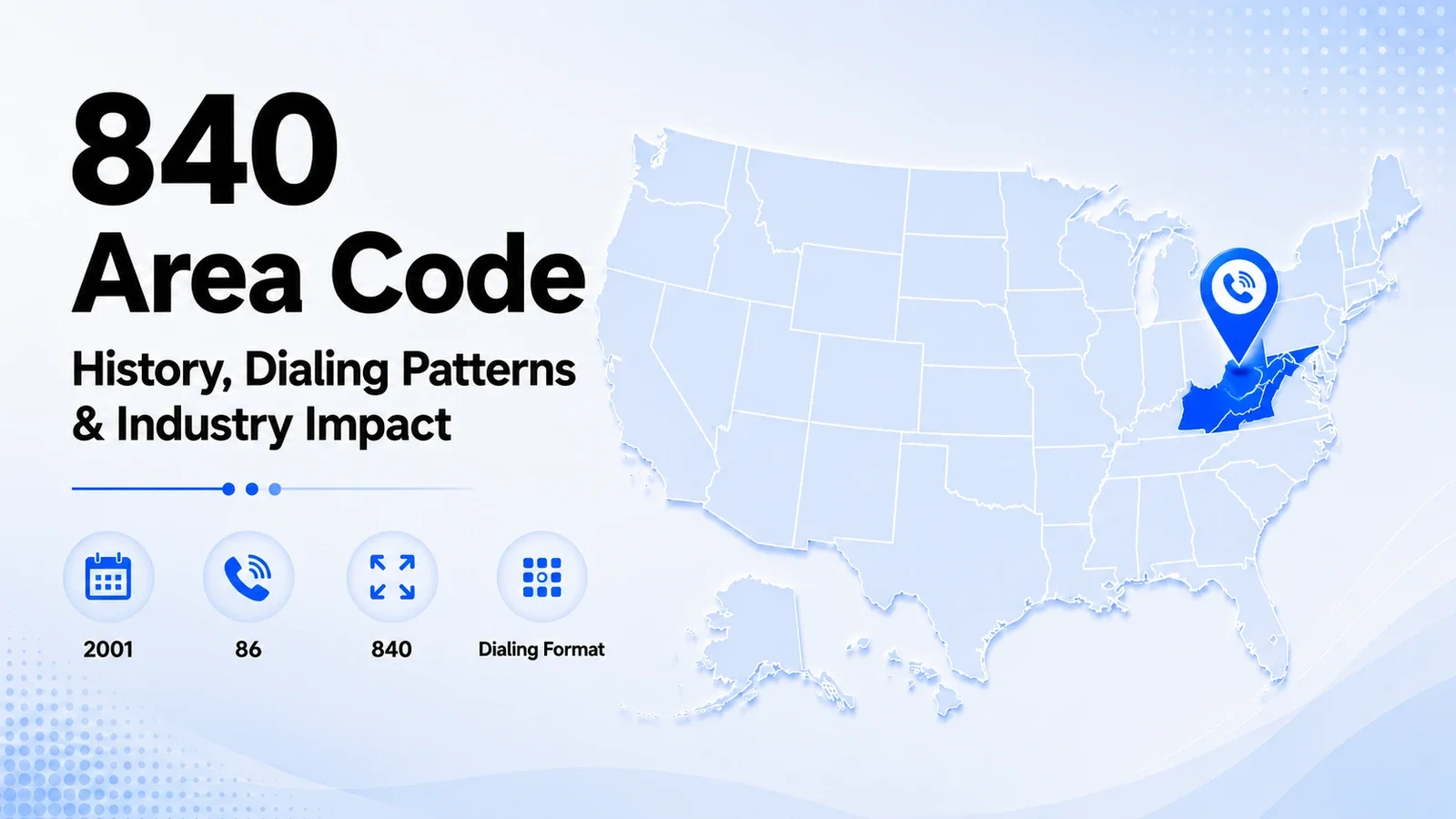
Area codes are three-digit prefixes that tell the network where to send a call. The 840 area code is the newer overlay for Southern California's Inland Empire. Callers dial three digits plus seven local digits, routed automatically by the North American Numbering Plan.
Some prefixes are reserved too — for toll-free lines, emergency hotlines, government offices, or future use. The 840 area code is an overlay for 909, helping carriers assign numbers across San Bernardino County and the wider Inland Empire.
NANP Origins and the 1947 Area Code System
Area code history traces to 1947, when the FCC-overseen North American Numbering Plan was established. It standardized numbering across the US, Canada, and several Caribbean nations, splitting large regions into smaller zones for faster, more accurate routing.
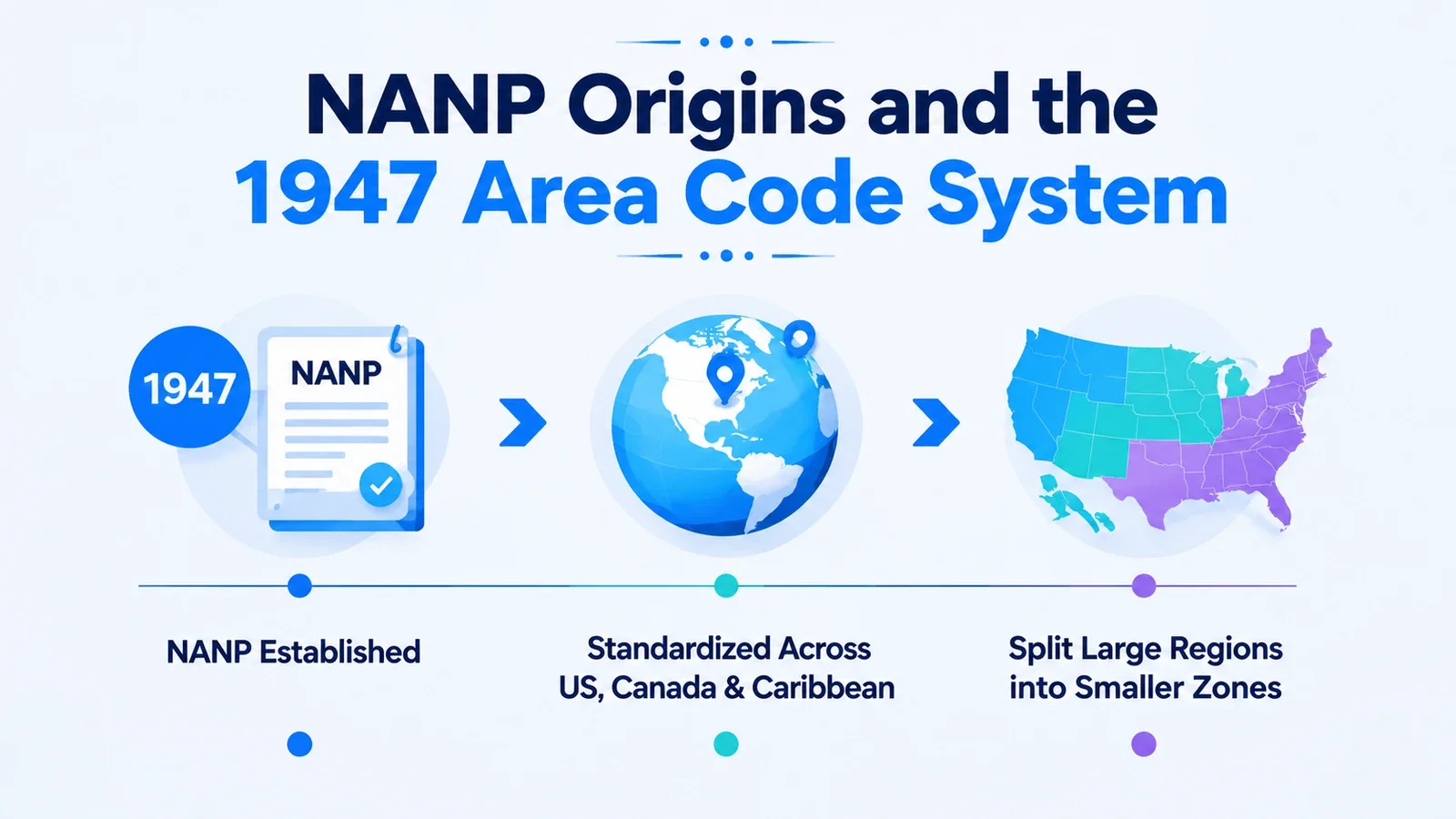
Before NANP, human operators connected long-distance calls by name or number — slow, expensive, and error-prone. Numeric codes let switching equipment route calls automatically, cutting setup from minutes to seconds and making direct-dial long-distance affordable for ordinary households.
How the 840 Area Code Fits the NANP Expansion
NANP originally issued just 86 area codes for North America. Code 909 split from 714 on November 14, 1992, then split again in 2004 to create 951 for western Riverside County. The 840 overlay followed on February 23, 2021, layered across that same San Bernardino County footprint.
Dialing Patterns and Format for 840
Calling 840 from outside the area code takes extra digits: international access code, then area code, then the full ten-digit number. Steps vary by location — get the sequence wrong, and the call misroutes.
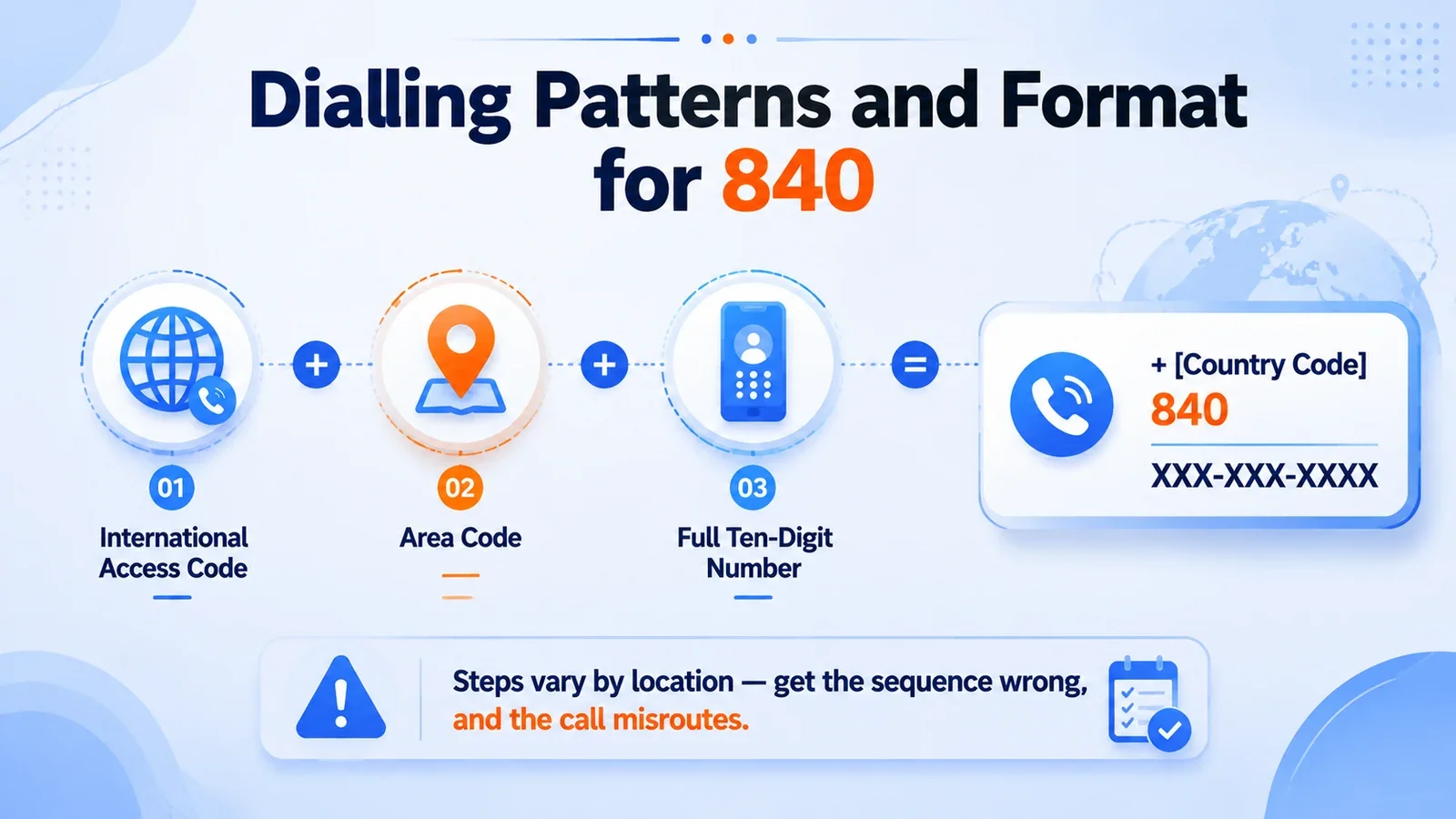
- Local call: Dial 840 + the seven-digit number (10-digit dialing is mandatory across the 909/840 overlay).
- Domestic long-distance: Dial 1 + 840 + the seven-digit number.
- From Canada: Dial 1 + 840 + the seven-digit number (same NANP framework).
- From the UK: Dial 00 + 1 + 840 + the seven-digit number.
- From most other countries: Dial your international access code + 1 + 840 + the seven-digit number.
Behind the scenes, wholesale voice termination carries the outbound minutes — without solid termination agreements, calls fail at network borders.
Dialing errors cause failed calls, wrong numbers, or surprise charges — always verify the full number first. Businesses programming auto-dialers or PBX systems should confirm 840 is in their outbound dial plans.
Industry Impact and Carrier Requirements for 840
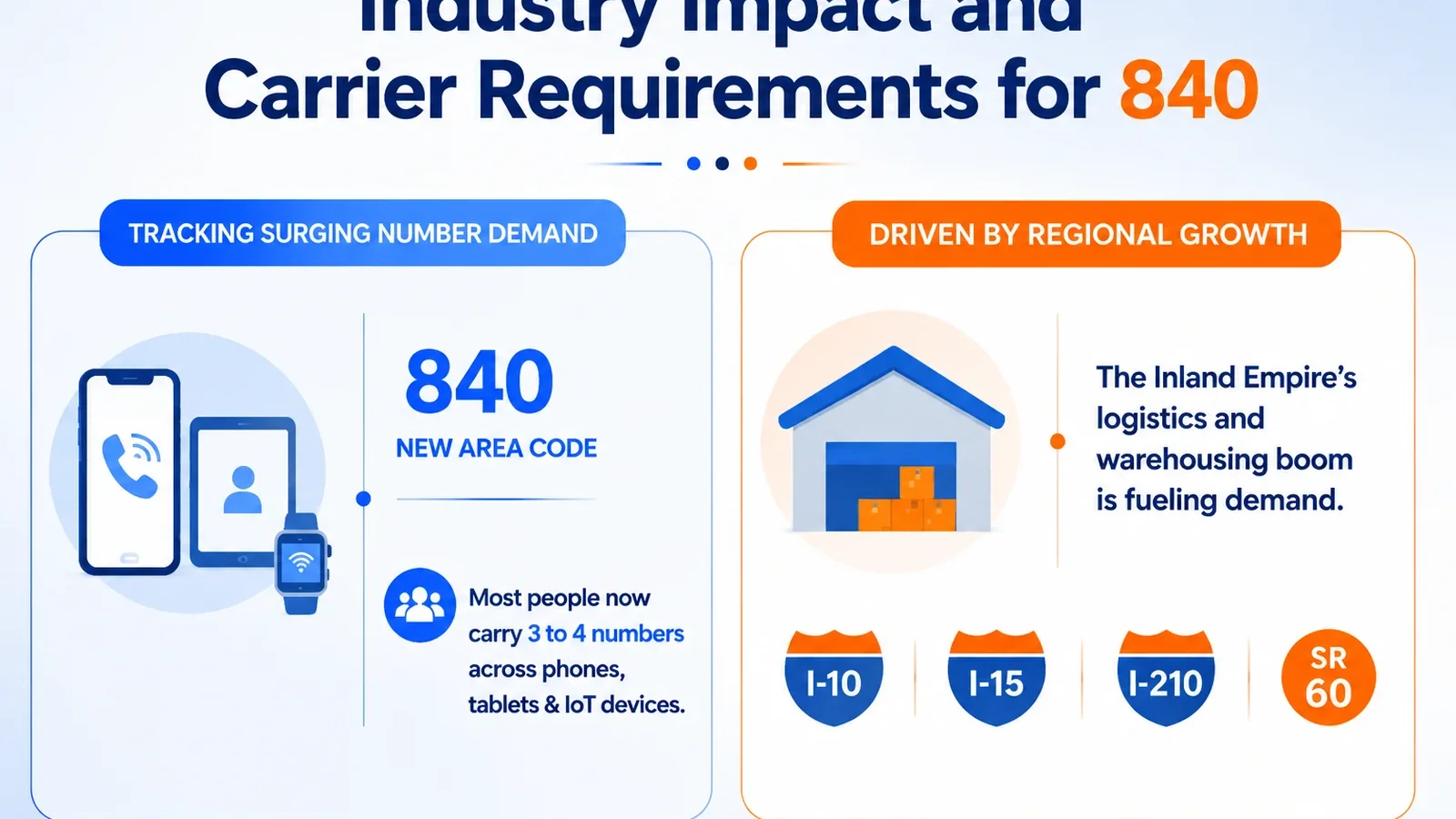
New area codes like 840 track surging number demand — most people now carry three or four numbers across phones, tablets, and IoT devices. The Inland Empire's logistics and warehousing boom along the I-10, I-15, I-210, and SR 60 corridors near Ontario International Airport adds even more pressure.
Rolling out a new area code isn't simple. Carriers must update routing tables, billing systems, and emergency databases, all while honoring portability for customers keeping old 909 numbers. Launch dates must be coordinated to prevent misrouted calls.
- Network upgrades: Switches and routers must recognize the new prefix.
- Database updates: 911 systems, caller-ID platforms, and fraud filters need the fresh code recorded.
- Customer outreach: Providers inform users about the new code and any dialing changes.
- Number portability: Existing 909 customers can keep their current numbers after the 840 overlay.
- Billing adjustments: Rate tables must reflect whether calls to the new code count as local or long-distance.
Business Opportunities and Local Trust with 840
New codes create real opportunities too. They open fresh number blocks for the Inland Empire market, including vanity numbers unavailable under 909. Wholesale VoIP providers can assign 840 DIDs to clients wanting a local San Bernardino County presence without physical offices.
840 numbers build local trust — customers answer more readily when they recognize the area code. A local number signals a company serves the region's logistics, healthcare, retail, and construction sectors, boosting answer rates in Ontario, Rancho Cucamonga, Fontana, and Redlands.
The same overlay dynamics are playing out elsewhere in California — the 820 area code region on the Central Coast has seen similar demand as local businesses request numbers that match their community rather than a distant billing address, mirroring the growth pattern TKOS has watched unfold across the Inland Empire.
VoIP Cost Benefits and Security for 840
VoIP simplifies 840 usage — cloud phone systems assign 840 numbers to any user, anywhere, so remote teams and call centers can share one local prefix. Calls route over the internet, with call forwarding, voicemail-to-email, and auto-attendants built in.
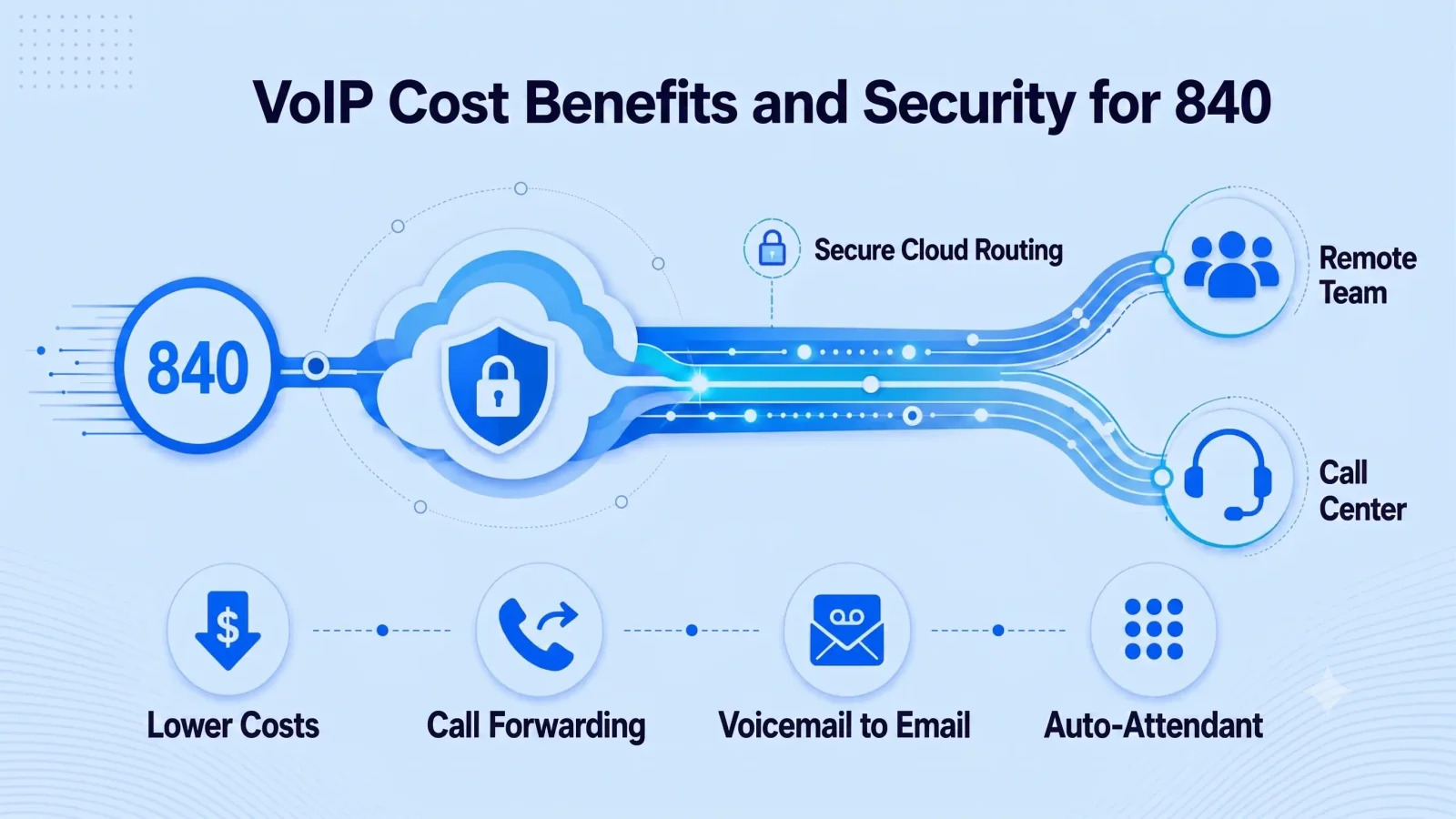
Cost matters too. Landlines charge per-minute, distance-based rates that add up fast for sales teams and support desks. VoIP flattens that — a call from New York to an 840 number costs the same as a local one, saving high-volume businesses thousands monthly.
Security matters too. As 840 becomes established, scammers may spoof it to look local — common scams include fake IRS threats, bogus warranties, and banking phishing. Carriers counter this with Call authentication, which digitally signs calls to verify caller identity.
How Callers Identify 840 Numbers
Caller ID shows the full ten-digit number before connection, and familiar area codes boost answer rates — local numbers consistently beat toll-free or unfamiliar prefixes. As 840 grows alongside 909, businesses using it gain that same trust before the call even connects.
Smartphones let users screen numbers before answering, and spam-detection apps flag numbers from community reports. Legitimate 840 numbers registered to verified businesses appear clean — critical for sales teams, support centers, and healthcare providers chasing high connect rates. Registering with major lookup providers protects that reputation.
Maintaining 840 Number Reputation and Compliance
Carriers monitor call patterns on every prefix, including 840. Lines with unusually high volumes, short durations, or blocked-report surges risk throttling or flagging. Businesses should keep call cadences reasonable, honor opt-outs promptly, and stay TCPA compliant to protect deliverability and trust.
How to Get an 840 Number
Getting an 840 number for your business takes minutes rather than weeks, since TKOS provisions Inland Empire DIDs directly through its cloud phone platform without requiring a physical office in San Bernardino County. Most customers finish setup and place their first call the same day they sign up.
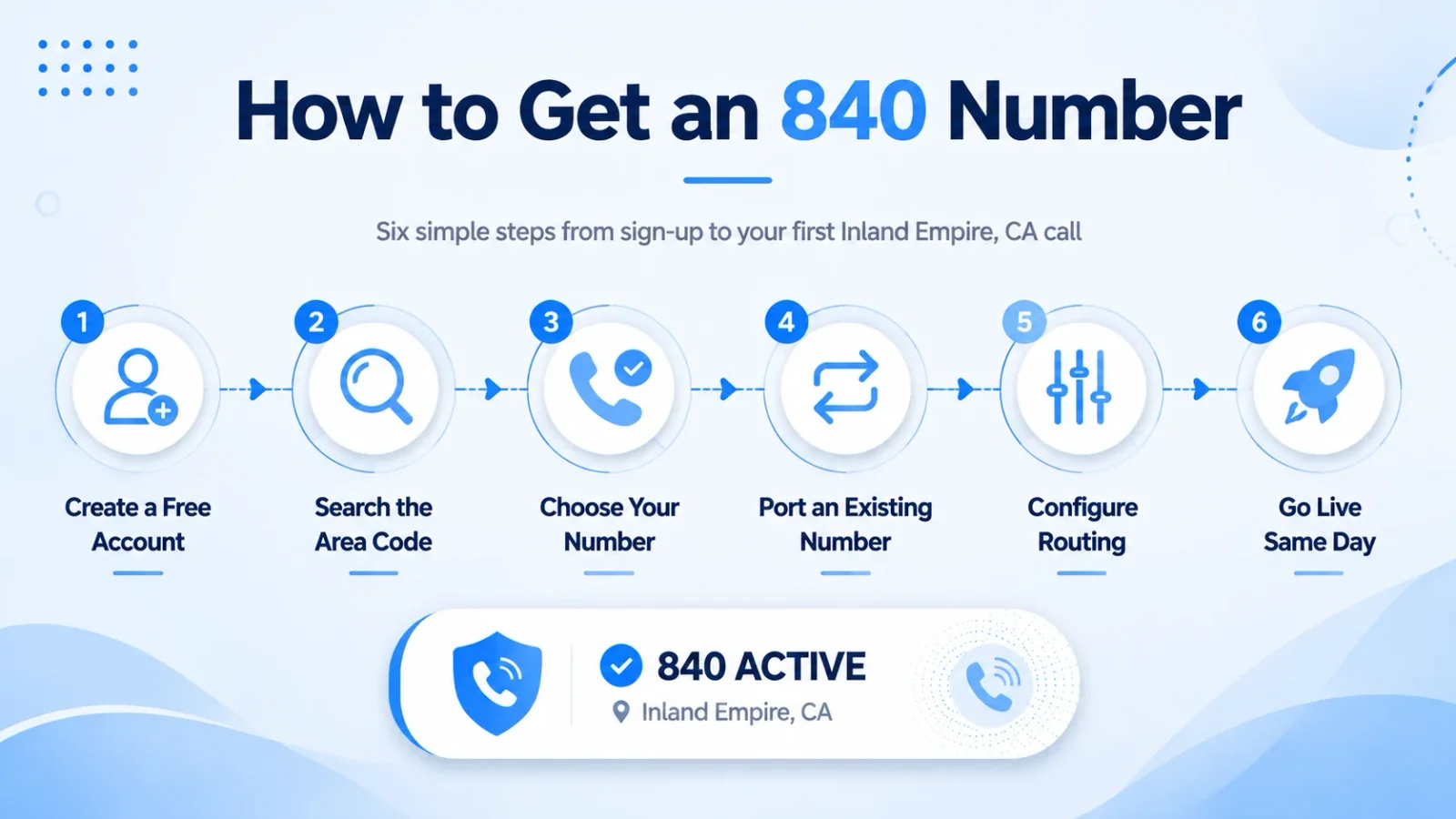
The process is designed for teams that want a local presence in Ontario, Rancho Cucamonga, or Redlands without the overhead of a traditional carrier contract. TKOS customers expanding beyond the Inland Empire often also set up numbers in the 945 area code for a Dallas-Fort Worth presence, all managed from the same TKOS dashboard.
- Create a free TKOS account: Sign up online with a business email and a few basic details to open your number-management dashboard.
- Search available 840 numbers: Filter the number picker by the 840 area code to see which prefixes and exchanges are currently open.
- Choose or request a specific number: Pick a standard listing or request a vanity number that matches your brand.
- Port an existing number if switching providers: Submit a porting request so your current 909 or other number transfers over without downtime.
- Configure call routing and forwarding: Set up auto-attendants, ring groups, and voicemail-to-email before the line goes live.
- Go live: Publish the number across your website, listings, and CRM so customers can start reaching you at your new 840 line.
Once active, the number behaves like any other TKOS line — calls route over the same tier-1 network, so call quality and reliability stay consistent even as you add more regional numbers later.
Conclusion
The 840 area code is more than a routing prefix — it's telecom growth meeting demand across the Inland Empire. Rooted in the 1947 NANP framework and layered onto 909 in 2021, it keeps local, long-distance, and special-service calls cleanly separated. For businesses, that means local credibility and better answer rates.
Stay safe too: never share account numbers, Social Security digits, or passwords with unknown callers, even local-looking ones. Let unexpected calls go to voicemail, call back on verified numbers, and report suspicious activity to carriers and the FCC. Codes like 840 keep the Inland Empire connected.
Popular international calling destinations