Introduction
Area codes are three-digit prefixes that route phone calls to the right region. They let networks tell a local number from one across the country, mapping each call to a unique zone—whether that is a single city, a state, or a whole country. The 884 area code follows this same model. A caller dials three digits plus a seven-digit local number, and the North American Numbering Plan handles the rest, keeping billions of calls sorted every day.
Beyond basic routing, area codes serve varied purposes. Some prefixes are reserved for toll-free lines, emergency hotlines, government offices, or customer support centers. Certain codes are set aside for future use. The 884 area code fits within this broad framework, helping carriers manage traffic and assign numbers in an orderly way. Whether you place calls in this region or want a credible local business presence, knowing how 884 works gives you a practical edge.
NANP Origins and the 1947 Area Code System
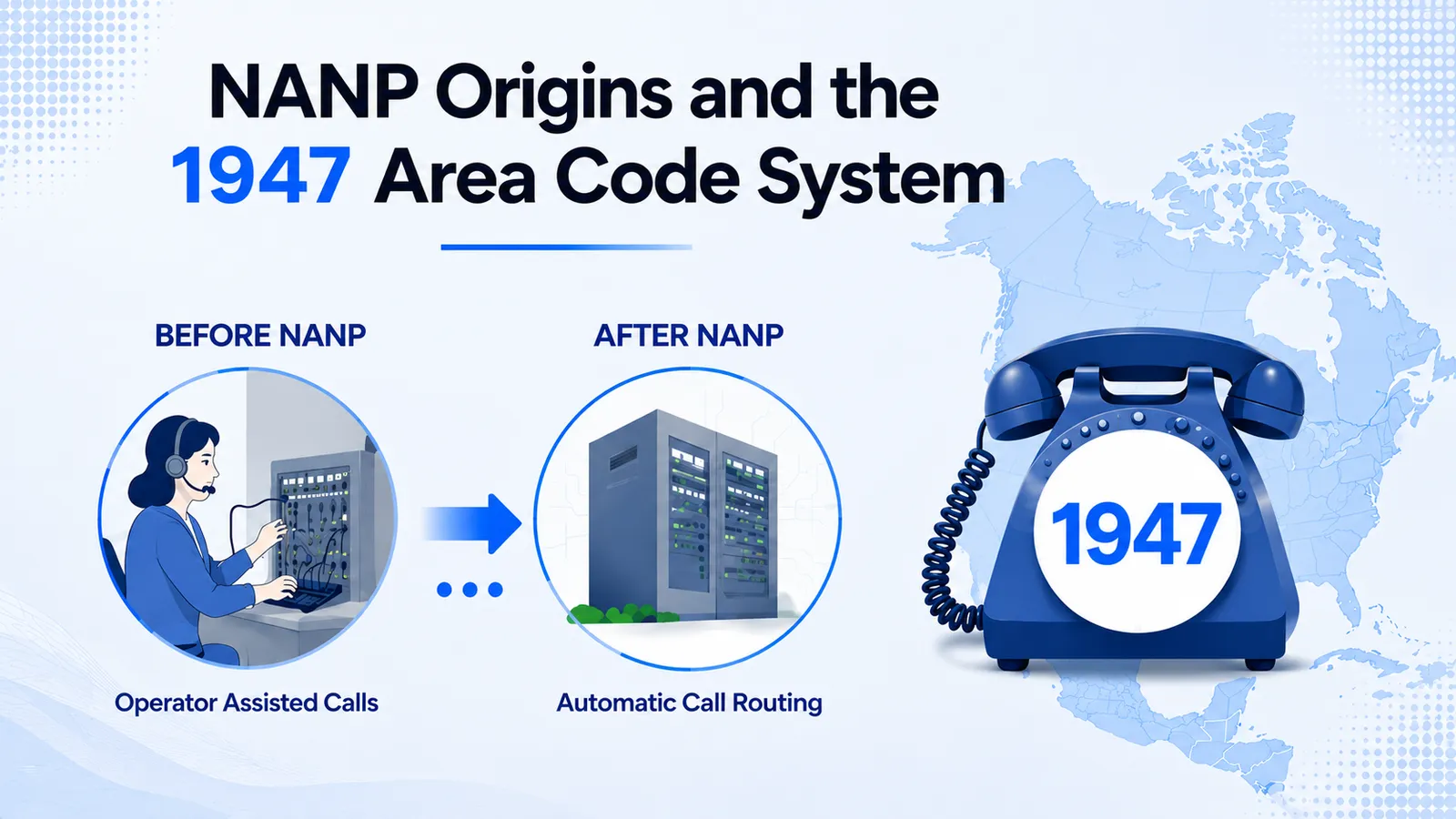
The concept of area codes dates back to 1947. That year, the FCC Guide-overseen North American Numbering Plan (NANP) was created. The NANP set up a standard numbering system across North America. It covers the United States, Canada, and several Caribbean nations. The main goal was to split large regions into smaller zones so phone networks could route calls faster and with fewer errors.
Before the NANP, long-distance calls required human operators. A caller would pick up the phone and ask an operator to connect them by name or number. The process was slow, expensive, and prone to mistakes. By assigning numeric codes to each region, the NANP let switching equipment handle routing automatically. This shift cut call setup times from minutes to seconds. It also paved the way for direct long-distance dialing without operator help. The change was a turning point in making phone service affordable for everyday households.
How the 884 Area Code Fits the NANP Expansion
The original NANP assigned about 86 area codes across the continent. That seemed like plenty at the time. As populations grew and new devices appeared, that supply ran low. Cell phones, fax machines, and smart devices all needed their own numbers. Regulators responded by creating overlay codes and geographic splits. The 884 area code is part of this expansion. It was introduced to allocate fresh number blocks where older codes had reached capacity.
- The 884 area code was introduced to allocate unique numerical prefixes for efficient call routing.
- Callers within the 884 area code dial the three-digit area code followed by the seven-digit local phone number.
- The purpose of area codes like 884 is to distinguish between local, long-distance, and international calls.
- Dialing patterns may vary when calling from outside the 884 area code, requiring additional prefixes or international access codes.
- Additional area codes were introduced to accommodate growing populations and advancements in telephony.
Dialing Patterns and Format for 884
When calling from outside the 884 area code, you may need extra digits. The exact steps depend on where you are calling from. In most cases, you dial your country's international access code first. Next, you enter the country code for the 884 region. Then you key in the full ten-digit number. Getting the sequence right matters because a single wrong digit can send your call to the wrong destination.
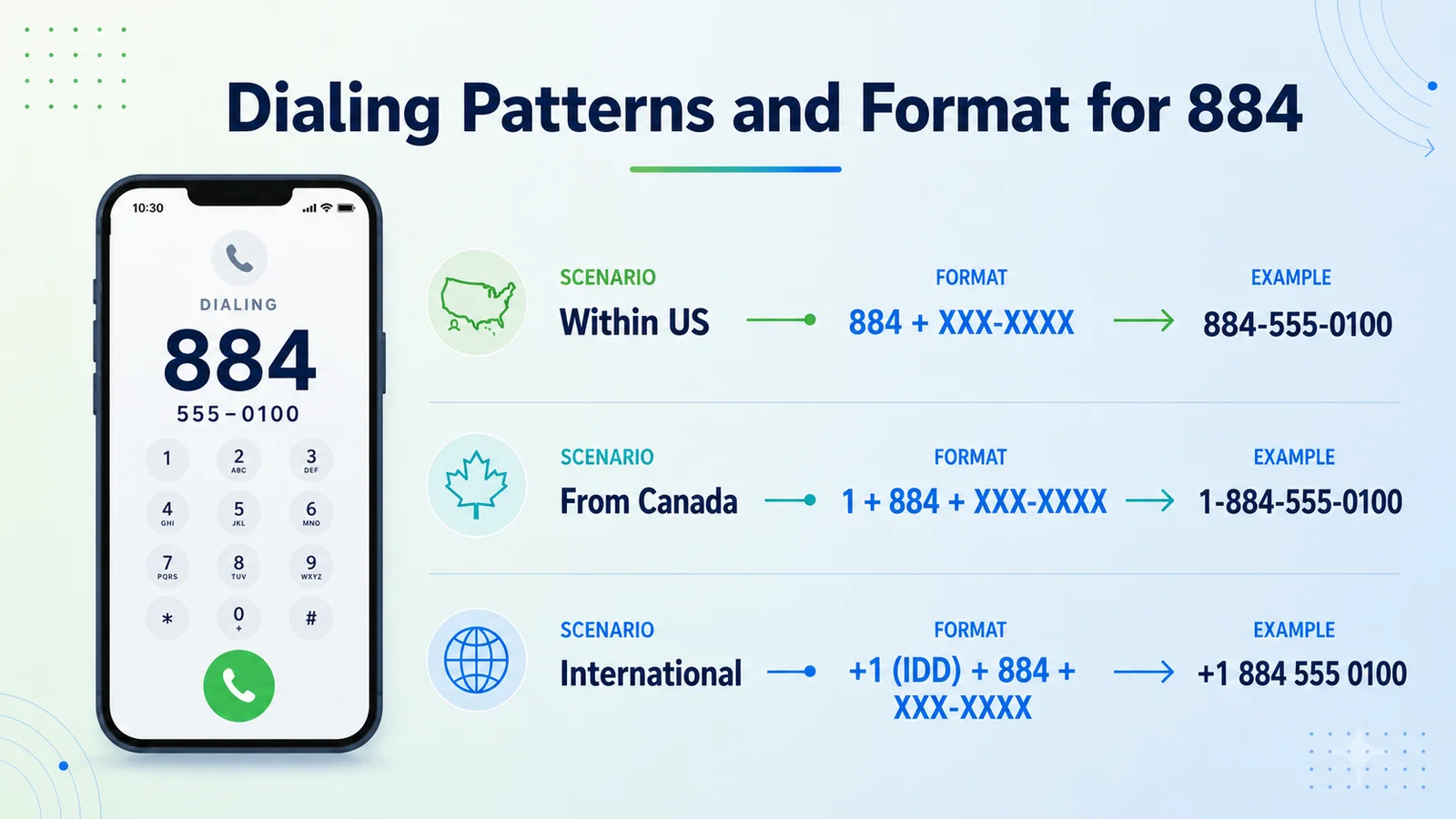
Here is a quick look at common dialing patterns for the 884 area code:
- Local call: Dial 884 + seven-digit number.
- Domestic long-distance: Dial 1 + 884 + seven-digit number.
- From Canada: Dial 1 + 884 + seven-digit number (same NANP framework).
- From the UK: Dial 00 + 1 + 884 + seven-digit number.
- From most other countries: Dial international access code + 1 + 884 + seven-digit number.
Following these steps is key to accurate call routing. It helps phone networks process and direct calls smoothly. Behind the scenes, wholesale voice termination handles every outbound minute placed on these numbers. Carriers rely on termination partners to complete calls across networks at scale. Without proper termination agreements, calls would fail at network borders.
Mistakes in dialing can cause failed calls, wrong-number connections, or unexpected charges. Always double-check the area code and the full number before you dial. If you are programming an auto-dialer or PBX system, verify that the 884 prefix is included in your outbound dial plan so calls route correctly on the first attempt.
Industry Impact and Carrier Requirements for 884
New area codes like 884 have a big effect on the telecom industry. As demand for phone numbers grows, service providers must update their systems. Smartphones, tablets, IoT devices, and fax lines all need unique numbers. One person may own three or four numbers today. This constant growth drains the supply of available codes and pushes regulators to open new ones.
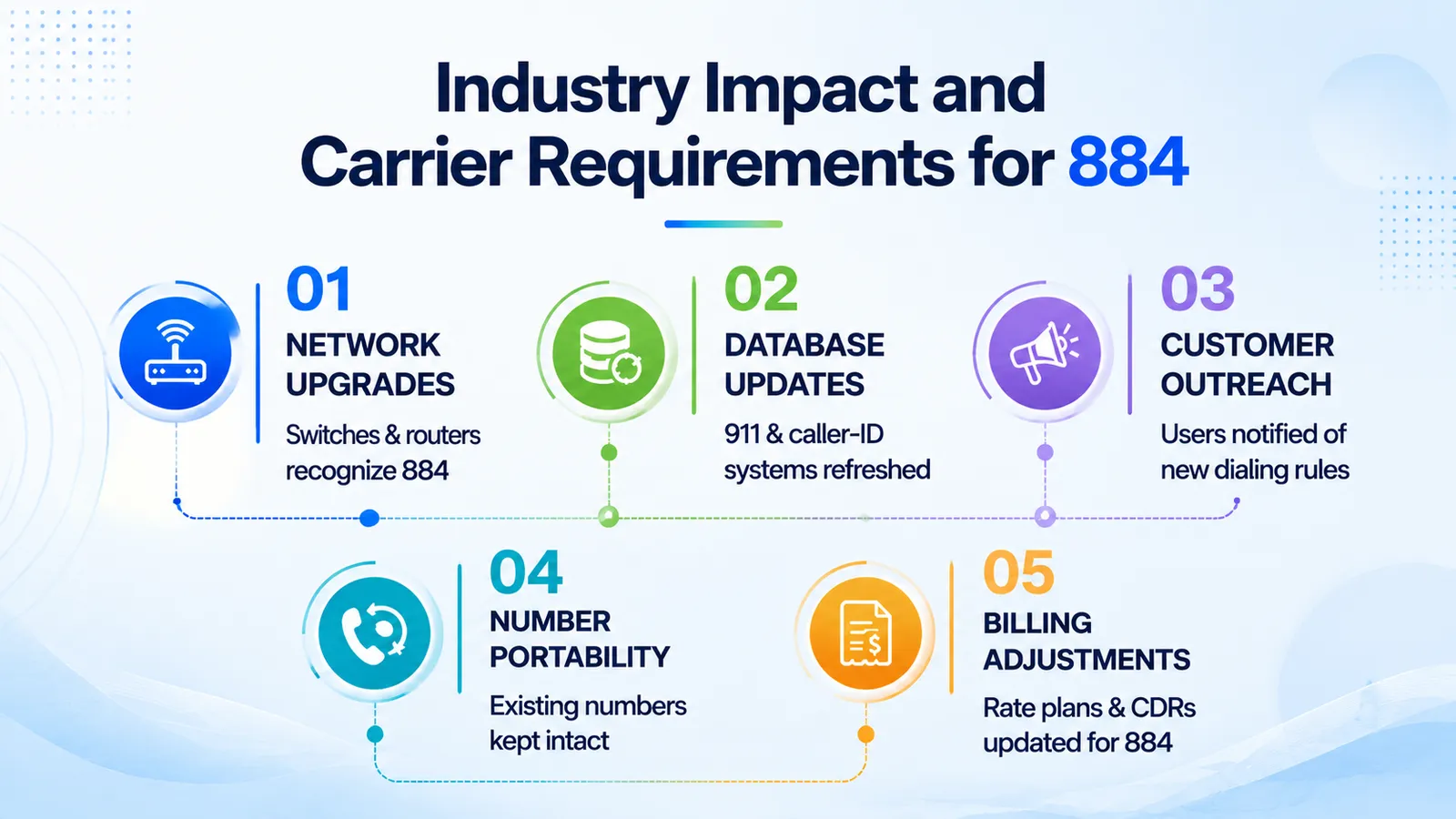
Rolling out a new area code is not a simple switch. Carriers must update routing tables, billing systems, and emergency databases. Local number portability rules still apply. Customers who keep their old numbers need seamless service during the transition. Every carrier in the region must coordinate the launch date to avoid misrouted calls.
- Network upgrades: Switches and routers must recognize the new prefix.
- Database updates: 911 systems, caller-ID platforms, and fraud filters need the fresh code on record.
- Customer outreach: Providers notify users about the new code and any changes to dialing habits.
- Number portability: Existing customers can keep their current numbers even after a new overlay code launches.
- Billing adjustments: Rate tables must reflect whether calls to the new code count as local or long-distance.
Business Opportunities and Local Trust with 884
Despite these challenges, new codes create real opportunities. They open fresh blocks of numbers for businesses entering a market. Startups can pick vanity numbers that were not available before. Wholesale VoIP providers can allocate 884 DIDs to clients who want a local presence without a physical office.
For businesses, having an 884 number can build local trust. Customers are more likely to answer a call from a familiar area code. A local number on a website or business card signals that the company serves that area. This detail can lift answer rates and improve customer engagement.
VoIP Cost Benefits and Security for 884
VoIP technology makes it even easier to use the 884 area code. A cloud phone system can assign an 884 number to any user, no matter where they sit. Remote teams, call centers, and sales reps can all share the same local prefix. Calls travel over the internet, so there are no geographic limits. Features like call forwarding, voicemail-to-email, and auto-attendants come built in.
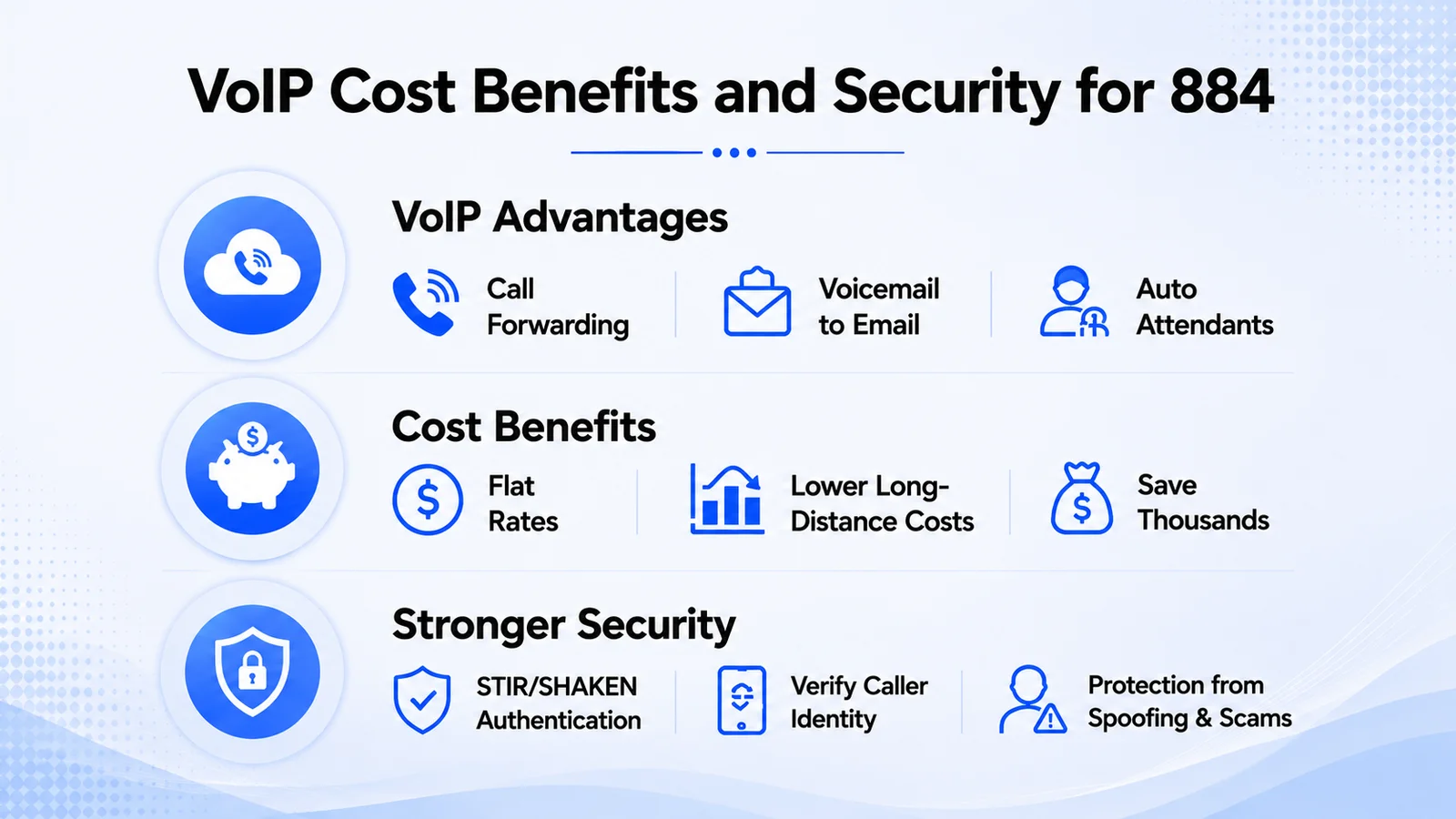
There are also cost benefits. Traditional landlines charge per-minute rates that vary by distance. Long-distance calls can add up fast for sales teams and support desks. VoIP flattens those costs. A call from New York to an 884 number costs the same as a call from the next town over. Businesses that handle high call volumes can save thousands each month by switching to VoIP with an 884 DID.
Security is another factor. As new area codes roll out, scammers may exploit unfamiliar prefixes. They spoof 884 numbers to appear local and trick people into answering. Common scams include fake IRS threats, bogus warranty offers, and phishing for bank details. Carriers combat this with STIR/SHAKEN call authentication. This protocol attaches a digital signature to each call so the receiving network can verify the caller's identity.
How Callers Identify 884 Numbers
Caller ID displays the full ten-digit number before a call connects. When a recipient sees a familiar area code, they are far more likely to pick up. Answer rates for local numbers consistently outperform toll-free or unfamiliar prefixes by a significant margin. Once the 884 area code becomes established in a region, businesses using it benefit from this same advantage. A recognizable local prefix carries built-in trust before a single word is spoken.
Modern smartphones let users search a number before answering. Reverse-lookup databases and spam-detection apps flag numbers based on community reports. A legitimate 884 number registered to a verified business will appear clean in these systems. This matters most for sales teams, support centers, and healthcare providers who depend on high connect rates. Registering your number with major lookup providers and using it responsibly keeps its reputation intact over time.
Maintaining 884 Number Reputation and Compliance
Carriers also monitor call patterns on every prefix, including 884. Lines that generate unusually high call volumes, very short call durations, or a sudden rise in blocked reports may be throttled or flagged. Businesses should follow proper call cadences, honor opt-out requests promptly, and stay compliant with TCPA guidelines. Protecting the reputation of an 884 number protects long-term deliverability and ensures customers continue to see it as a trustworthy caller.
Conclusion
The 884 area code is more than a routing prefix. It reflects the ongoing growth of telecom networks scaling to meet rising demand, and rooted in the 1947 NANP framework, it keeps local, long-distance, and special-service calls neatly separated. For callers, it means dialing the right digits and letting the network work. For carriers, it means updating infrastructure through every transition. For businesses, it opens doors to local credibility, better answer rates, and flexible VoIP setups.
Staying safe is part of using any area code responsibly. Never share account numbers, Social Security digits, or passwords with an unknown caller, even if the number looks local. Let unexpected calls go to voicemail and call back through a verified number. Report suspicious activity to your carrier and to the FCC. As providers continue adding capacity and launching new prefixes, codes like 884 remain a small but vital part of the system that keeps people, businesses, and emergency services connected every day.