Introduction
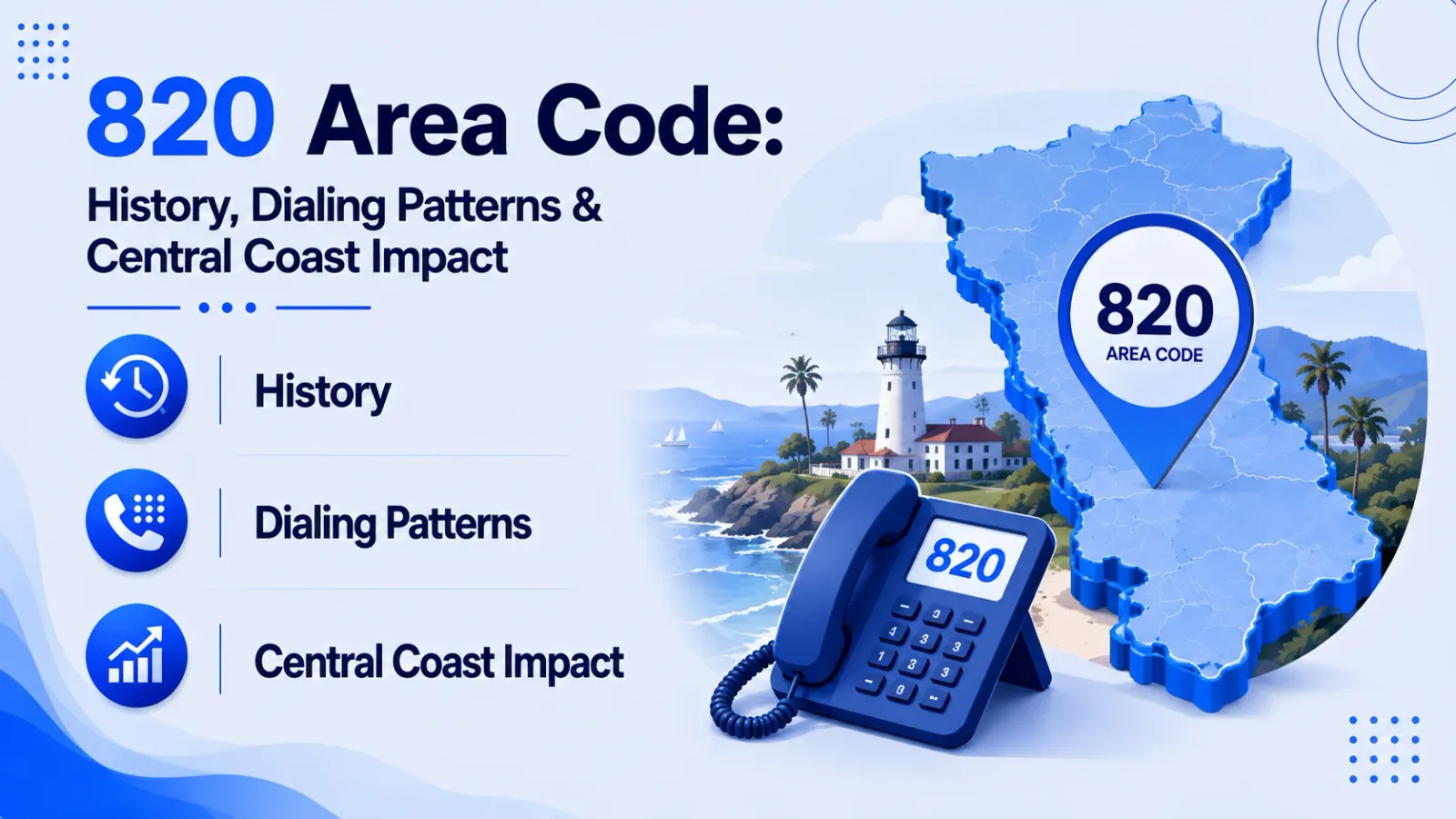
Area codes are three-digit prefixes that tell the phone network where to send a call. The 820 area code is the newer overlay serving California's Central Coast. Callers dial three digits plus seven local digits, routed automatically by the North American Numbering Plan.
Some prefixes are reserved for toll-free lines, emergency hotlines, or future growth. The 820 area code overlays 805, helping carriers assign fresh numbers across San Luis Obispo, Santa Barbara, and Ventura counties without retiring a single existing line.
History of 820: From NANP to the 1999 Split
Long-distance dialing traces back to 1947, when the NANP split the U.S., Canada, and parts of the Caribbean into numbered zones, letting callers dial direct instead of waiting for an operator.
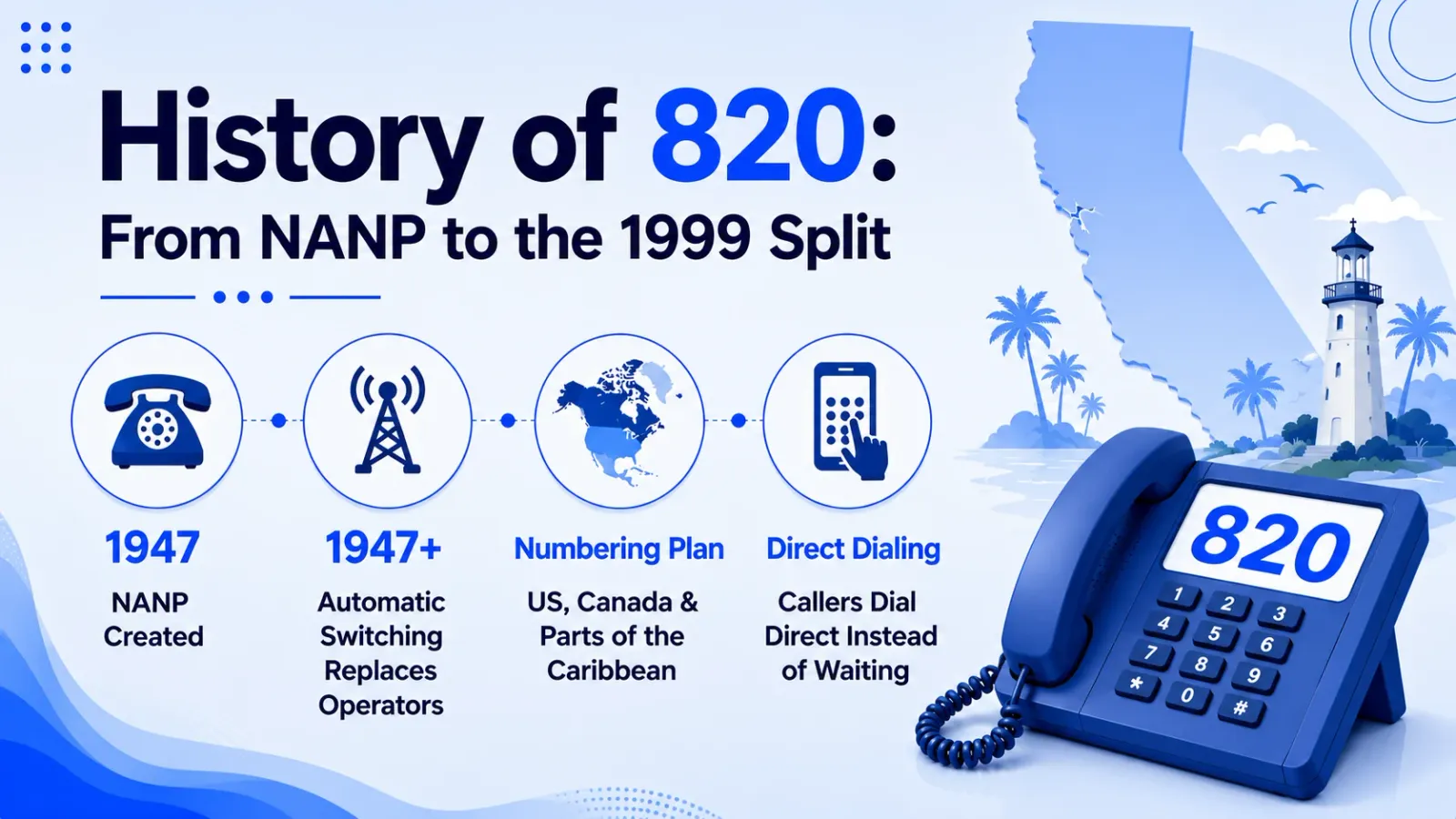
Area code 805 has served California's Central Coast for decades; by 1999, inland growth prompted regulators to spin off 661 for the San Joaquin and Santa Clarita valleys, while 805 kept its coastal counties.
The 2017 Overlay: How and Why 820 Arrived
Even after the 661 split, 805 filled up again as phones, tablets, and connected devices multiplied across the coast. The California Public Utilities Commission approved 820 as an overlay on May 25, 2017, adding capacity without redrawing any county lines.
New 820 numbers began service in June 2018. That same month, 10-digit dialing became mandatory across the whole 805/820 complex, so even a call across the street now needs the full area code, not just seven digits.
Cracking the Code: How to Dial an 820 Number
Calling an 820 number from outside the area code takes extra digits: an international access code, then the US country code, then the full ten-digit number. Miss a step in that sequence and the call misroutes or fails outright.
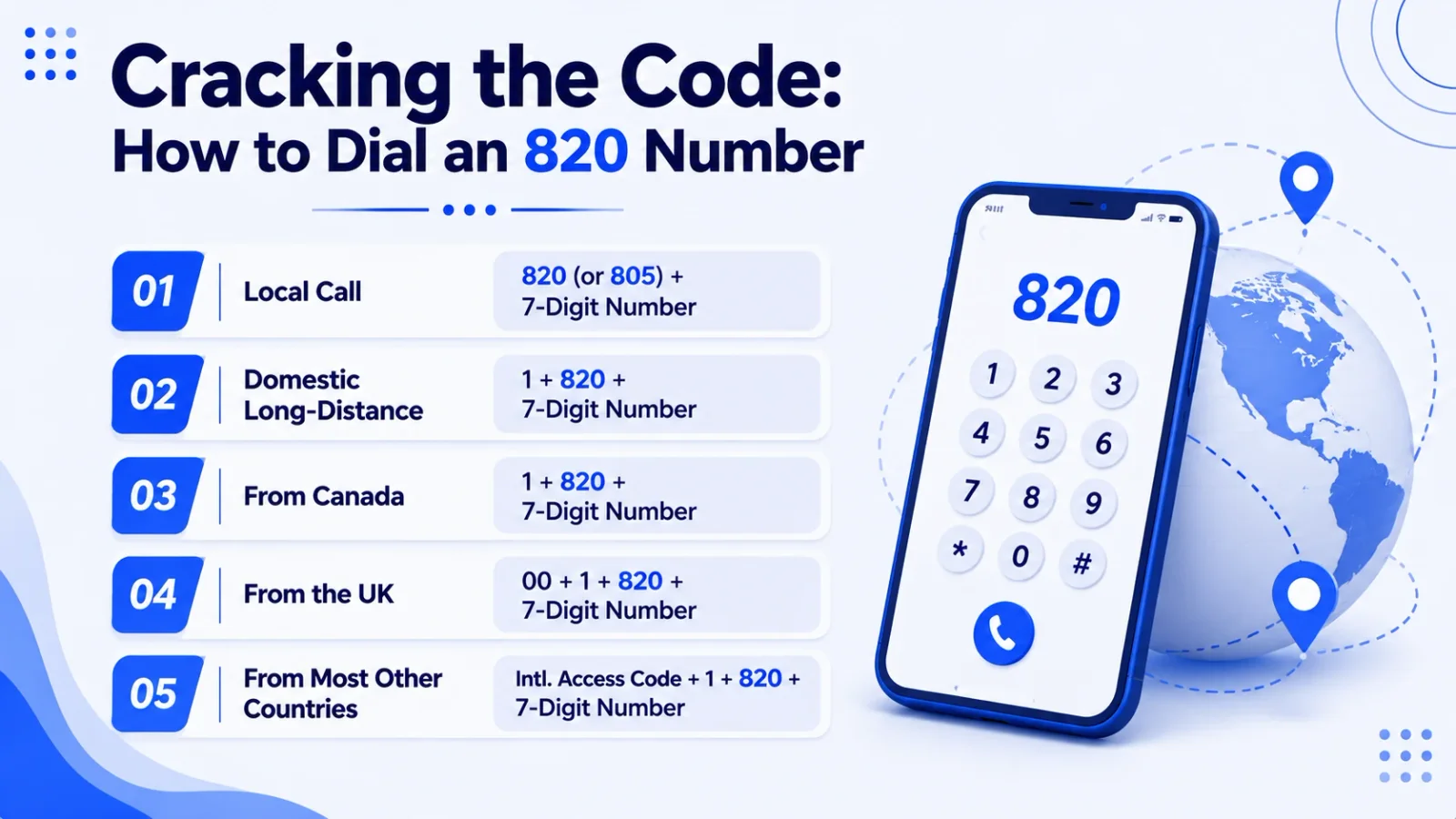
- Local call: Dial 820 (or 805) + the seven-digit number — 10-digit dialing is mandatory across the whole overlay complex.
- Domestic long-distance: Dial 1 + 820 + the seven-digit number.
- From Canada: Dial 1 + 820 + the seven-digit number (same NANP framework).
- From the UK: Dial 00 + 1 + 820 + the seven-digit number.
- From most other countries: Dial your international access code + 1 + 820 + the seven-digit number.
Correct dialing keeps calls routing cleanly across the network. Behind the scenes, wholesale voice termination carries those minutes to their destination — weak termination agreements are a common cause of dropped or misrouted long-distance calls.
Typos cause failed connections, wrong numbers, or surprise charges, so always double-check the full number before dialing. Businesses running auto-dialers or PBX systems should confirm 820 sits in their outbound dial plans alongside 805.
Wine Country, Rockets & Research: Who Relies on 820
The Central Coast's economy spans wine and agriculture across Santa Barbara and San Luis Obispo counties, coastal tourism, Vandenberg Space Force Base's launch operations, and two major universities — Cal Poly San Luis Obispo and UC Santa Barbara — all generating steady demand for local phone numbers.
Rolling out an overlay isn't simple for carriers either. Switches, billing systems, and 911 databases all need updating, and every step has to protect number portability for callers keeping their existing 805 line.
- Network upgrades: Switches and routers must recognize the new prefix.
- Database updates: 911 systems, caller-ID platforms, and fraud filters need the fresh code recorded.
- Customer outreach: Providers inform users about the overlay and the shift to 10-digit dialing.
- Number portability: Existing 805 customers keep their numbers unchanged under the 820 overlay.
- Billing adjustments: Rate tables must reflect whether 820 calls count as local or long-distance.
Local Numbers, Local Trust: Business Opportunities
New codes open fresh inventory too. The 820 overlay unlocks number blocks and vanity numbers no longer available under 805, giving newer businesses options that would otherwise be gone. Wholesale VoIP providers can assign 820 DIDs to clients wanting a Central Coast presence without an office.
820 numbers build local trust — customers answer more readily when they recognize the area code. A local number signals a company serves the region's wine, tourism, agriculture, and research sectors, boosting answer rates in Santa Barbara, San Luis Obispo, Ventura, and Paso Robles. A similar overlay played out to the north when the 279 area code launched over Sacramento and the Central Valley, giving agriculture and logistics firms there the same kind of recognizable local prefix that Central Coast businesses now lean on.
Landline vs. VoIP: Cost, Security & STIR/SHAKEN
VoIP simplifies life on the Central Coast — cloud phone systems assign 820 numbers to any user, anywhere, so remote teams and seasonal tourism staff can share one local prefix. Calls route over the internet, with forwarding, voicemail-to-email, and auto-attendants built in.
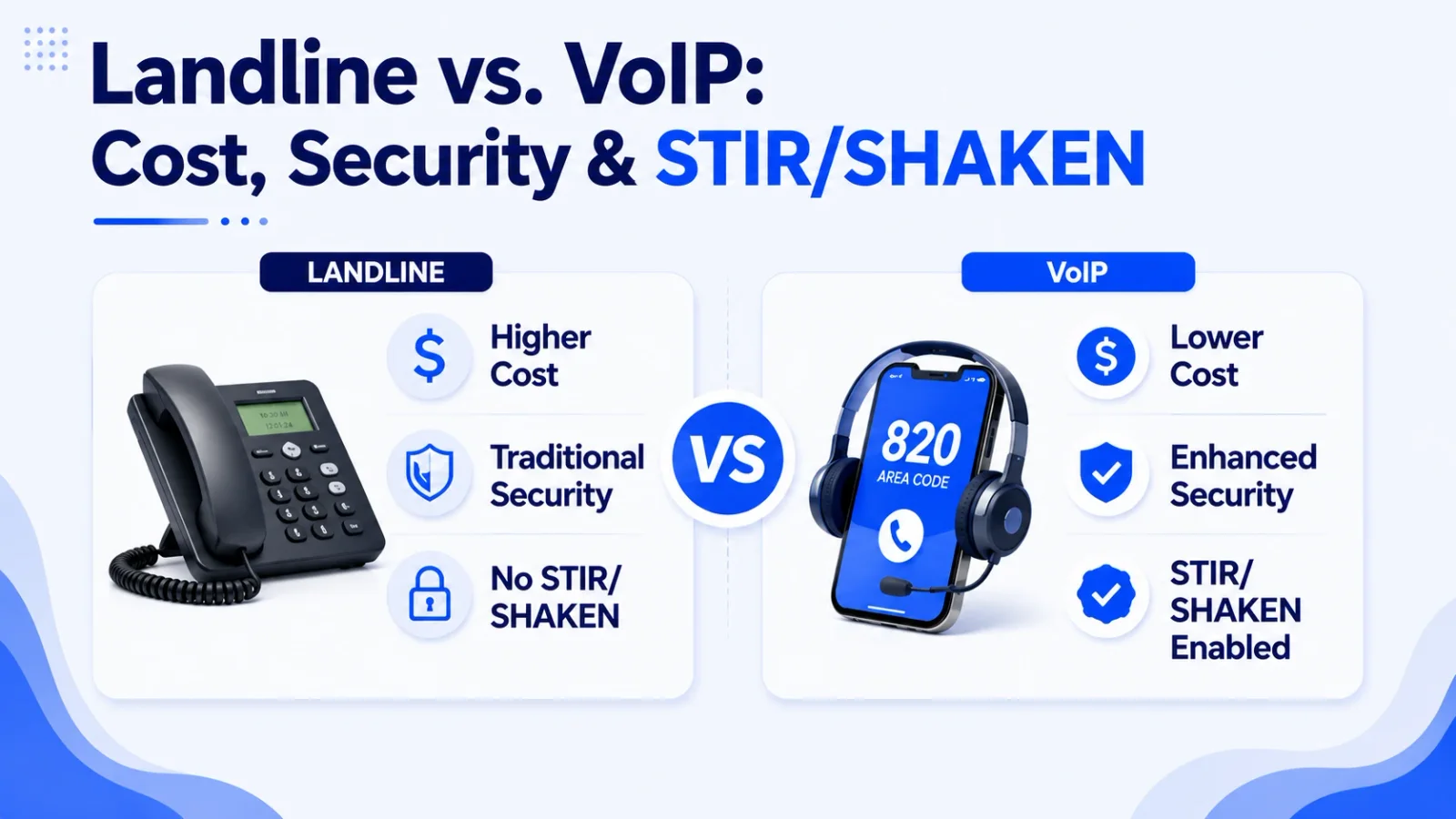
Cost matters too. Landlines bill per-minute, distance-based rates that add up fast for wineries booking tastings or agencies fielding tourist calls. VoIP flattens that — a call from London to an 820 number costs the same as one from next door.
Security matters just as much. As 820 becomes familiar, scammers may spoof it to look local — running fake prize, warranty, or banking scams. Carriers counter this with STIR/SHAKEN, which digitally signs calls so recipients can verify the caller's identity.
First Impressions: How Callers Read an 820 Number
Caller ID shows the full ten-digit number before anyone answers, and familiar area codes boost pickup rates — local numbers consistently beat toll-free or unrecognized prefixes. As 820 grows alongside 805, businesses using it earn that trust before the call even connects.
Smartphones let users screen calls before answering, and spam-detection apps flag numbers reported by other recipients. Legitimate 820 numbers tied to verified businesses stay clean — critical for wineries, booking agencies, and campus offices chasing high connect rates. Registering with major caller-ID providers protects that reputation.
Staying Compliant: Reputation & TCPA Guidance
Carriers monitor call patterns on every prefix, including 820. Lines with unusually high volumes, short durations, or spikes in blocked-call reports risk throttling or flags. Businesses should pace outbound calls sensibly, honor opt-outs immediately, and stay TCPA-compliant to protect deliverability and trust.
How to Get an 820 Number
Claiming a Central Coast number no longer means waiting on a technician or signing a multi-year contract. TKOS turns the whole process into a self-service signup, so a tasting room, tour desk, or satellite office anywhere from Santa Maria to Ojai can activate an 820 line the same afternoon it decides to expand.
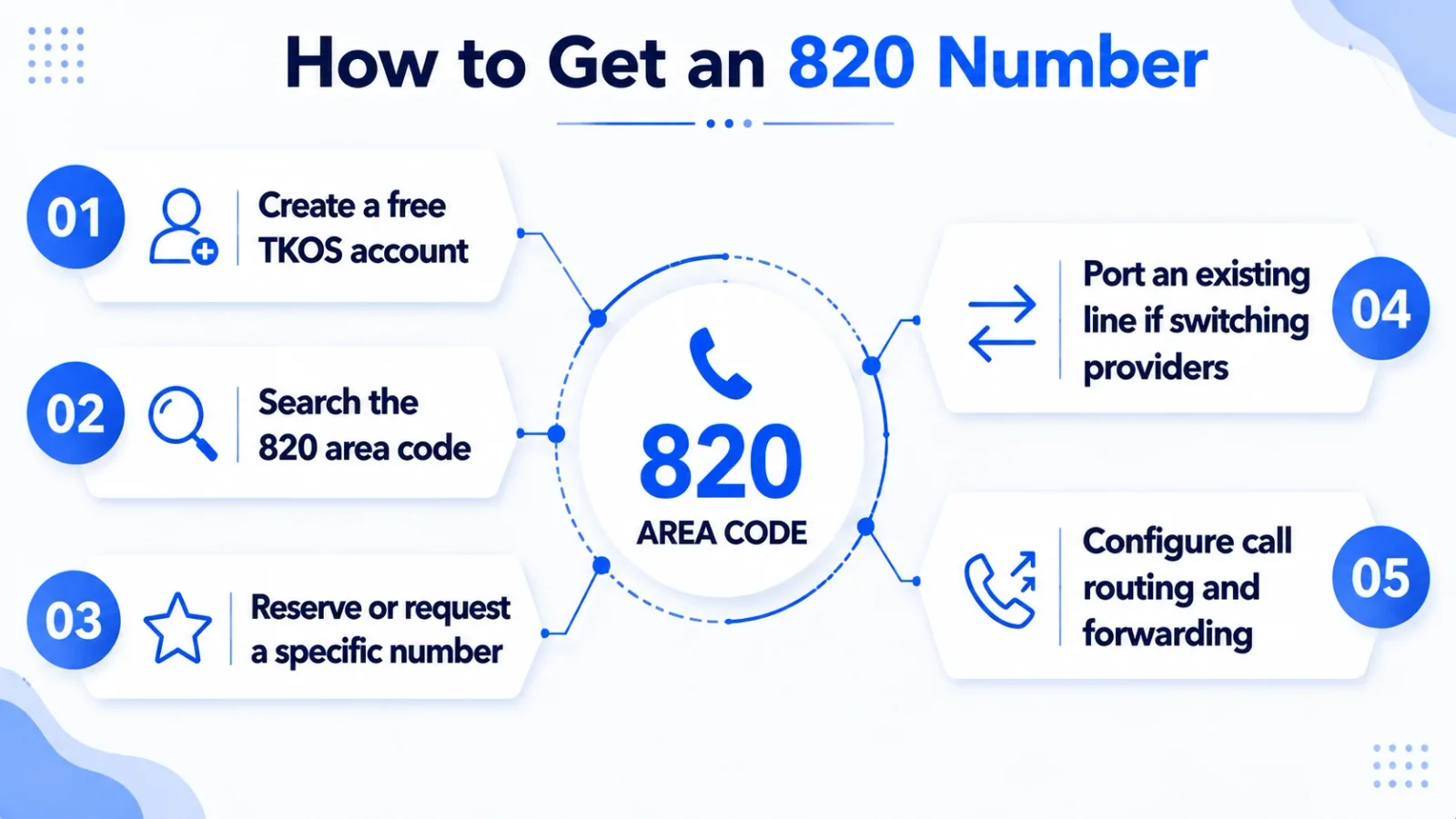
- Create a free TKOS account: Sign up online with an email address and business name — no hardware purchase or long-term contract required to get started.
- Search the 820 area code: Browse available numbers filtered by prefix and exchange, including options that spell out a memorable word or match a local landmark.
- Reserve or request a specific number: Lock in a vanity number for a marketing campaign, or let the system assign the best available match automatically.
- Port an existing line if switching providers: Keep a current 805 or 820 number and transfer it to TKOS without any service interruption for callers.
- Configure call routing and forwarding: Point the new number to a ring group, voicemail box, or mobile phone, and set business hours for after-hours coverage.
- Go live: Publish the number on the website, listings, and caller ID, and start taking Central Coast calls right away.
TKOS customers expanding beyond the coast often pair an 820 number with a presence in the 840 area code, giving one business local-sounding lines in both the Central Coast and Southern California's Inland Empire without ever opening a second office.
Conclusion
The 820 area code is more than a routing prefix — it's telecom infrastructure keeping pace with the Central Coast. Rooted in the 1947 NANP framework and layered onto 805 in 2018, it keeps calls cleanly separated. For businesses, that means local credibility and stronger answer rates.
Stay cautious too: never share account numbers, Social Security digits, or passwords with unknown callers, even ones that look local. Let unexpected calls go to voicemail, call back on verified numbers, and report suspicious activity to carriers and the FCC.
Popular international calling destinations