Introduction
Picture this: a Cape Town-based e-commerce business wants to serve US customers on WhatsApp. They find a free US number app, sign up, enter the number — and the verification code never arrives. They try three more apps. Two reject the number outright. One finally delivers a code, but WhatsApp flags the account within 48 hours.
This is not bad luck. It is what happens with most free US number services. WhatsApp's verification system actively blocks VoIP-flagged and shared-pool numbers — and the free options are full of both. Understanding where free numbers fail — and what actually holds up — is what this guide covers.
Why Would You Need a US Number for WhatsApp?
The reasons vary more than most guides acknowledge. Individuals often want a US number for privacy — keeping their personal South African number off group chats — for accessing US-based contacts who expect a +1 number, or for managing a side business without a second SIM.
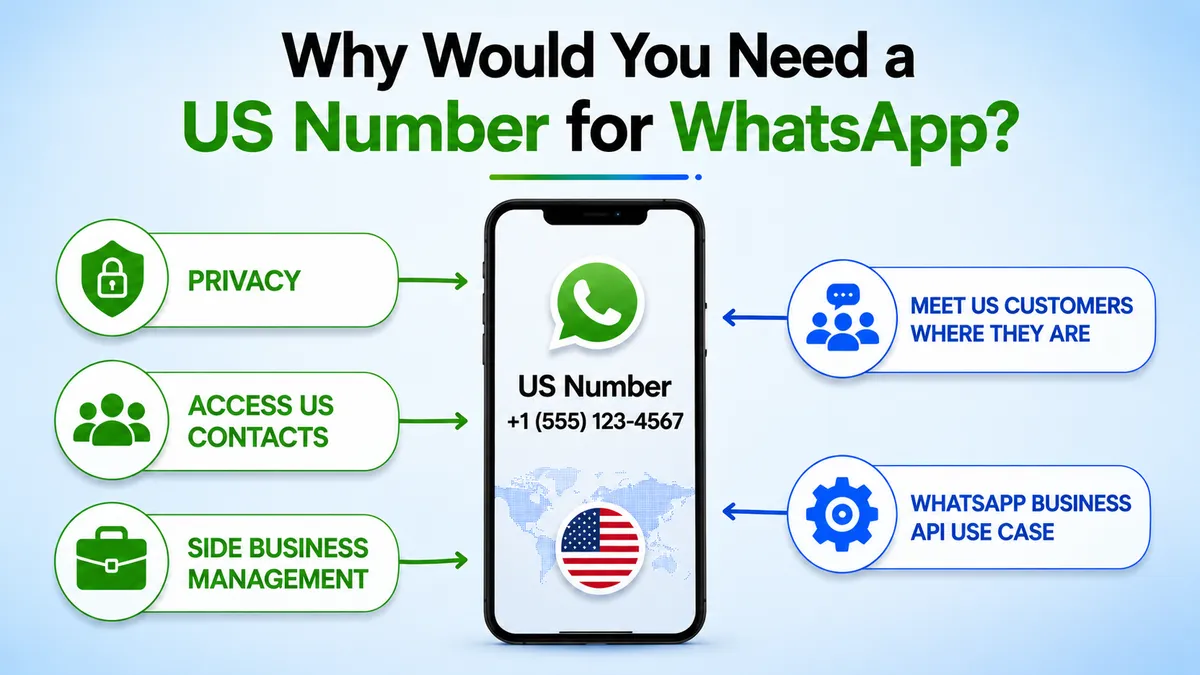
Businesses have a different set of needs. South African companies selling to US customers increasingly use WhatsApp as a support and sales channel — and a +1 number is the difference between a message that gets read and one that gets ignored. A US-facing business that wants to meet American buyers on WhatsApp needs a number that doesn't look foreign.
What Free Options Exist for Getting a US WhatsApp Number?
Several services provide free or near-free US numbers. Here is an honest look at each.
Google Voice
Google Voice gives you a genuine US number tied to a Google account — calls, SMS, and voicemail included. WhatsApp can verify via this number. The catch: Google Voice requires an existing US number or US phone to sign up, and it is only available to US residents. Accessing it from South Africa requires a VPN and an existing US number to complete setup, which creates a circular dependency. Not practical for most users outside North America.
TextNow
TextNow assigns a free US or Canadian number and supports SMS over Wi-Fi. The free tier is ad-supported. WhatsApp verification codes generally arrive, and many users report success. Numbers go inactive if unused for 30+ days, which is a problem for a secondary WhatsApp account you don't check daily. Reliability drops sharply after the initial few weeks.
Talkatone
Similar model to TextNow — free US number, Wi-Fi calling, ad-supported. Works for verification in many cases. The free tier has call minute limits. Numbers recycled from inactive accounts sometimes carry a WhatsApp registration history, which causes the new registrant's verification to fail silently.
Public SMS-Receiving Sites
Sites that publish shared US numbers where anyone can read incoming SMS publicly are shared by thousands of users simultaneously. WhatsApp has flagged and blacklisted the overwhelming majority of these numbers. Using them for a WhatsApp account is rarely reliable and carries a real risk of the account being flagged immediately after verification.
Can You Use a Free Foreign Number for WhatsApp?
Yes — WhatsApp accepts numbers from any country, not just the US. A free foreign number for WhatsApp works as long as it can receive an SMS or voice call for verification. The same limitations that apply to free US numbers apply globally: VoIP-tagged numbers, shared pool numbers, and recycled virtual numbers are frequently blocked by WhatsApp's verification system regardless of country code.
The most reliable free foreign numbers for WhatsApp come from services that assign dedicated numbers rather than shared pools. Google Voice is US-only; most free apps focus on +1 numbers. For other country codes, a dedicated virtual DID from a local carrier is the only option with consistent verification rates. For a US-facing presence, a +1 number is worth targeting — US customers are far less likely to engage with an unfamiliar international code.
Why Do Free US Numbers Often Fail WhatsApp Verification?
WhatsApp's verification system now distinguishes between mobile-registered numbers and VoIP or virtual numbers. The platform actively restricts registration on VoIP numbers, shared virtual numbers, and numbers previously used for bulk account creation — aligning with number authentication standards outlined in the FCC guide.
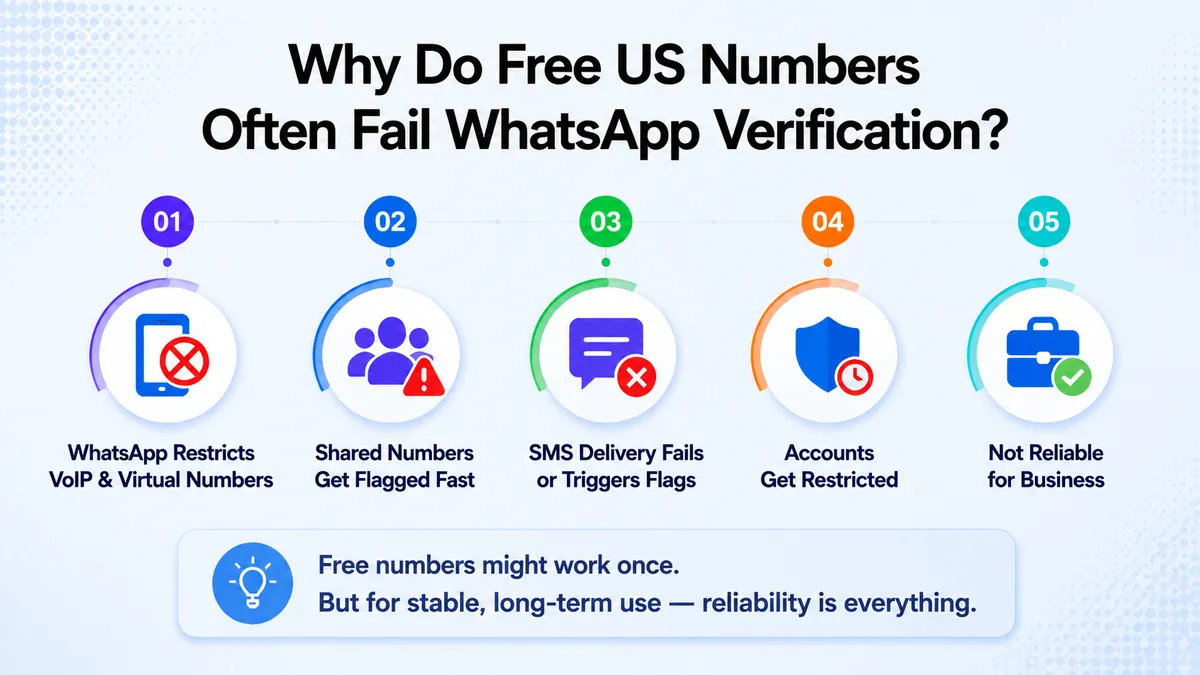
The mechanism is straightforward: a number used by hundreds of people for WhatsApp verification gets flagged as high-risk. Free shared numbers burn through their verification utility fast. Most VoIP-tagged numbers now either fail to receive the verification SMS entirely, or receive it but trigger an account flag within 24—72 hours. For any business account, a shared or recycled number is not a foundation you can build on.
Getting a Free WhatsApp Number and Code: What to Expect
When you search for a free WhatsApp number and code, you are looking for two things: a US (or other country) number to register with, and the OTP verification code WhatsApp sends to confirm ownership. The number is the easy part — apps like TextNow or Talkatone assign one in under a minute. The code is where things go wrong.
WhatsApp sends its verification code via SMS. For free app numbers, it may arrive immediately, be delayed, or not arrive at all if the number is flagged. If SMS fails, try the voice call fallback — WhatsApp reads the code aloud, and this succeeds more often on VoIP numbers. Even after a successful code, WhatsApp may restrict the account within hours if the number is on a known VoIP range. A dedicated virtual DID bypasses this — it passes carrier lookup as a legitimate number, so the code arrives and the account is not flagged.
What Is the Difference Between a Free Number and a Virtual US DID?
Not all virtual numbers are the same. Free app-issued numbers are VoIP numbers assigned dynamically from a shared pool, carrying a VoIP flag in number lookup databases that WhatsApp checks during verification. Shared pools mean the number's history is unpredictable and often blacklisted before you ever use it.
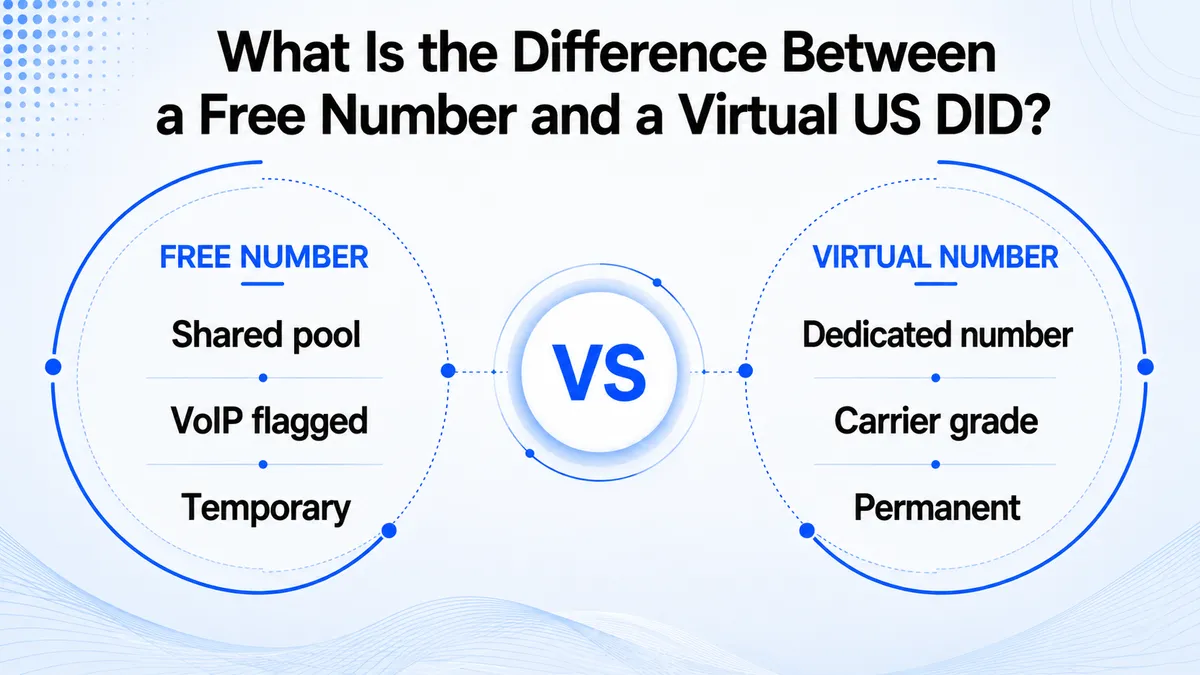
A Direct Inward Dialing (DID) number is a dedicated number assigned exclusively to you, routed through carrier-grade infrastructure with a legitimate geographic registration. DID numbers issued by licensed carriers can be ported, held indefinitely, and used across multiple services including WhatsApp Business and the WhatsApp Business API.
The practical difference: a dedicated virtual US DID from a licensed carrier behaves like a real US phone number — because, from a carrier perspective, it is one. WhatsApp's verification system treats it accordingly. For a South African business that needs a permanent, reliable US WhatsApp presence, this is the path that holds.
How to Get a Reliable US Number for WhatsApp — Step by Step
If your use case is personal or low-volume and you accept the risks, TextNow is the most functional free option. For long-term business use, a dedicated virtual DID from a carrier-grade provider is the right foundation.
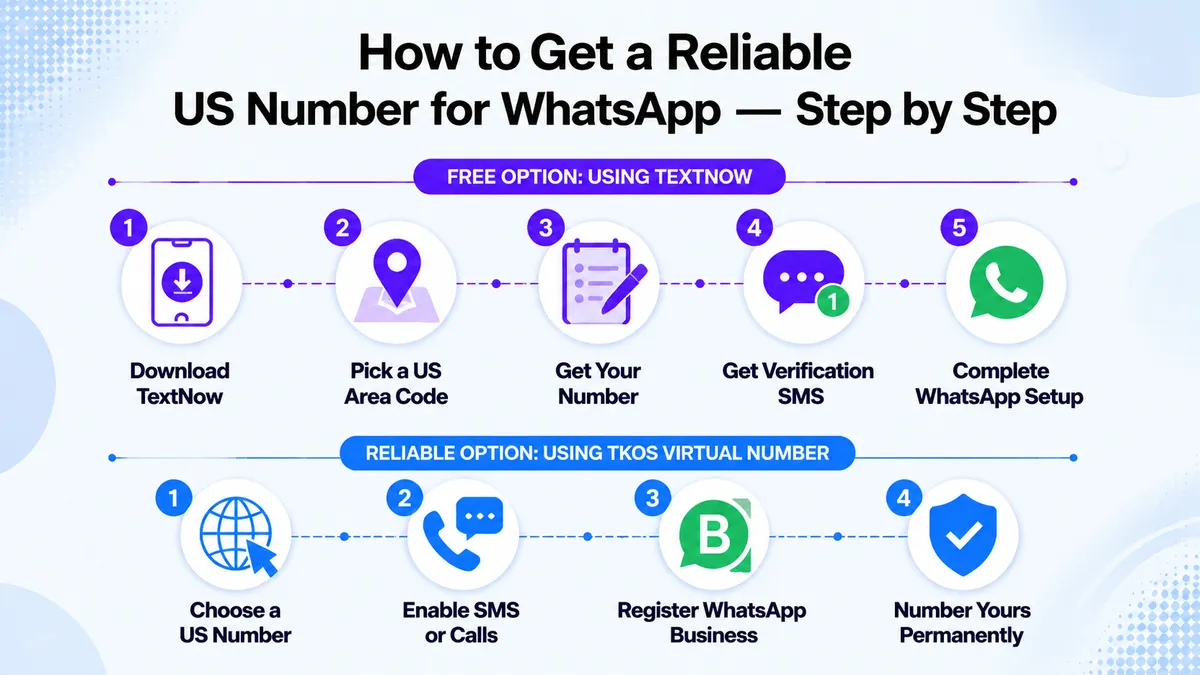
To use TextNow: download the app, create an account, and select a US area code — major metro codes like the 279 area code (Sacramento) are recognised by US recipients. Open WhatsApp, register with the number, retrieve the SMS code from TextNow, and complete setup. Log in at least once every 30 days to keep the number active.
For a dedicated virtual number — the option that works for WhatsApp Business and long-term use — select a US DID from the TKOS area code inventory. Configure it to receive SMS or voice calls to your chosen device or PBX. Use the number to register WhatsApp Business on your business device. TKOS operates as a wholesale VoIP carrier, which means the number is permanently assigned to your account — no activity requirements, no recycling risk, and no shared history.
Should You Use WhatsApp Business or WhatsApp Business API with a US Number?
WhatsApp Business (the app) is appropriate for small businesses where one person manages conversations manually. A virtual US DID works fine here — download the app, register with your US number, and you are presenting a +1 number to US customers.
WhatsApp Business API is for operations that need CRM integration, automated messaging, or multi-agent access. The API requires a dedicated number never previously registered on any WhatsApp app — a fresh virtual DID is the clean solution. You will also need a Meta Business Manager account and a verified business. TKOS virtual number infrastructure supports both paths — contact the team at tkos.co.za to configure the right number and routing.
How to Get a WhatsApp Number Without Payment
Getting a WhatsApp number without payment is possible through the free-tier apps covered above. TextNow is the most consistent free option for a US number — no credit card required, no payment at signup. Talkatone works similarly. Both assign a real US number at no cost, supported by in-app advertising.
The limits of the no-payment route are real: numbers expire after 30 days of inactivity, verification success depends on whether that specific number has been flagged by WhatsApp, and there is no support if things go wrong. For personal use where losing the account is acceptable, these are reasonable trade-offs.
For business use, the payment-free options are not a foundation — they are a test. The practical path for a business that needs a WhatsApp number without recurring instability is a dedicated virtual DID, which carries a small monthly fee but removes all of the above risks. The cost is typically lower than one hour of staff time spent troubleshooting a flagged account.
Conclusion
A free US number can get you through the door for personal use, but free options come with real trade-offs. VoIP blocks, 30-day activity rules, recycled number histories, and WhatsApp account restrictions can arrive without warning. Every time an account gets flagged, you lose the contact list, the chat history, and the number itself. For a business account on WhatsApp Business or the WhatsApp Business API, that level of instability is simply not acceptable.
The right move is a dedicated virtual US DID — permanently assigned, carrier-registered, and not shared with anyone else. TKOS provides carrier-grade virtual numbers across 100+ countries, including dedicated US DIDs built for WhatsApp Business registration. Unlike free shared-pool numbers, these are permanently assigned to your account with a 99.9% uptime SLA and routing through 500+ direct carrier interconnects. Browse US area codes and build your US WhatsApp presence on a foundation that holds.
Top WhatsApp calling countries