Introduction
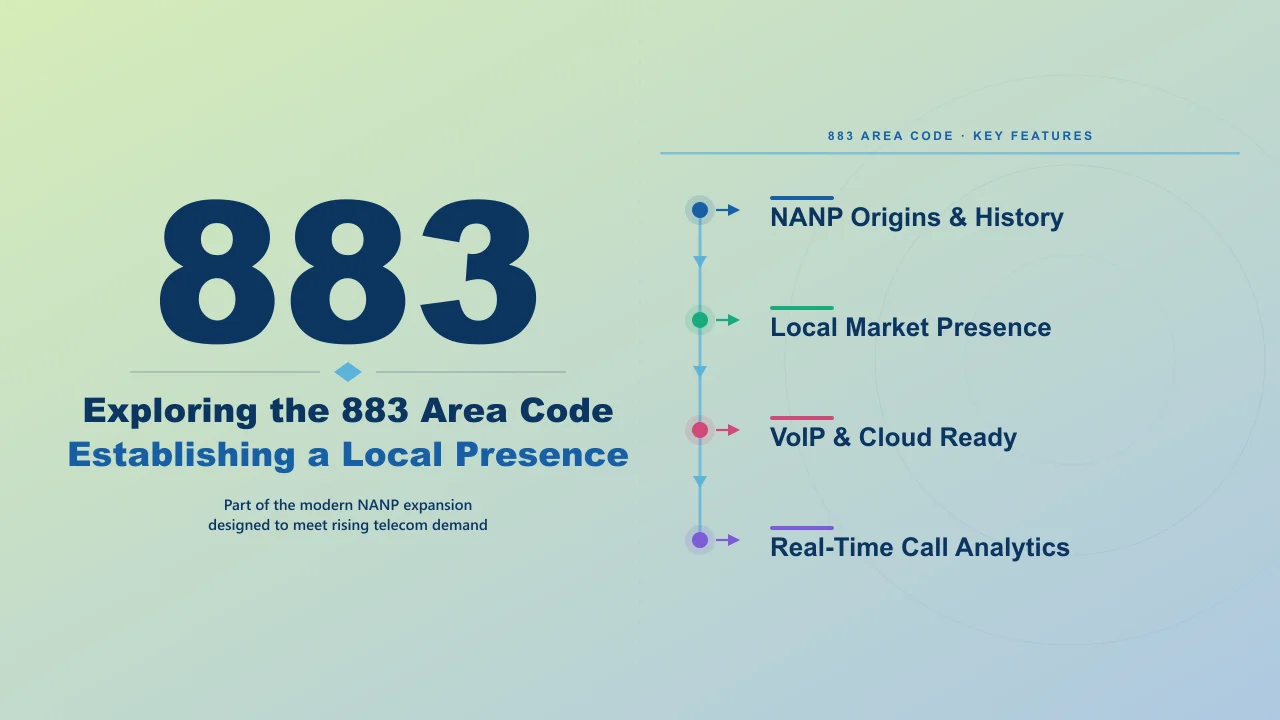
883 is not a city, state, or region — and it's not active. It's one of ten codes (822, 880 through 887, and 889) NANPA holds in reserve for toll-free use, released only when the currently active toll-free codes start running low on numbers. No carrier can issue an 883 number today, for any business, in any location.
That's a correction worth making clearly, because 883 gets described online — including in an earlier version of this article — as if a business could "establish a local presence" with one. It can't. 883 has never been geographic, and it isn't in service. This guide covers what 883 actually is, how NANPA decides when a reserved code like it goes live, and what to use instead right now.
883 Is Toll-Free, Not Geographic
Every US area code falls into one of two families: geographic codes tied to a state or metro (like 305 for Miami or 713 for Houston), and non-geographic codes reserved for specific functions. Toll-free codes are the largest non-geographic family — none of them, including 883, correspond to a place. A future 883 number would work identically for a caller in Miami and a caller in Seattle.
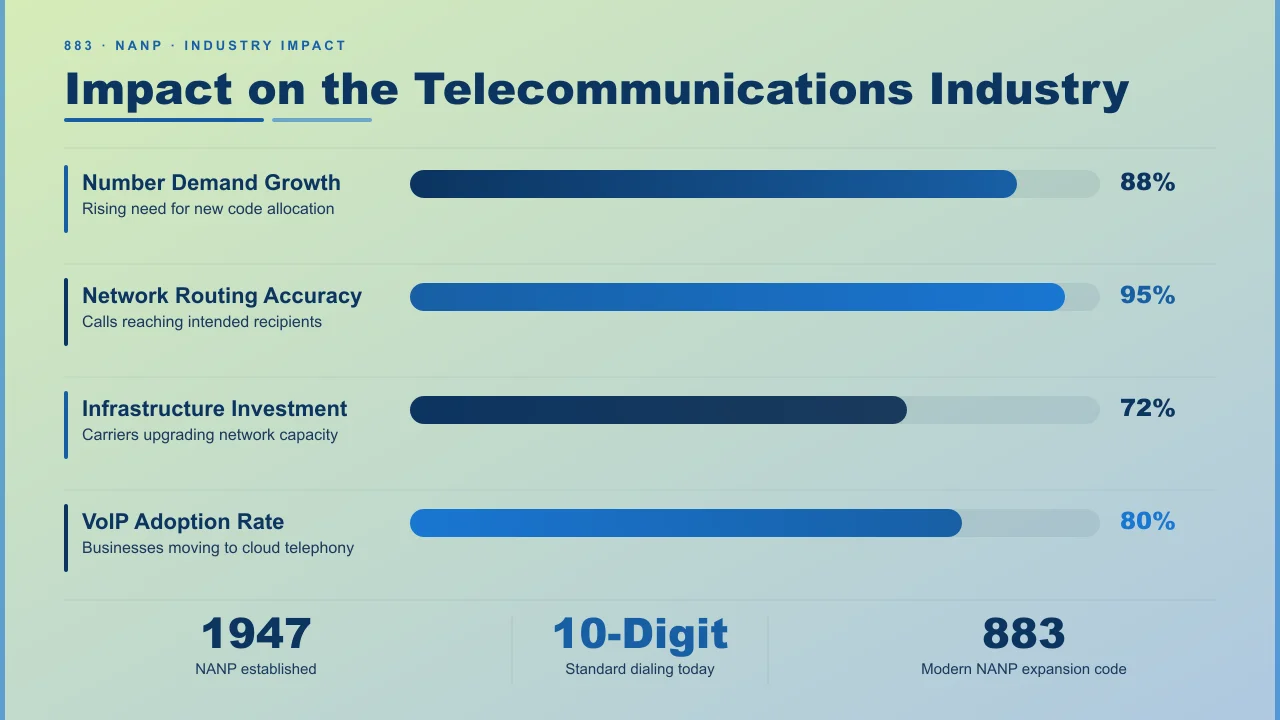
That rules out the "local presence" pitch some sites attach to 883 — toll-free numbers do the opposite, projecting a single national contact point rather than a local one. If local presence in a specific city is the goal, a geographic area-code DID is the right tool, not a toll-free prefix.
How NANPA Decides to Release a Reserved Code
Toll-free codes have been added to the active list eight times since 1967: 800 (1967), 888 (March 1996), 877 (April 1998), 866 (July 2000), 855 (October 2010), 844 (December 2013), and 833 (2017). NANPA and the FCC track how many numbers remain unassigned across all active toll-free codes and add a new one once that supply runs low enough to threaten new activations.
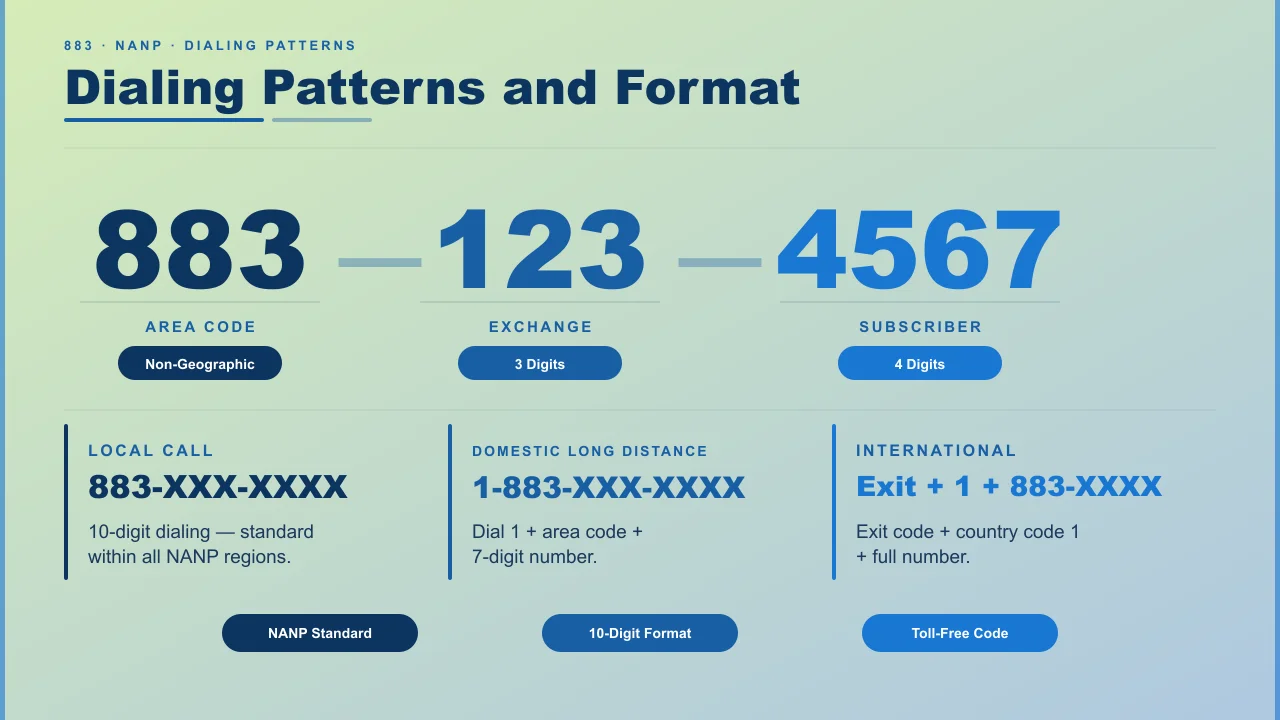
Notice the pattern: releases came roughly every two to four years from 1996 through 2013, then slowed — it's been nine years since 833 arrived in 2017 with no new code needed yet. That's the reserve pool doing its job: 800, 833, 844, 855, 866, 877, and 888 are still meeting demand, so 883 and its nine reserved siblings stay dormant.
- NANPA monitors monthly toll-free number utilization across all seven active codes.
- The FCC authorizes a new code only when the industry projects the active pool will run short.
- Reserved codes activate in the order NANPA assigns them — there's no way to request 883 specifically ahead of others.
- Once released, a new toll-free code works identically to the existing seven — no code is more premium than another.
Don't Fall for an 883 Number Offer
Because 883 sounds plausible as "just another area code," some marketplaces and resellers advertise it as available or let you "reserve" one in advance. Since NANPA hasn't released it, no such number can actually route calls — treat any offer like that as a sign to walk away, the same caution that applies to 880 and 885.
Conclusion
883 is a reserved toll-free code with no geography and no active status — not a local number, not available today, and not on a public release date. For a working toll-free number now, the seven active codes cover the same function 883 will eventually serve. Browse our toll-free numbers page, or if local presence in a specific city is the actual goal, see our wholesale DID number guide.