Introduction
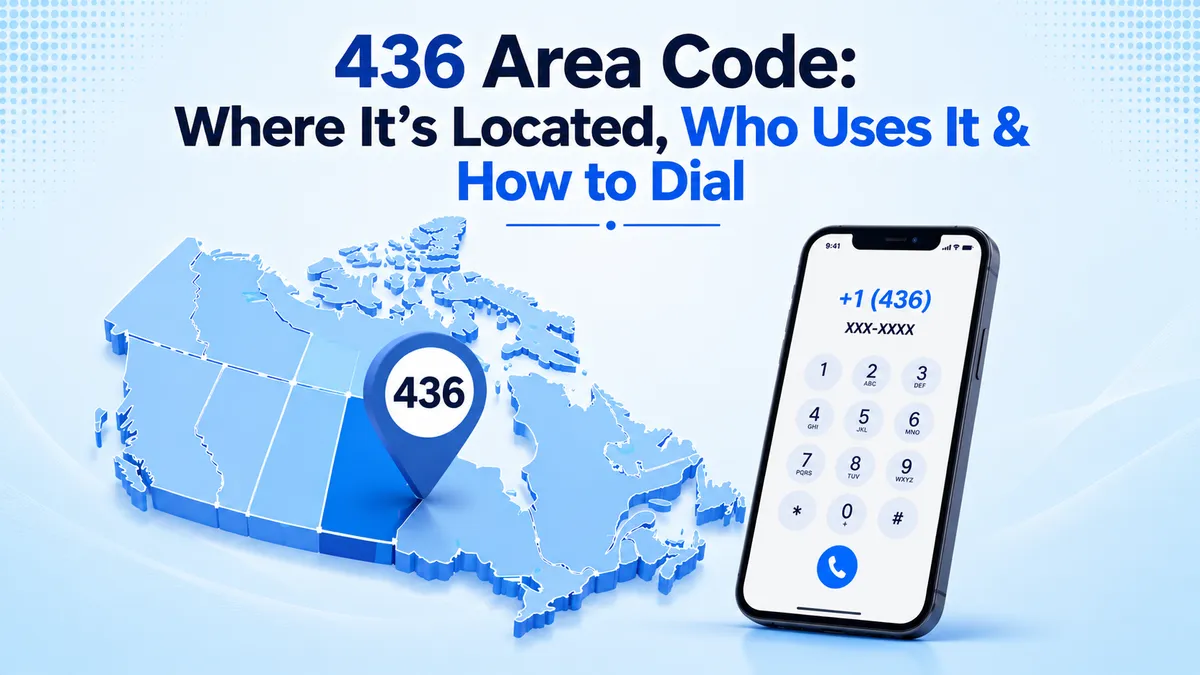
The 436 area code began serving Northeast Ohio on March 1, 2024, as an overlay for the existing 440 region around Cleveland. It doesn't replace 440 or add new ground: every city and county assigned to 440 also falls under 436. Numbers issued before 2024 keep their original 440 digits, while new numbers can now carry either code. Despite the shared 'Cleveland area' label many directories use, the numbering area actually stops short of Cleveland itself.
This guide covers where 436 reaches, why it exists alongside 440, and what changes for callers. It also covers dialing rules, time zone, and the fastest way to get a number. Several existing guides mix up 436 with Ohio's other numbering areas, so this one relies on the Public Utilities Commission of Ohio, the North American Numbering Plan Administrator, and Wikipedia's verified records.
The Basics: What the 436 Area Code Covers and Why It Exists
Area code 436 is an all-services overlay: a second code layered onto a region that already has one, instead of splitting it in two. The Public Utilities Commission of Ohio approved the overlay in December 2022, projecting 440 would run out of numbers by the third quarter of 2024. NANPA confirmed the plan in Planning Letter PL-610, issued February 16, 2023, and the code went live March 1, 2024. Nobody with an existing 440 number had to change it.
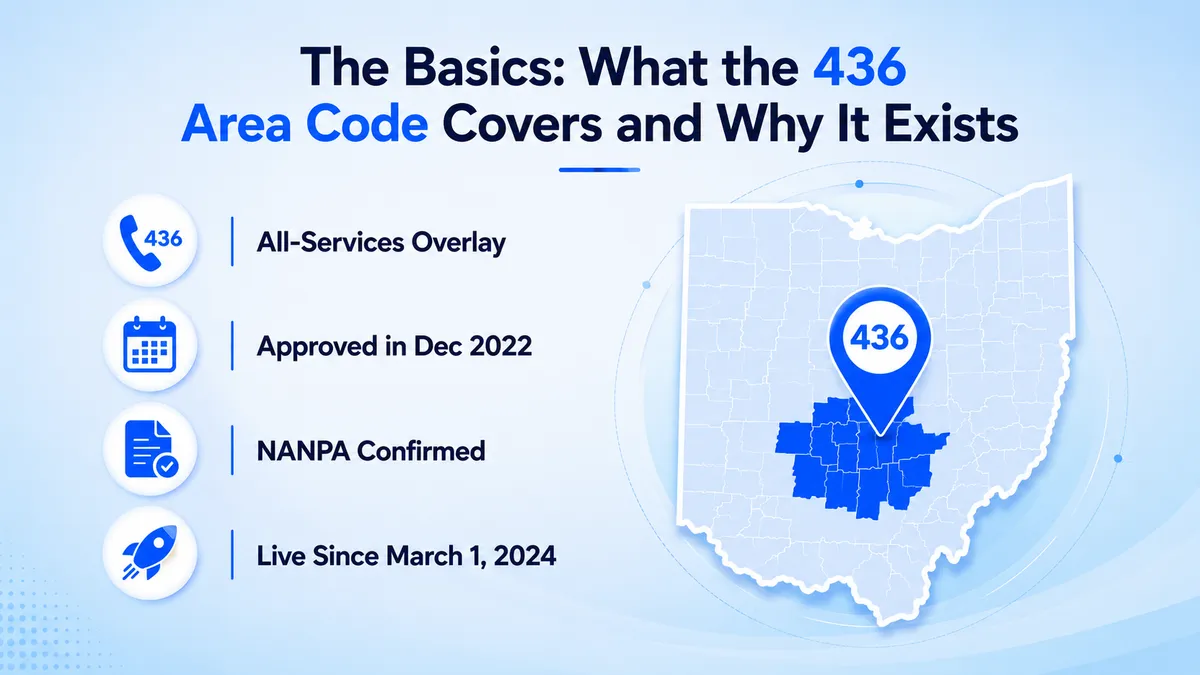
Splitting an area geographically forces half its numbers to change, costly for businesses with printed materials and stored contacts. An overlay avoids that: the old code keeps working as before, and a second pool of numbers opens for new lines. The tradeoff is 10-digit dialing for every call, covered below.
Does the 436 Area Code Actually Reach the City of Cleveland?
No, and it's the detail most number directories get wrong. The 436/440 area wraps around Cleveland's southern, western, and eastern suburbs, but Cleveland itself and most of its inner suburbs sit on area code 216, a separate area predating both 440 and 436. A business wanting a number matching downtown Cleveland needs 216, not 436. Several provider pages describe Cleveland proper as covered territory, which doesn't match the official numbering plan.
What 436/440 does reach is the ring of suburbs around Cleveland: Parma, Westlake, Strongsville, and Mentor. The split dates to 1997, when 216 was divided three ways, with the outer ring becoming 440 and Cleveland staying on 216. Because 440 later needed its own overlay in 436, the geography inherited that same surrounds-but-excludes shape.
Mapping the 436 Region Across Northeast Ohio
Parma is the largest city inside the 436/440 area, followed by Westlake, Strongsville, Mentor, Elyria, and Lorain. The region also includes Ashtabula, Chardon, Eastlake, North Olmsted, North Ridgeville, North Royalton, Solon, and Willoughby. It covers all of Lake and Geauga counties, most of Ashtabula and Lorain counties, and slivers of Erie, Huron, Trumbull, and Cuyahoga counties — the rest of Cuyahoga, including Cleveland itself, stays on 216.
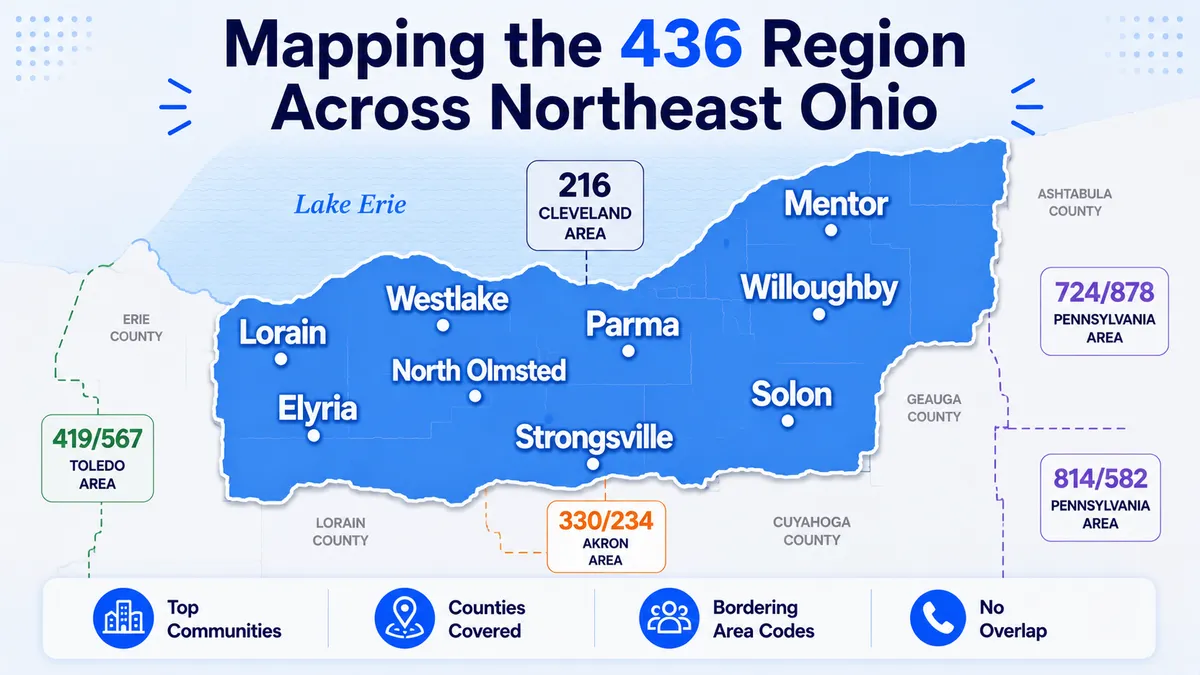
Bordering Area Codes
The region borders 216 to the north around Cleveland, 419/567 to the west toward Toledo, 330/234 to the south toward Akron, and Pennsylvania's 724/878 and 814/582 to the east. None of these neighboring codes overlap with 436/440.
From 216 to 440 to 436: Three Generations of Cleveland-Area Numbering
Northeast Ohio has been divided for numbering purposes three times in under three decades. Area code 216 once covered the whole Cleveland metro area; in 1996 it split to create 330 south of Cleveland. The following year, 216 split again, creating 440 for the suburbs ringing Cleveland while Cleveland stayed on 216. That split, completed August 16, 1997, is the direct ancestor of today's 436. The same overlay pattern has played out in other Ohio cities — Dayton's 324 area code followed an identical regulatory path, layering over 937 once that pool ran short.
By the early 2020s, growth in the 440 region had used up enough combinations that regulators planned relief again. Rather than split the region a third time, the state chose an overlay, adding 436 on top of 440 instead. The boundary lines drawn in 1997 are still the lines today; only the pool of digits changed.
436 and 440 Side by Side: What Changes for Callers
Because 436 is an overlay, almost nothing changes between the two codes except the digits. Callers can't tell which code they've reached without seeing the number. The only real decision point is for businesses ordering a new number, where 436 may now be the only option in some prefixes.
| Factor | Area Code 440 | Area Code 436 |
|---|---|---|
| Status | Original code, active since 1997 | Overlay code, active since March 2024 |
| Coverage area | Same numbering area | Same numbering area |
| Assigned to | Numbers issued before 2024 | New numbers issued from 2024 onward |
| Dialing requirement | 10-digit dialing required | 10-digit dialing required |
| Call cost and quality | Identical | Identical |
| Availability for new lines | Limited, prefix-dependent | Increasingly the default for new numbers |
Dialing Rules Under the Overlay: When You Need All 10 Digits
Every call in the 436/440 region requires 10-digit dialing, area code plus seven-digit number, even between two neighbors. Ohio mandated 10-digit dialing across 440 by October 24, 2021, years before 436 existed, because one of 440's central office codes, 988, was reassigned nationwide as the Suicide & Crisis Lifeline shortcode. As outlined in the FCC guide, all US overlay regions must adopt 10-digit dialing before a second code can be activated.
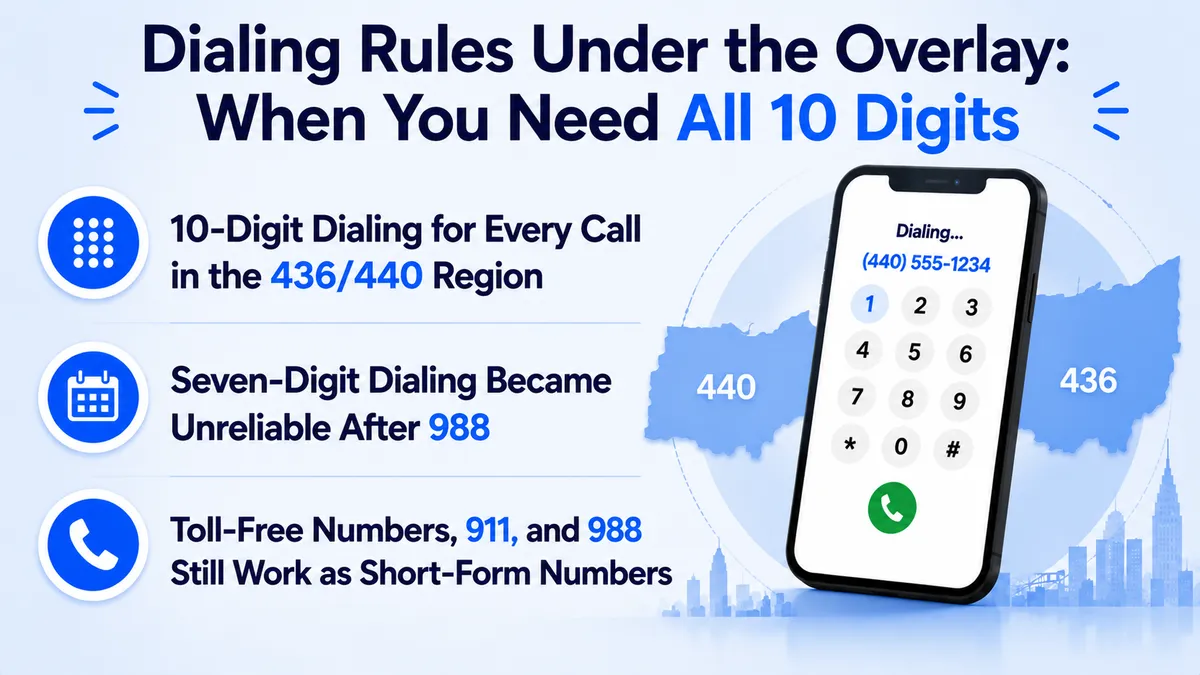
Toll-free numbers, 911, and 988 itself still work as short-form numbers; the 10-digit rule applies only to standard calls. That change applied well before the first 436 number existed, so long-time residents are already used to it. What's new is that a 436 and a 440 number can now sit side by side in one directory and dial identically.
Time Zone and Call-Timing Basics for the 436 Area Code
The entire 436/440 area runs on Eastern Time year-round, with no internal time-zone split to account for. Businesses calling from the West Coast should factor in the three-hour difference: a 9 a.m. Pacific call lands at noon Eastern.
This matters most for businesses running automated dialers or SMS campaigns into the region, since a misconfigured time zone can push calls outside acceptable calling-hour windows. Setting the account default to Eastern (US & Canada) avoids most issues. For South African callers, the region runs six or seven hours behind Johannesburg depending on the season.
How to Get a 436 Area Code Number
Getting a 436 number doesn't require living in Ohio. TKOS provisions Ohio numbers — including 436 and 440 — remotely through its wholesale VoIP platform, with carrier-grade infrastructure and same-day activation for most accounts.
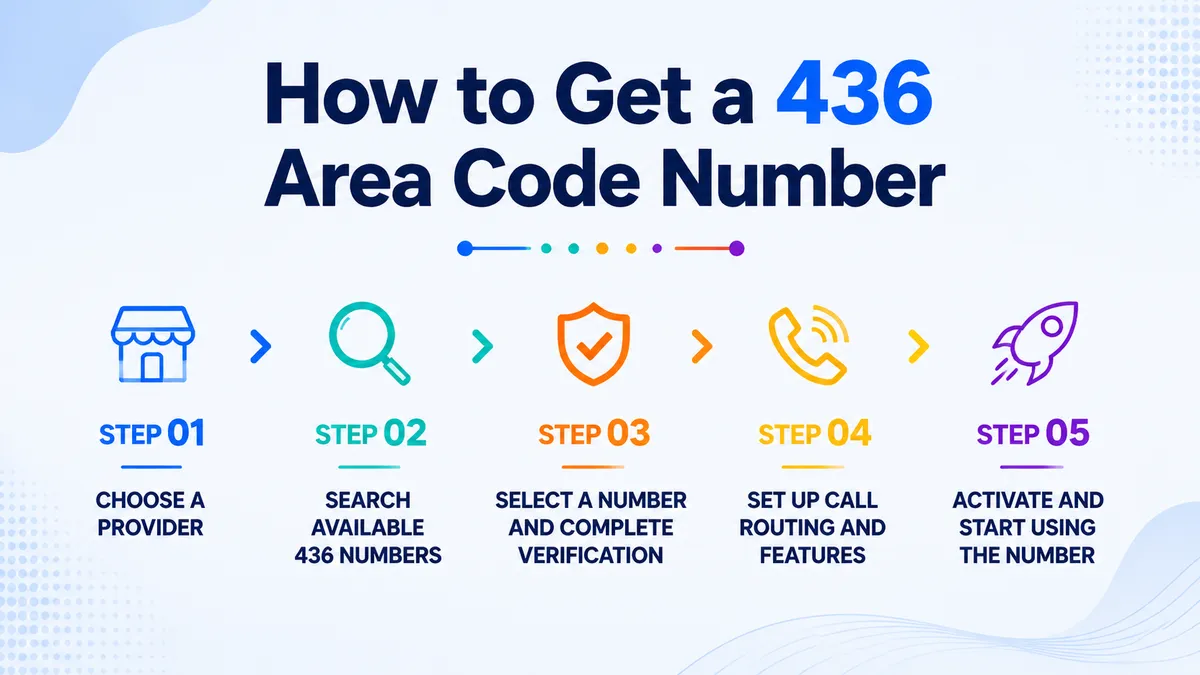
- Choose a provider that offers Ohio numbers and confirm it specifically lists 436 or 440.
- Search available 436 numbers, filtering by area code and browsing by prefix or digit pattern.
- Select a number and complete verification — SMS, email, or document upload depending on compliance requirements.
- Set up call routing and features: forwarding, voicemail, and business-hours settings.
- Activate and start using the number — most businesses complete the full process in under fifteen minutes.
Why Local Businesses Are Choosing 436 Numbers Over Toll-Free or Out-of-State Lines
A 436 or 440 number signals genuine local presence to callers in Parma, Westlake, or Lorain, even if the office sits elsewhere. Answer rates for unfamiliar area codes have dropped as spam calls increased; a number matching the caller's own area code is more likely to get picked up. For contractors, healthcare offices, and real estate agents, a local number reinforces a 'we know this area' impression that out-of-state numbers can't match.
Businesses expanding into the region without a physical office often choose 436 because it's available even after every 440 number in a prefix is claimed, making it the practical option for new entrants, not a downgrade. Remote teams also use local 436 numbers for a direct line without a desk phone. Either way, the number works identically to a 440 number for anyone calling it.
See also: 424 area code (Los Angeles).
Conclusion
The 436 area code is best understood as 440's overlap partner, not a new region: same cities, same counties, same dialing rules, just a second pool of numbers for an area that had nearly run out of the first. It reaches the suburbs ringing Cleveland, Parma foremost among them, but not Cleveland's own downtown exchanges, which remain on 216. A source that places 436 in Cleveland proper, or confuses it with Toledo's unrelated 419/567 area, is simply wrong.
For everyday calling, the takeaways are simple: dial all 10 digits every time, expect Eastern Time year-round, and don't assume an unfamiliar 436 number is a stranger just because it looks newer than an old 440 line. Businesses looking to get their own 436 number can do so through most virtual number providers in a few minutes, no Ohio address required.
Popular international calling destinations