Introduction
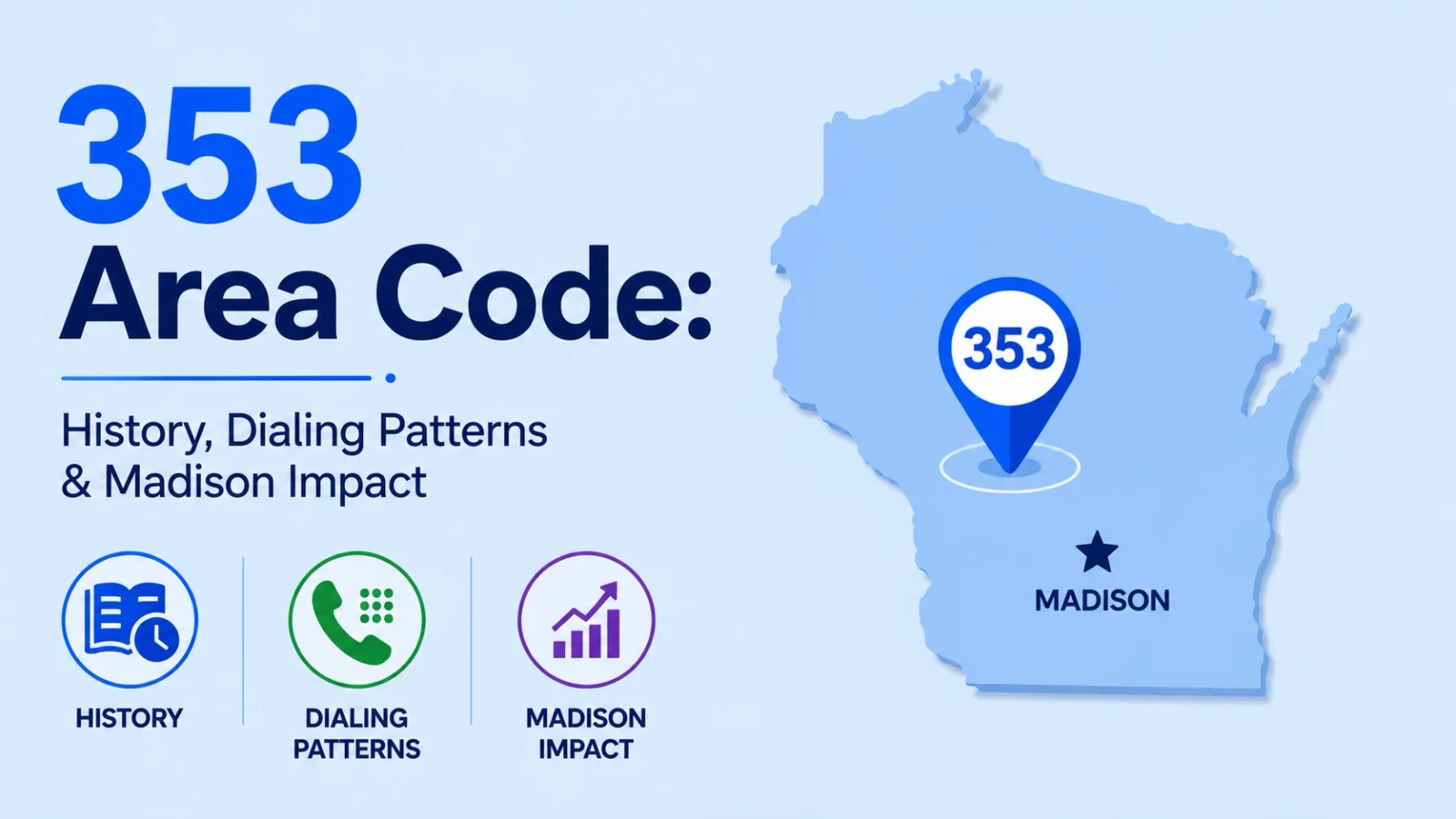
Area codes are three-digit prefixes that tell the phone network where to route a call. The 353 area code is the newer overlay serving Madison and the surrounding counties of southwest and south central Wisconsin. Every call routes automatically through the North American Numbering Plan.
The 353 area code overlays 608, giving carriers fresh numbers to assign across Dane County and eighteen neighboring counties as the region's population and business base keeps expanding.
The 1947 Origins of the Numbering Plan
Area code history goes back to 1947, when the FCC-overseen North American Numbering Plan was established. It standardized phone numbering across the US, Canada, and parts of the Caribbean, dividing the continent into numbering plan areas for faster call routing.
Before NANP, operators connected long-distance calls manually by name or exchange — slow and costly. Numeric area codes let switching equipment route calls automatically, cutting connection times from minutes to seconds and making direct-dial long distance available to households nationwide.
From a 1955 Boundary Line to the 353 Overlay
Area code 608 has an unusual origin story. NANPA assigned it in 1955, not through a later-era split like most modern overlays, but through an early boundary rearrangement between area codes 414 and 715 — a rare adjustment made during the numbering plan's first decade.
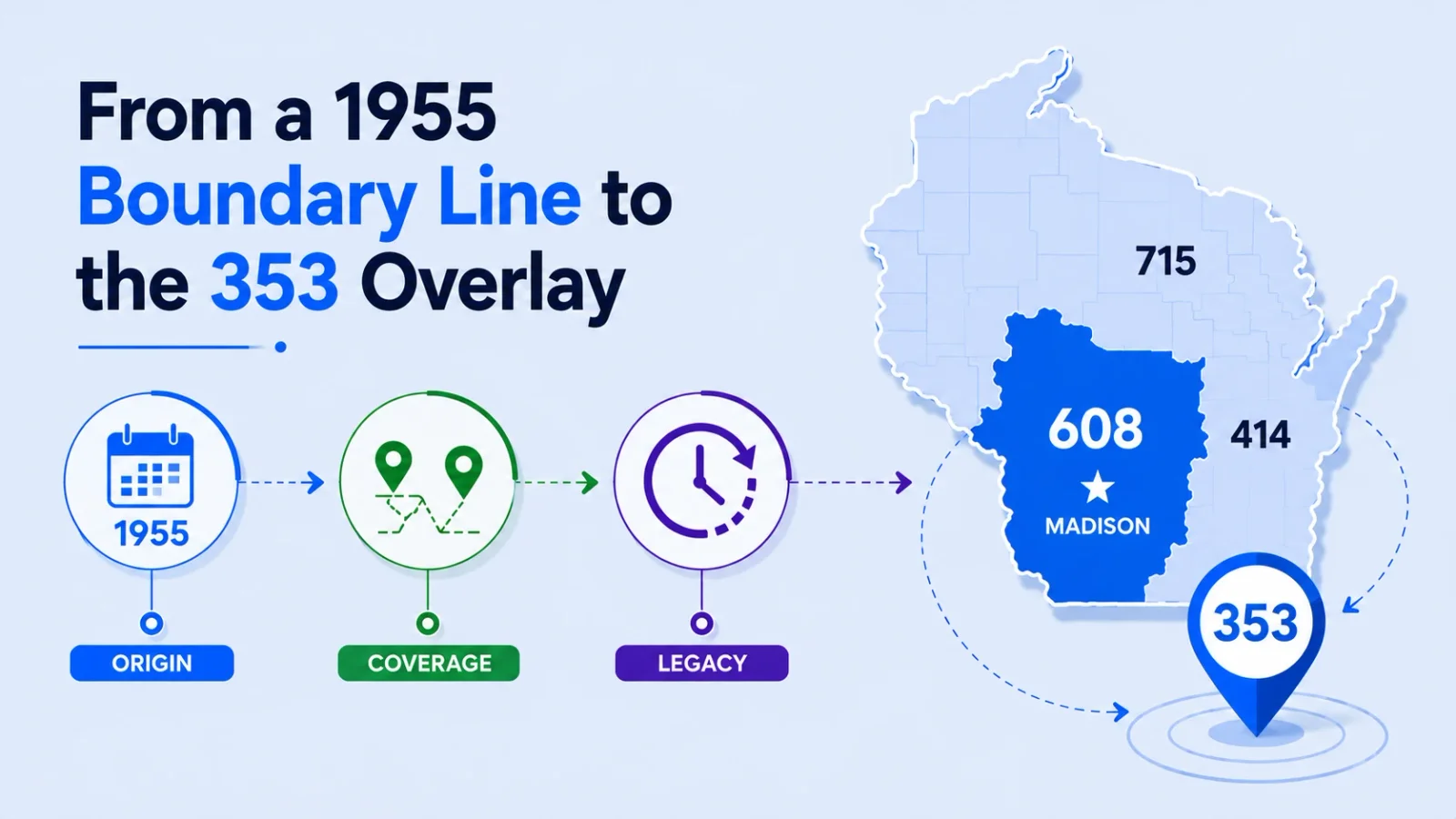
That rearrangement gave southwest and south central Wisconsin, including Madison, its own dedicated code decades before the overlay era began. For nearly seventy years, 608 alone served the growing capital region without splitting into a second geographic code.
By September 2022, the Wisconsin Public Service Commission and NANPA announced an all-service overlay: 353. Carriers began ordering new central office codes on July 11, 2023, and the overlay went into service on September 15, 2023, without retiring a single 608 number.
How to Dial a 353 Number, Step by Step
Calling a 353 number from outside the region takes extra digits: an access code, then the area code, then the full number. Every call across the 608/353 overlay requires all ten digits, even between neighbors in the same building.
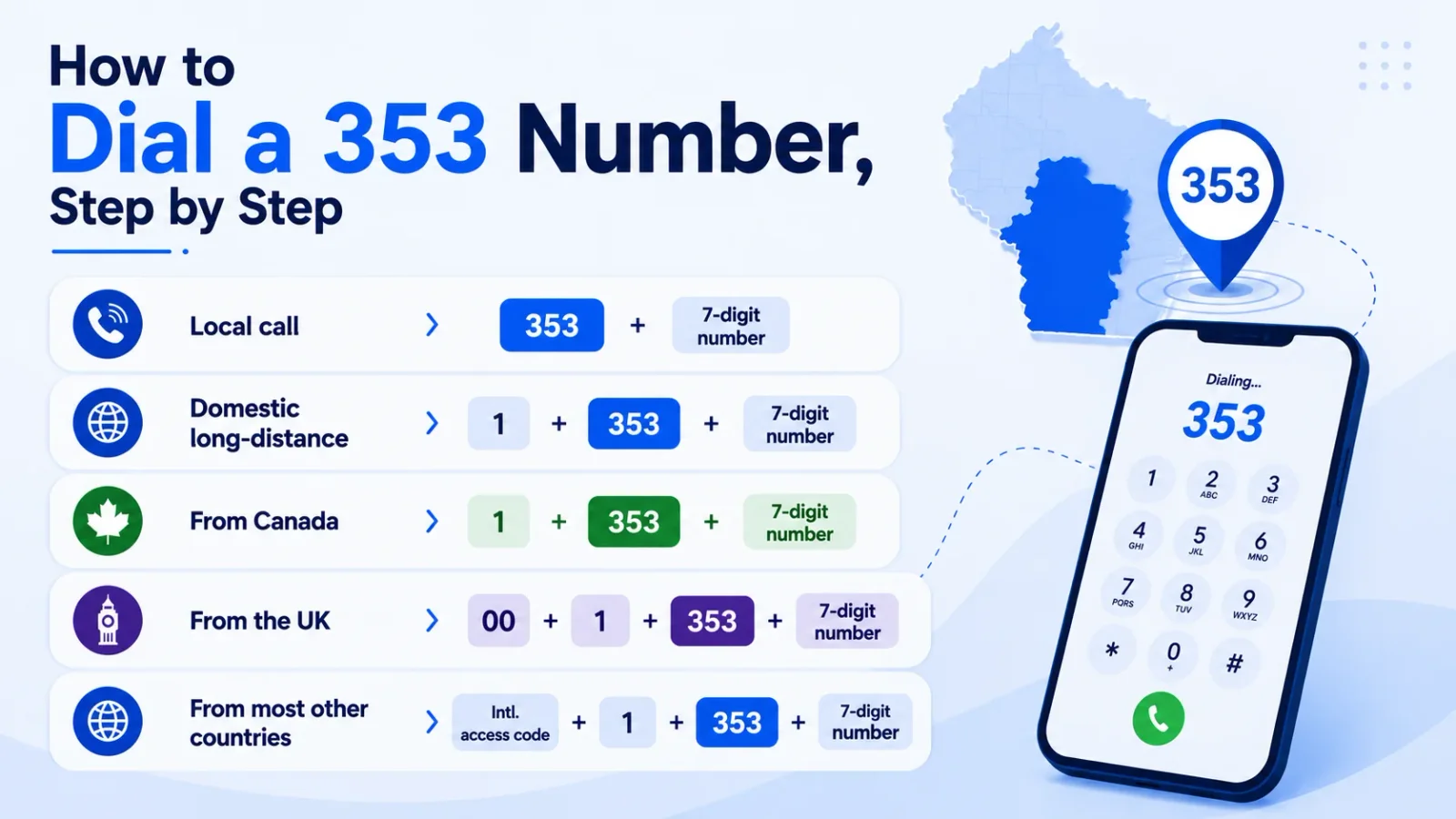
- Local call: Dial 353 + the seven-digit number (10-digit dialing is mandatory across the 608/353 overlay).
- Domestic long-distance: Dial 1 + 353 + the seven-digit number.
- From Canada: Dial 1 + 353 + the seven-digit number (same NANP framework).
- From the UK: Dial 00 + 1 + 353 + the seven-digit number.
- From most other countries: Dial your international access code + 1 + 353 + the seven-digit number.
Correct dialing keeps calls routing cleanly through the network. Wholesale voice termination carries the outbound minutes behind the scenes — without solid termination agreements in place, calls can fail before they ever reach Madison.
Businesses programming auto-dialers or PBX systems should add 353 to their outbound dial plans alongside 608.
Capitol Growth: Why Dane County Drove the 353 Rollout
New area codes like 353 track surging number demand — most people now carry three or four numbers across phones, tablets, and connected devices. Madison's growth as both state capital and university hub added steady pressure on 608's remaining number blocks.
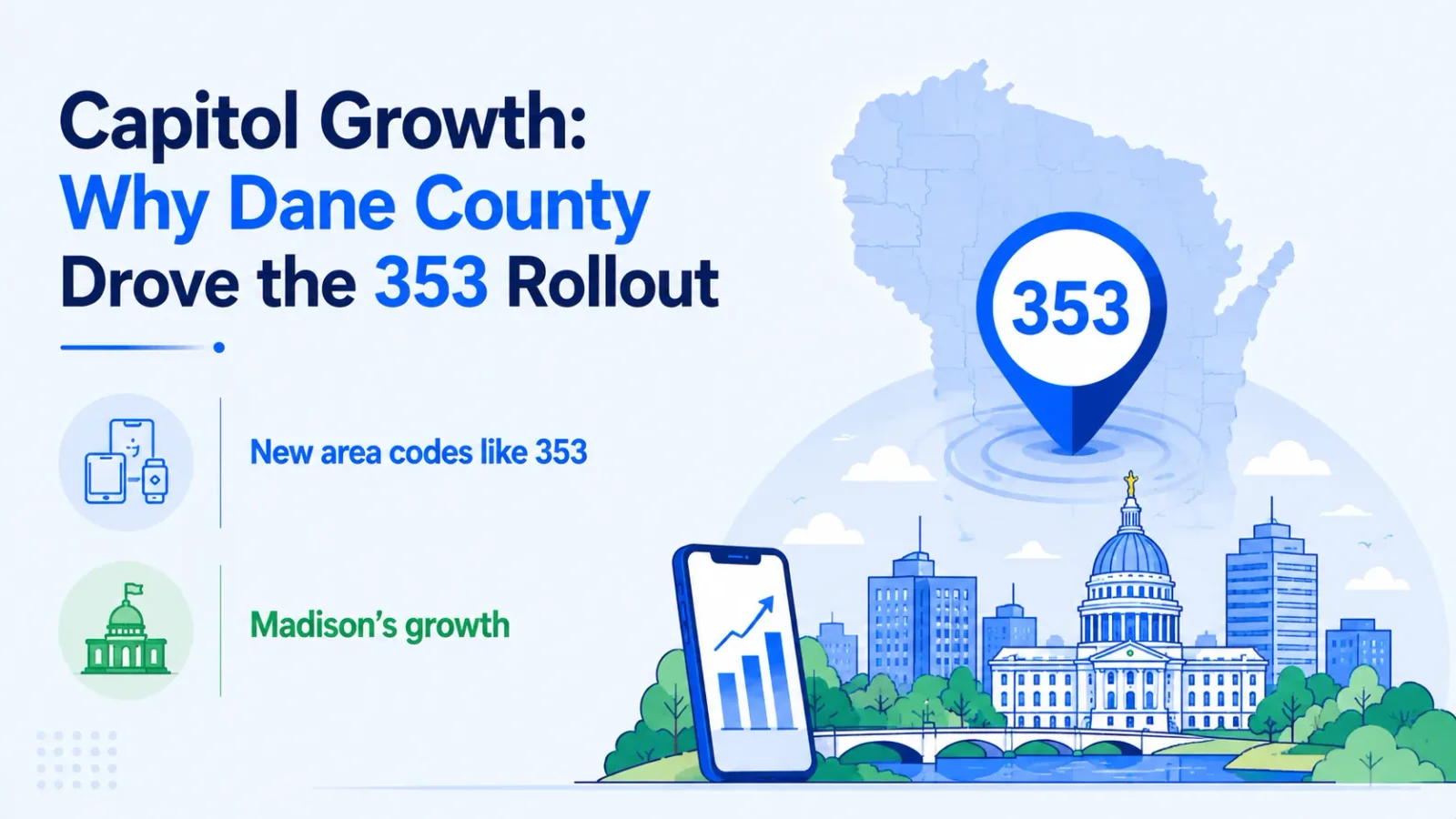
The 353 region spans nineteen counties, from Dane and Rock to La Crosse, Sauk, and Vernon, reaching cities including Madison, La Crosse, Janesville, Beloit, and Wisconsin Dells. State government anchors the regional economy alongside the University of Wisconsin—Madison and a fast-growing biotech and health-sciences research cluster.
Rolling out an overlay isn't simple for the carriers serving this region.
- Network upgrades: Switches and routers must recognize the new prefix.
- Database updates: 911 systems, caller-ID platforms, and fraud filters need the 353 code recorded.
- Customer outreach: Providers inform 608 customers about the overlay and the shift to 10-digit dialing.
- Number portability: Existing 608 customers keep their numbers unchanged after the 353 rollout.
Business Opportunities Across 19 South Central Wisconsin Counties
New codes open fresh number blocks for a market that needs them. Wholesale VoIP providers can assign 353 DIDs to businesses that want a Madison-area presence without renting local office space, from startups to firms expanding statewide.
A 353 or 608 number builds trust fast — customers answer more readily when they recognize the area code. That familiarity helps state-adjacent contractors, healthcare providers, and retailers boost connect rates in Madison, Janesville, Beloit, and La Crosse.
Similar overlay-driven growth is playing out elsewhere in the Midwest: businesses serving Dayton and Springfield have seen comparable demand since Ohio activated the 326 area code, another sign that fresh number blocks track directly with regional economic expansion.
VoIP Cost Savings and Security for 353 Numbers
VoIP simplifies 353 usage — cloud phone systems assign numbers to any user, anywhere, so remote teams and support desks can share one local prefix. Calls route over the internet, with call forwarding, voicemail-to-email, and auto-attendants built in.
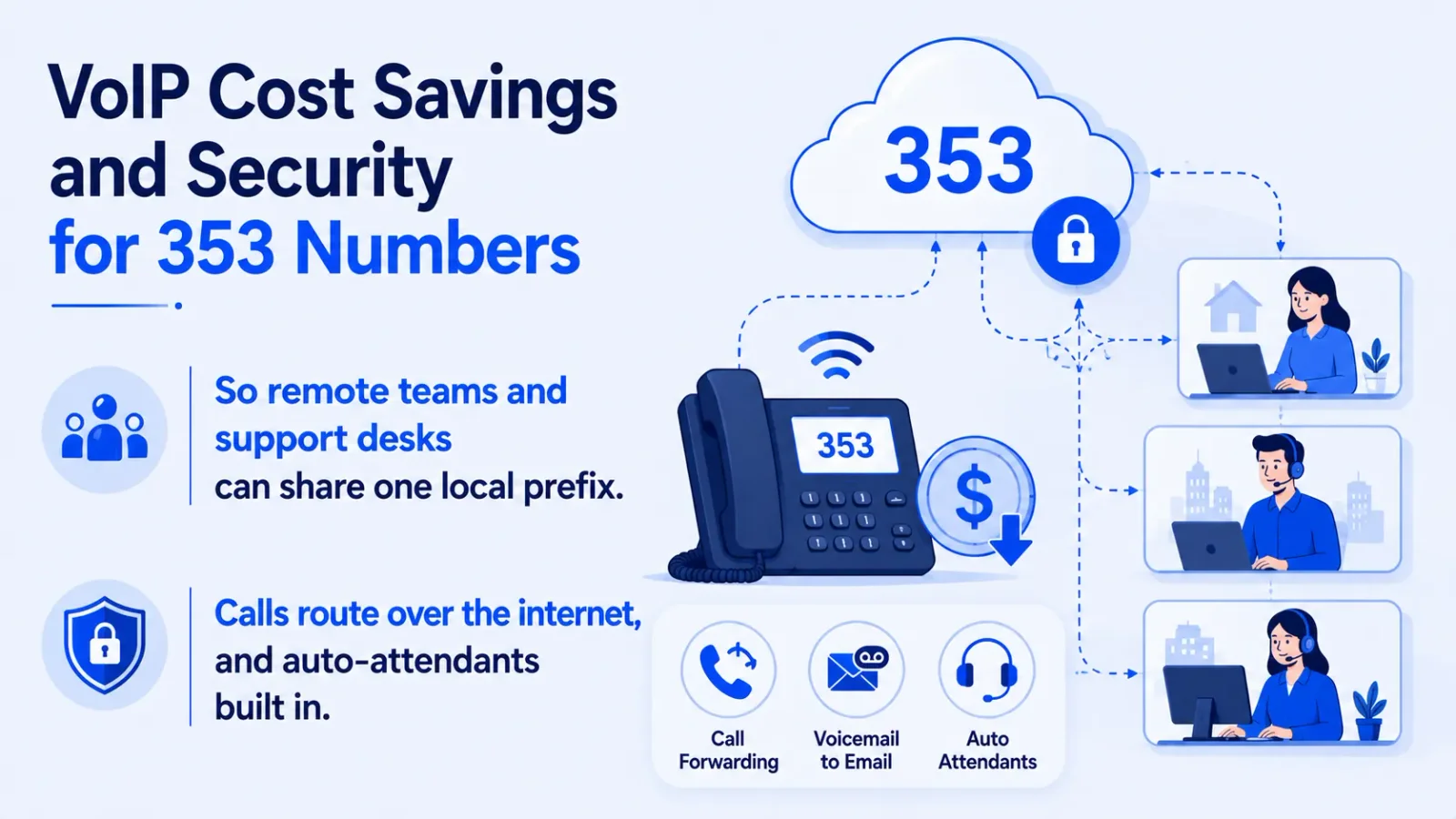
Cost matters too. Landlines charge per-minute, distance-based rates that add up fast for busy teams. VoIP flattens that — a call from Chicago to a 353 number costs the same as a call from next door, saving high-volume businesses real money.
Security matters just as much. As 353 becomes familiar, scammers may spoof it to look local — common tactics include fake government-benefit calls and bogus utility threats. Carriers counter this with Call authentication, which digitally signs calls to verify caller identity.
Reading Caller ID: How the Region Recognizes 353 Calls
Caller ID shows the full ten-digit number before a call connects, and familiar area codes boost answer rates — local numbers consistently beat toll-free or unfamiliar prefixes. As 353 becomes common alongside 608, businesses using it gain that same head start.
Smartphones let people screen calls before answering, and spam-detection apps flag numbers reported by the community. Legitimate 353 numbers registered to verified businesses stay clean — critical for sales teams, clinics, and support desks chasing high connect rates. Registering with major lookup providers protects that reputation.
Staying Compliant: Reputation and TCPA Rules for 353 Lines
Carriers monitor call patterns on every prefix, including 353. Lines showing unusually high volumes, short call durations, or spikes in blocked-call reports risk throttling or flagging. Businesses should pace outbound calling reasonably and honor opt-out requests right away.
Staying TCPA compliant protects deliverability and trust alike. That means honoring do-not-call requests, keeping consent records for marketing calls and texts, and avoiding calls outside permitted hours — all of which keep a 353 number's reputation clean long-term.
How to Get a 353 Area Code Number
Setting up a 353 number takes minutes rather than weeks. TKOS provisions Madison-area DIDs through a self-service dashboard, so remote teams, statewide retailers, and out-of-state startups can claim a local south central Wisconsin presence without waiting on a physical line installation.
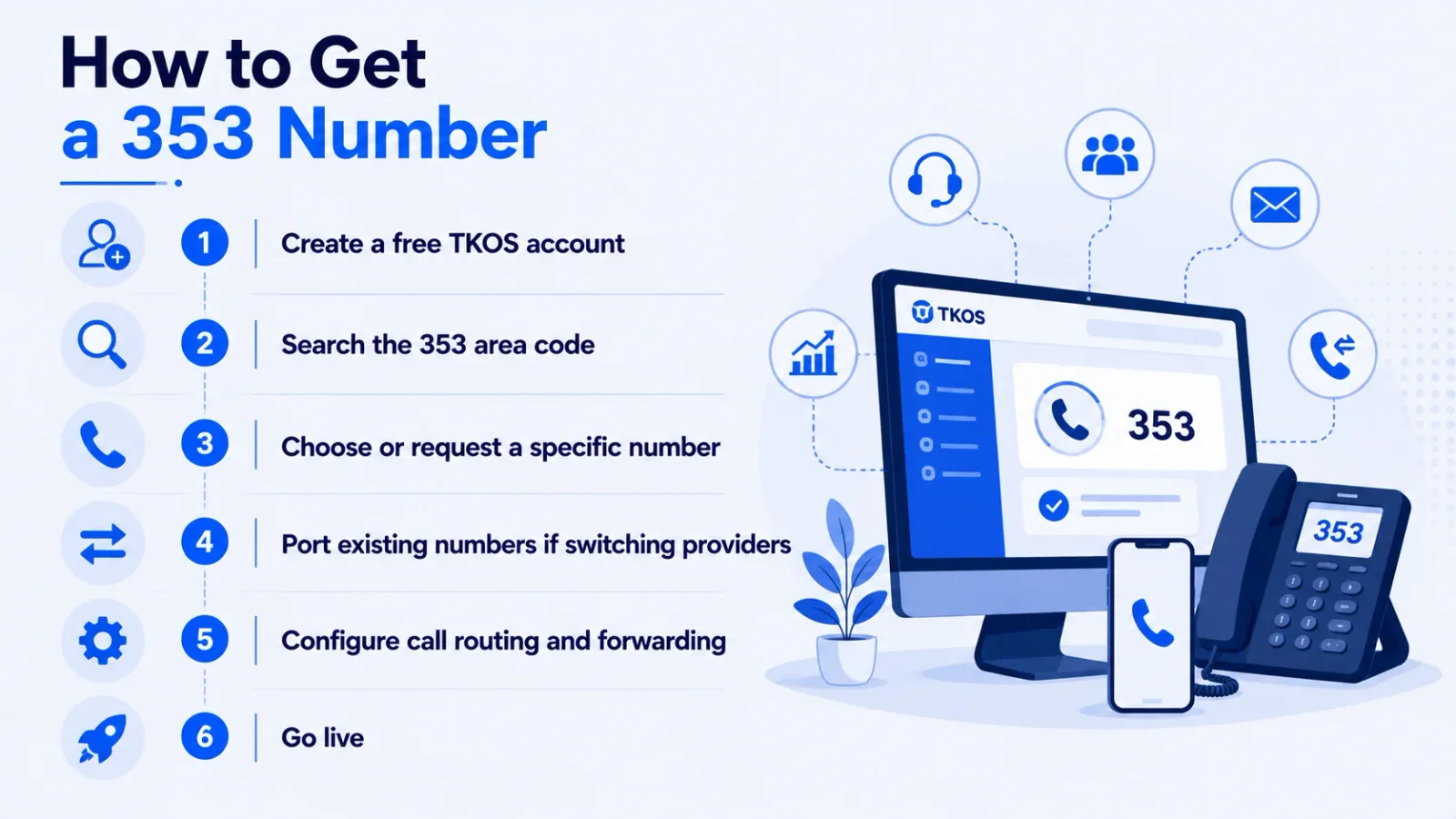
- Create a free TKOS account: Sign up online and verify your business details to unlock number provisioning.
- Search the 353 area code: Filter available numbers by prefix to see current 353 inventory across Dane, Rock, and the surrounding counties.
- Choose or request a specific number: Pick a memorable sequence or request a vanity number for marketing and support lines.
- Port existing numbers if switching providers: TKOS handles the paperwork so current 608 or 353 lines move over without downtime.
- Configure call routing and forwarding: Set up auto-attendants, ring groups, and voicemail-to-email before the number goes live.
- Go live: Publish the new number across your website, listings, and CRM once testing confirms clean call quality.
TKOS customers expanding into other markets often also set up numbers in the 274 area code region, giving them a foothold in Green Bay and the Fox Cities alongside their Madison presence.
Businesses reaching further west add a line in the 871 area code covering southern New Mexico, pairing a Wisconsin presence with a Southwest one under the same TKOS account.
See also: 350 area code (Stockton/Modesto).
Conclusion
The 353 area code is more than a routing prefix — it's telecom capacity meeting growth across Madison and south central Wisconsin. Rooted in the 1947 NANP framework and layered onto a 608 code with roots in 1955, it keeps calls routing cleanly as the region expands.
Stay cautious too: never share account numbers, Social Security digits, or passwords with unknown callers, even local-looking ones. Let unexpected calls go to voicemail, call back on verified numbers, and report suspicious activity to carriers and the FCC. Codes like 353 keep the region connected.
Popular international calling destinations